A beautifully lit room should feel calm, not sound like it is quietly vibrating. So, why do LED bulbs buzz? Usually, the noise comes from a mismatch between the bulb, dimmer switch or fitting rather than from the LED light itself. The good news is that most buzzing can be traced quickly and resolved with the right component choice.
LED lighting is designed to be efficient, long-lasting and versatile enough for everything from a warm bedroom lamp to a striking kitchen pendant. Yet LEDs use electronic drivers to manage power, and those small components can occasionally create an audible hum. Understanding where it comes from helps you protect both the atmosphere of your room and the performance of your lighting.
Why Do LED Bulbs Buzz in Some Fittings?
An LED does not produce light in the same way as an old incandescent bulb. Traditional filament bulbs could often tolerate imperfect dimming systems because the filament simply heated up and glowed. LED bulbs contain electronic circuitry that converts mains electricity into a controlled current suitable for the LEDs.
When that circuitry receives an uneven or incompatible electrical signal, tiny parts inside the bulb, driver or dimmer can vibrate. That vibration is heard as a buzz, hum or high-pitched whine. It may be barely noticeable during the day but become frustrating in a quiet bedroom, reading corner or dining space.
The source is not always the bulb. A decorative pendant, recessed downlight, LED strip driver or wall dimmer may be the component making the sound. Pinpointing the cause before replacing everything saves time and helps maintain the look you planned for the room.
An incompatible dimmer is the most common cause
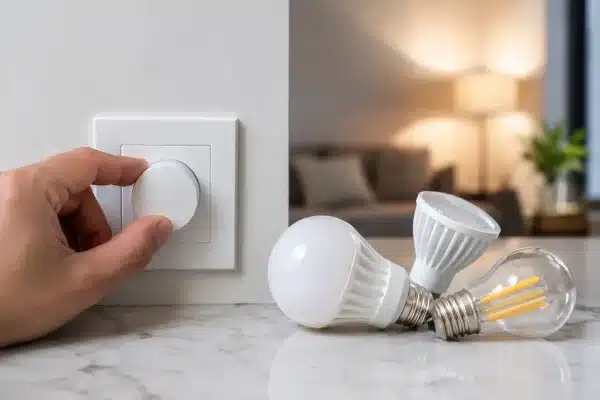
Many homes still have dimmer switches designed around halogen or incandescent lamps. These older dimmers often need a higher electrical load than a small group of LED bulbs provides. They can also use a leading-edge dimming method that does not suit every LED driver.
The result may be buzzing, flickering, a restricted dimming range or lights that fail to switch fully off. A bulb labelled dimmable is not automatically compatible with every dimmer. It simply means the bulb is built to work on a suitable LED dimming circuit.
For the best results, use an LED-compatible trailing-edge dimmer and check both its minimum and maximum load. A dimmer with a minimum load of 5W, for example, is far more likely to work well with modern LED lamps than an older unit designed for much larger loads. In fittings with several bulbs, the combined wattage matters too.
The bulb or built-in driver may be lower quality
A budget LED can seem like a saving until its driver creates flicker, noise or an unpleasantly cool light. Better-quality bulbs tend to use more stable driver components, which manage current more smoothly and reduce the chance of audible vibration.
This does not mean every buzzing bulb is poor quality. Even an excellent bulb can object to the wrong dimmer. However, if one bulb buzzes in several different fittings while comparable lamps remain silent, it is sensible to replace that bulb with a quality alternative.
For integrated LED fittings, the driver may sit in the ceiling void, within the fitting body or in a discreet housing nearby. If that driver is buzzing, the fitting may need a replacement driver rather than a replacement light source. This is especially relevant for LED tape, under-cabinet lighting and bespoke joinery, where the driver must be correctly sized for the total wattage and length of strip.
Loose parts can amplify a small vibration
Sometimes the electrical hum is minor, but the fitting turns it into a noticeable noise. A loose shade, metal ceiling rose, retaining ring or bulb seated imperfectly in its holder can resonate as power passes through the circuit.
With the power isolated, check that the bulb is correctly fitted and that removable parts are secure. Do not overtighten a bulb or force delicate glass shades. If a fitting has been recently installed, a qualified electrician can check connections, mounting and the driver location safely.
Transformers and old low-voltage circuits can cause problems
Older 12V halogen downlight systems commonly use transformers. Replacing the halogen lamps with LED equivalents may reduce the circuit load below what the original transformer requires. The transformer can then hum, pulse or fail to operate reliably.
The answer is usually not to return to inefficient halogen lamps. It is to have a suitable LED driver installed by an electrician. This is a worthwhile upgrade in kitchens, hallways and bathrooms where multiple low-voltage fittings are used every day.
Is a Buzzing LED Bulb Dangerous?
A faint hum from an LED bulb or dimmer is often an annoyance rather than an immediate safety risk. Electronic components can make a small amount of noise under certain conditions, particularly at low dimming levels. Still, persistent buzzing should not be ignored, especially if it is new or getting louder.
Switch the light off and seek professional advice if the buzzing is accompanied by a burning smell, heat around the switch or fitting, scorch marks, repeated tripping, visible sparking or a bulb that flashes unpredictably. These signs can point to a faulty component or connection rather than normal LED behaviour.
Bathroom fittings, outdoor lights and kitchen lighting need particular care because of their locations and usage. The correct IP rating, appropriate driver and professional installation are as important as the style of the fitting. Never open a fixed LED fitting, driver or switch unless you are qualified to do so.
How to Stop LED Lights Buzzing
Start with a simple test before buying replacements. Move the suspected bulb to a different non-dimmable fitting, if practical and safe. If the noise disappears, the original dimmer or fitting is the likely issue. If it continues, the bulb itself is a stronger suspect.
Then work through the system logically:
- Check whether the bulb is marked as dimmable. A non-dimmable LED on a dimmer circuit can buzz, flicker or suffer a shortened lifespan.
- Turn the dimmer to full brightness. If the buzz fades or disappears, dimmer compatibility is very likely the cause.
- Test a known quality LED bulb with the same cap type and wattage range. Do not mix different LED types on one dimmed circuit if you can avoid it.
- Ask an electrician to assess older dimmers, transformers and integrated LED drivers, particularly where several lights are affected.
In many cases, fitting an LED-rated trailing-edge dimmer solves the problem immediately. Where a room has a statement chandelier or multi-light pendant, choose matching dimmable bulbs from the same range. This creates more consistent colour temperature, brightness and dimming behaviour, as well as a more polished overall appearance.
Choosing Quieter LED Lighting for Your Home
When planning a new lighting scheme, think beyond the visual finish. The right bulb should deliver the desired warmth, brightness and beam angle, but it must also suit the controls and circuit behind it.
For a living room, dimmable warm-white LEDs can create a relaxed layered effect when paired with a compatible dimmer. In kitchens and workspaces, you may prefer a brighter, neutral-white light, often on a standard switched circuit where dimming is unnecessary. A well-chosen non-dimmable LED bulb on a normal switch is one of the simplest ways to avoid dimmer-related buzzing altogether.
Smart bulbs deserve a separate mention. Many smart bulbs should not be connected to a traditional wall dimmer because they manage brightness through their own app, remote or smart control system. They generally need a standard on-off switch left on at the wall. Combining smart functionality with a conventional dimmer can lead to unreliable performance, noise and reduced bulb life.
For larger projects, from illuminated shelving to hospitality interiors, the driver is central to the final result. It should be matched to the LED load, installed with adequate ventilation and accessible for future maintenance. Bespoke LED strip lighting looks effortlessly refined when it is specified correctly, but its electrical components deserve the same attention as the visible detail.
A quiet lighting scheme lets the texture of a shade, the glow of a pendant and the warmth of your chosen colour temperature take centre stage. If a buzz interrupts that feeling, treat it as a useful signal to check compatibility rather than something you simply have to live with.