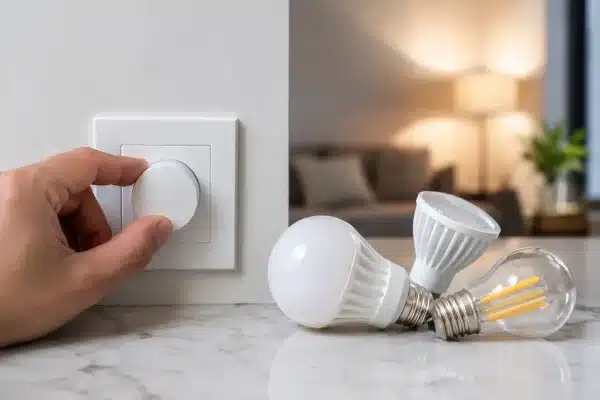
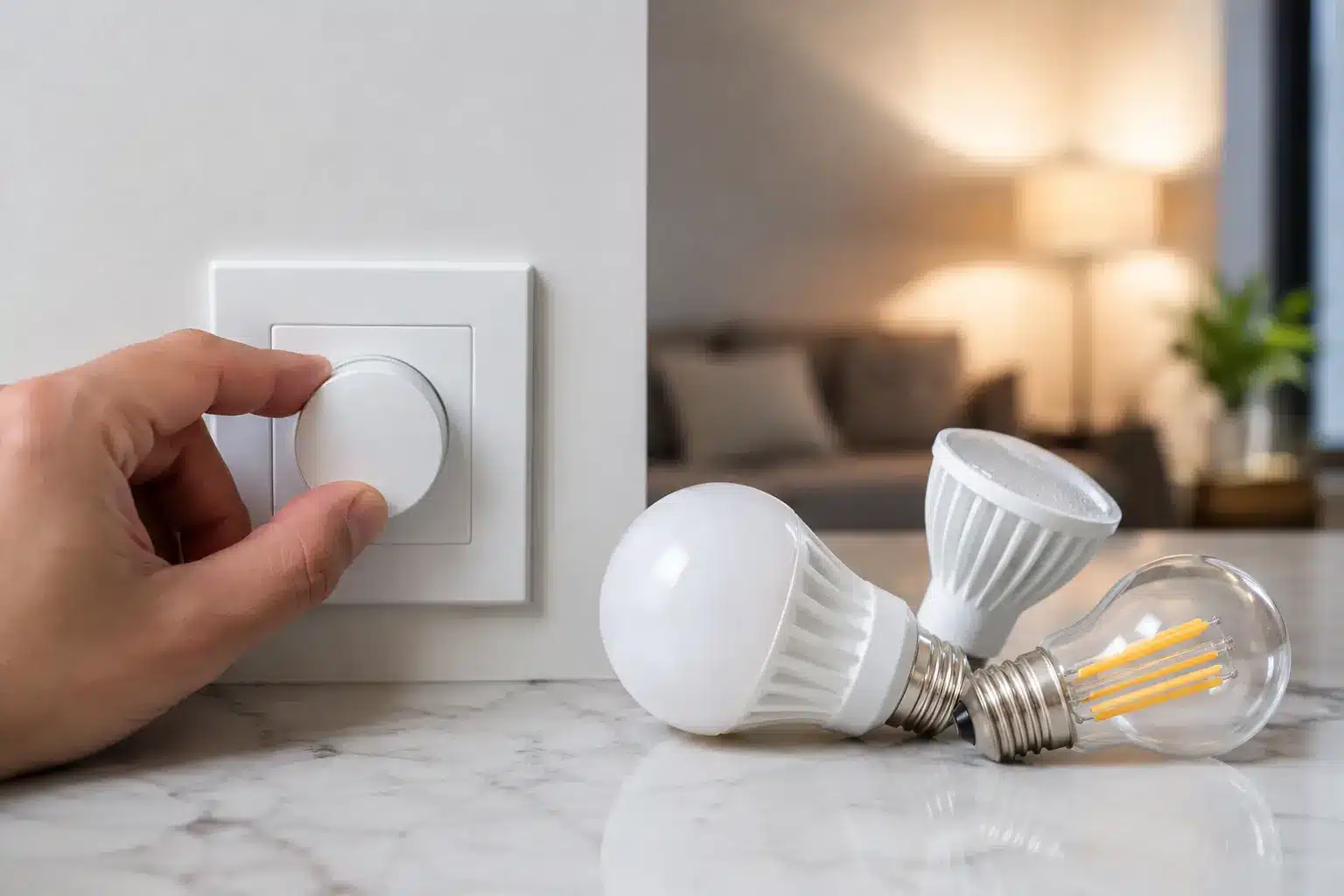
A dimmer should make a room feel more considered, not leave you with flickering lamps, a faint buzz or lights that refuse to switch off. So, can you dim any LED? No. While most modern LED lighting is designed with energy efficiency and ambience in mind, only products made for dimming will perform properly on a dimmer circuit.
The good news is that creating flexible, atmospheric lighting is straightforward once you know what to match. Whether you are softening kitchen lighting for dinner, setting the mood in a bedroom or planning layered lighting for a hospitality space, the bulb, fitting, driver and dimmer all need to work together.
Can you dim any LED bulb or fitting?
An LED can only be dimmed if it is clearly labelled dimmable. This applies to familiar replaceable bulbs, such as E27, E14, B22 and GU10 lamps, as well as integrated LED pendants, downlights, wall lights and LED tape.
A non-dimmable LED has an internal electronic driver designed to receive a constant mains supply. Connecting it to a conventional dimmer asks that driver to do a job it was never built to do. The result may be visible flickering, reduced lamp life, inconsistent brightness, humming or failure to turn on at all. In some cases, the light may seem fine initially but deteriorate over time.
Do not assume an LED is dimmable simply because it is LED. Check the product packaging, specification or fitting instructions before buying. If it does not explicitly say dimmable, treat it as non-dimmable.
For an integrated fitting, the question is slightly different: the LEDs themselves are part of the fitting, so it is the built-in driver that determines whether dimming is possible. A beautiful statement pendant can be dimmable, but only when paired with the correct dimming method.
Why LED dimming needs the right dimmer
Older dimmer switches were designed around incandescent lamps, which drew far more power. LEDs use a fraction of that load and contain sensitive electronics, so a standard dimmer may not deliver stable results even with a dimmable LED bulb.
For most domestic installations, an LED-compatible trailing-edge dimmer is the preferred choice. It is designed for low-wattage electronic loads and generally gives a quieter, smoother dimming range than older leading-edge dimmers. That said, compatibility always comes before assumptions. Check the dimmer manufacturer’s approved lamp list where available, particularly when installing several lamps on one circuit.
The total wattage matters too. A circuit with six 5W LED downlights only uses 30W, which can fall below the minimum load required by some older dimmers. Conversely, every dimmer has a maximum LED load that must not be exceeded. Its rating may look generous, but LED ratings and inrush current mean the permitted LED load can be lower than the headline figure suggests.
A quality LED dimmer with an adjustable minimum brightness setting can make a noticeable difference. This allows the electrician to set the lowest stable level, preventing lights from dropping into flicker just before they switch off.
Leading-edge or trailing-edge?
If you are replacing a dimmer in an older home, this is usually the decision that matters most. Leading-edge dimmers are commonly associated with traditional lamps and certain compatible LED drivers. Trailing-edge dimmers are typically the better fit for modern dimmable LED bulbs and fittings because they are quieter and operate more gently with electronic drivers.
There is no universal rule, however. Some specialist drivers specify leading-edge dimming, while others support either type. Follow the fitting or driver’s stated requirements rather than choosing on price alone.
The common signs of a compatibility problem
A dimmable bulb and LED dimmer can still clash. The issue is rarely that LEDs cannot be dimmed; it is usually that one component is unsuitable for another.
Look out for flickering at low levels, flashing when switched off, buzzing from the lamp or switch, a limited dimming range, delayed start-up or one lamp behaving differently from the rest. A slight glow when the dimmer is off is another familiar complaint, especially with certain dimmers and very low-wattage LEDs.
Before replacing everything, check that all lamps on the circuit are the same model and wattage. Mixing bulbs can cause uneven dimming, even when each one is technically dimmable. It is also worth confirming that the dimmer is rated for LEDs and that the total connected load sits within its recommended range.
If a fitting was recently installed and has never dimmed smoothly, the driver and control type may simply be mismatched. This is particularly common with integrated decorative fittings and LED strip projects, where the driver is less visible but just as important as the light source.
Smart bulbs are different
Smart bulbs often dim through their app, remote control or voice assistant, rather than through a wall dimmer. In this case, they should normally be supplied with full, constant power.
Putting many smart bulbs on a traditional dimmer can lead to unreliable connections, flickering or a bulb that cannot be reached when the wall dimmer is turned down. A standard on-off switch, left on for smart control, is usually the intended setup. Some smart lighting systems do offer compatible smart wall controls, but these are not the same as a conventional rotary dimmer.
Choose one approach for each circuit: use a physical dimmer with compatible dimmable LEDs, or use smart lamps and their specified controls. Combining both only works where the manufacturer expressly says it will.
Dimming LED tape and bespoke lighting
LED tape gives kitchens, shelving, wardrobes, media walls and commercial interiors a polished finish, but it needs its own dimming plan. Unlike a mains bulb, LED tape usually runs from a low-voltage driver and is controlled by a compatible dimmer, receiver or smart controller.
The tape, power supply and controller must all be specified for the same voltage and dimming method. A 24V LED tape installation, for example, needs a correctly sized 24V driver with enough capacity for the full tape length. Under-sizing the driver can create heat, unstable output and premature failure. Over-specifying is generally safer, provided the components are correctly matched.
For simple warm white tape, a compatible dimmable driver may work with a wall dimmer. For colour-changing, tunable white or RGBW tape, a dedicated controller is usually required. This provides proper control over brightness, colour temperature and scenes rather than forcing a complex system through a basic dimmer switch.
This is where a tailored lighting plan pays off. A concealed LED detail should feel effortless once installed, but the result depends on the right profiles, tape output, driver location, switching and controls being considered before the joinery or plasterboard is finished.
A practical checklist before you buy
Start by identifying whether you are dimming a replaceable bulb, an integrated fitting or LED tape. Then confirm the product is marked dimmable and note any stated dimmer requirements. Match it with an LED-rated dimmer, and make sure the combined wattage falls within the dimmer’s recommended LED load.
For rooms with multiple downlights, buy matching lamps rather than adding whichever bulbs are available. You will achieve more even colour temperature, brightness and dimming performance. Warm white light around 2700K is often ideal for relaxed living spaces and bedrooms, while 3000K can give kitchens and bathrooms a clean but still welcoming finish.
If your lighting scheme includes smart products, decide whether app-based control or wall-dimmer control is the priority. Both can create a beautiful atmosphere, but they need to be planned as separate systems unless compatibility is confirmed.
Finally, do not overlook the quality of the dimmer itself. A low-cost switch can undermine a carefully chosen fitting, whereas a well-matched dimmer lets the light move smoothly from practical brightness to a softer evening glow.
When to ask an electrician or lighting specialist
Changing like-for-like bulbs is simple, but replacing a dimmer switch, altering wiring or connecting LED drivers should be handled by a qualified electrician. This is particularly relevant in bathrooms, outdoor areas, kitchens and commercial projects, where safety zones, IP ratings and circuit design all matter.
For a renovation or a room built around layered lighting, it is sensible to choose fittings and controls together rather than after the first fix. Lux Lighting can help shape bespoke LED strip solutions and decorative schemes around how the space will actually be used, from bright task lighting to the lower, warmer light that makes a room feel finished.
The best dimmable lighting is rarely the one with the most features. It is the one that gives you the right light at the right moment, without drawing attention to the technology behind it.