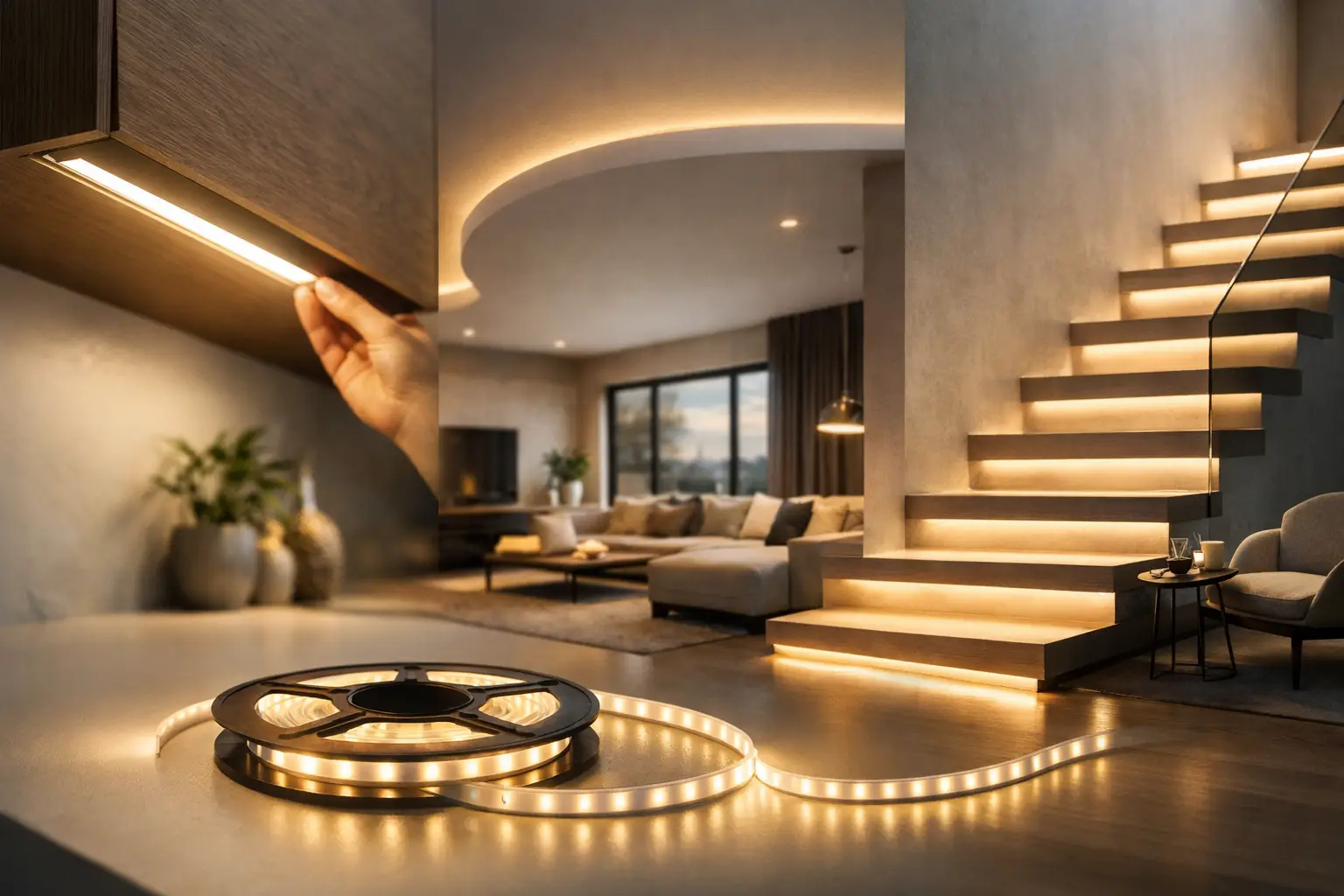
A kitchen island with the right glow underneath feels sharper, calmer and far more considered. The same room with a badly placed strip can look patchy, cold or oddly unfinished. That is why bespoke LED strip lighting has become such a strong choice for homeowners, renovators and commercial projects that want more than basic illumination.
Strip lighting is no longer just a practical add-on hidden under a cabinet. Used properly, it shapes a room. It softens hard edges, draws attention to materials, adds depth to shelving, and gives architectural details the finish they deserve. The difference between standard tape lighting and a bespoke approach is simple – one fills a gap, the other completes a space.
Why bespoke LED strip lighting changes the result
Off-the-shelf solutions can work in straightforward settings, but many interiors are not straightforward. Kitchen runs vary, alcoves are rarely perfectly even, shelving can be recessed or open, and commercial spaces often need lighting that works around joinery, branding and customer flow. A bespoke setup is tailored to the exact space, the intended mood and the way the lighting needs to perform day to day.
That matters because LED strip lighting is seen indirectly as much as directly. You notice the wash of light on a wall, the glow under a counter, the way a shelf line feels clean and intentional. If the colour temperature is wrong or the cut points have been handled poorly, the effect can feel harsh. If the driver, diffuser or profile has not been matched properly, even an expensive room can lose some of its polish.
A bespoke service helps avoid that. Lengths are cut to suit the application, profiles are chosen to match the finish, and the output is selected for the job rather than guessed. In a home, that might mean warm white lighting that flatters timber, stone and painted cabinetry. In a bar or restaurant, it might mean stronger feature lighting with controlled brightness and cleaner lines that hold up in the evening.
Where bespoke LED strip lighting works best
The beauty of bespoke LED strip lighting is its flexibility. It suits modern interiors particularly well, but it is not limited to ultra-minimal spaces. Used with restraint, it can sit comfortably in classic kitchens, contemporary extensions, boutique hospitality settings and practical family homes.
Kitchens and utility spaces
Kitchens remain one of the strongest applications. Under-cabinet lighting improves visibility on worktops, but it also removes the flatness that central ceiling lights often create. Plinth lighting adds a floating effect to islands and base units, while shelf and pantry lighting can make storage feel more premium and easier to use.
The key is balance. Too bright, and the room starts to feel clinical. Too dim, and the detail disappears. A bespoke layout gives you the chance to decide whether the strip should act as task lighting, ambient lighting, or a blend of both.
Living rooms and media walls
In living areas, strip lighting is often used to create atmosphere rather than strong functional light. Recessed shelving, ceiling details, alcoves and media walls all benefit from subtle illumination that adds structure without demanding attention. It makes the room feel layered, particularly in the evening when you want less glare and more comfort.
This is where dimming and colour temperature matter most. A warm, even glow tends to sit better in relaxed spaces than anything too blue or overpowered.
Bedrooms and wardrobes
Bedrooms benefit from softer, more understated lighting choices. Bespoke strips can be built into headboards, dressing areas, floating bedside features or wardrobe interiors. The practical advantage is obvious, but the visual advantage is often bigger. The room feels calmer, more finished and more expensive without relying on a single decorative fitting to do all the work.
Bathrooms and stair details
Bathrooms and stairs demand a little more planning because safety and rating requirements come into play. Done properly, strip lighting can define niches, mirror surrounds and step edges in a way that feels clean and contemporary. Done badly, it can look overly bright and expose every hard finish in the room. Here, precise specification matters.
Hospitality and commercial interiors
Bars, restaurants, salons and retail spaces often get the strongest impact from bespoke strip lighting because ambience is part of the customer experience. Light can guide movement, frame displays, highlight textures and reinforce the overall identity of the space. In commercial settings, consistency matters as much as style. A tailored system is often worth it because it looks better and tends to perform more reliably over time.
What makes a strip lighting scheme feel premium
The strip itself is only one part of the final look. Much of what people describe as high-end lighting comes from the supporting details. Aluminium profiles help with heat management and create a neater, straighter line. Diffusers soften the diode effect so you get a smoother band of light rather than a dotted look. Good drivers and compatible controls improve reliability and make dimming more predictable.
Then there is the finish of the installation. The best schemes are integrated into the room rather than added as an afterthought. They align with cabinetry, shadow gaps, shelving lines and architectural details. That is often where bespoke planning earns its keep. You are not just buying lighting – you are making sure the light belongs in the room.
Choosing the right brightness and colour
This is where many projects go wrong. People tend to focus on where the strip will go before they think carefully about how the light should feel. Brightness, measured in output, should relate to the purpose of the lighting. A kitchen worktop needs more clarity than a bedroom headboard. A bar back display may need drama, but not at the expense of comfort.
Colour temperature is just as important. Warm white generally creates a more inviting feel in homes, especially in living spaces, bedrooms and feature areas. Cooler whites can suit utility zones or certain commercial environments, but they can also flatten finishes if used without care. It depends on the materials in the room, the amount of daylight, and the mood you want after dark.
If you want one simple rule, match the lighting to the atmosphere you are trying to create rather than the latest trend. Stylish interiors rarely feel accidental.
Why custom matters more in awkward spaces
The strongest argument for bespoke LED strip lighting often appears in spaces that standard products handle badly. Curved counters, uneven alcoves, long shelving runs, floating staircases and made-to-measure joinery all ask more of a lighting scheme. Generic kits can leave visible gaps, wasted material or control issues that show up quickly once the room is in use.
Custom planning helps you think beyond the strip itself. Where will the power supply sit? Will the profile be surface-mounted or recessed? Do you need dimming, sensor control or smart integration? Should the lighting switch with the main room circuit or work independently? These are practical questions, but they affect the finished look just as much as the decorative choices.
For project clients, there is also the issue of coordination. Joiners, electricians, designers and property owners all need the same plan. A bespoke specification reduces guesswork and usually leads to a cleaner result on site.
Bespoke LED strip lighting and long-term value
It can be tempting to treat strip lighting as a small finishing touch and cut costs there. Sometimes that works. Often, it creates false economy. Poor-quality tape, mismatched components and rushed installation can lead to uneven light, premature failure or an overall effect that never quite feels right.
Investing in a tailored setup usually means better performance, better visual consistency and less chance of having to redo work later. That does not mean every room needs the most complex specification. It means the solution should fit the space. A utility room and a restaurant bar do not need the same approach, and a family kitchen may need flexibility that a purely decorative display area does not.
For customers planning a renovation or a full room refresh, bespoke strip lighting is often one of the details that quietly lifts everything else. Cabinetry looks sharper. Surfaces gain depth. The whole scheme feels more intentional.
Lux Lighting sees this across residential and commercial projects alike – the spaces that stand out are usually the ones where lighting was considered early, not added at the end.
If you are choosing lighting for a room that needs more atmosphere, more definition or simply a better finish, bespoke strip lighting is worth taking seriously. The best results are rarely the loudest. They are the ones that make the whole space feel right the moment the lights come on.