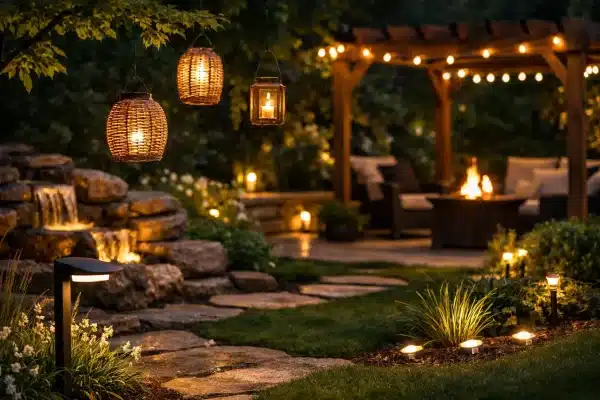
A garden can look beautifully finished by day and still disappear completely after sunset. That is usually the difference between a space with furniture and planting, and one with a proper lighting scheme. The best garden lighting ideas do more than help you see where you are going – they shape atmosphere, add depth and make the whole garden feel considered.
If you are planning an outdoor update, the most successful approach is rarely to flood everything with brightness. A better result comes from layering light in the same way you would indoors. Think of your garden in zones: where you walk, where you sit, what you want to show off, and what needs to feel softer in the background.
What makes the best garden lighting ideas work
Good outdoor lighting balances mood with function. You need enough light for safety around paths, steps and doors, but too much can flatten the space and spoil the relaxed feel people usually want outdoors. The most stylish schemes create contrast. A softly lit seating area, a gentle wash on a wall, and a few carefully chosen feature lights will usually feel more expensive than one bright fitting doing all the work.
It also helps to think seasonally. In spring and summer, lighting extends evenings outdoors. In autumn and winter, it keeps the garden visible from inside, which matters just as much. A well-lit tree, fence line or patio edge can make the view from the kitchen or living room feel warmer and more polished, even when the weather is doing its worst.
Best garden lighting ideas for structure and ambience
Light the patio like an outdoor room
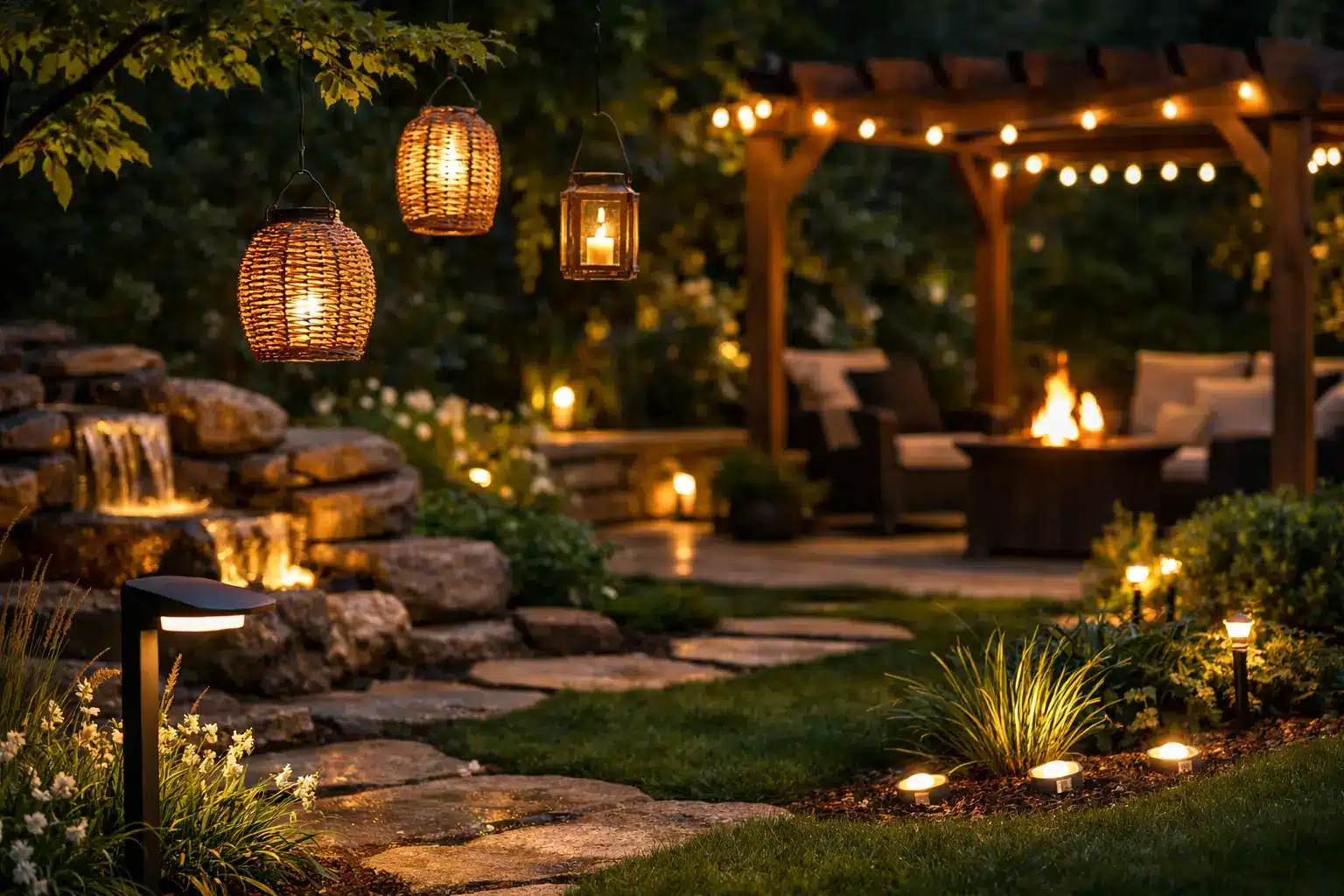
If your patio is where people gather, start there. Wall lights, low-glare pendants in covered areas, or discreet spotlights can make the space feel like a continuation of the home rather than an afterthought outside the back door. The key is comfortable light. You want enough brightness to chat, eat and relax, but not the harsh effect of security lighting.
Warm white tones usually work best for this. They flatter timber, stone and planting, and they make outdoor dining feel inviting instead of clinical. If your patio includes a pergola or covered structure, subtle integrated lighting can look especially clean and modern.
Use path lights to guide, not overpower
Path lighting is one of the most practical choices, but it can quickly look overdone if every metre is lined with identical bright spikes. A more refined look comes from spacing fittings thoughtfully and letting the light mark the route rather than dominate it.
This is especially useful in family gardens where safe movement matters. Near gravel, level changes or stepping stones, low-level fittings make a real difference. If your garden is compact, choose slimmer, understated designs so the fittings do not visually clutter the space during daylight hours.
Add uplighting to trees and architectural planting
Few things transform a garden faster than lighting a well-shaped tree or mature shrub from below. It adds height, drama and a sense of finish, particularly in gardens that feel flat after dark. Olive trees, acers, palms and sculptural evergreens all respond brilliantly to uplighting.
This is where restraint matters. One or two strong focal points often create more impact than trying to light every border. If the beam is too wide or too bright, the effect can feel theatrical in the wrong way. The aim is to reveal shape and texture, not to turn the garden into a stage set.
Highlight walls, fences and garden boundaries
Boundary lighting helps a garden feel deeper. When the eye can read the edges of the space after dark, the whole layout appears larger and better defined. Wash lights on a rendered wall, subtle fittings along fencing, or gentle illumination behind slatted screens can all add that extra layer.
This works particularly well in newer gardens where planting is still establishing. If borders are not yet full, lighting the hard landscaping keeps the scheme visually strong. It also gives a smart, contemporary finish that suits modern extensions and open-plan kitchen views.
Best garden lighting ideas for features worth showing off
Make steps and level changes safer
Garden steps should never disappear at night. Recessed step lights or low-mounted wall lights improve safety while adding a polished architectural detail. This is one of those upgrades that feels subtle but changes the whole experience of moving through the space.
If you have raised decking, terraced paving or a split-level garden, this type of lighting is worth prioritising early. It is both practical and design-led, which is usually the sweet spot in outdoor schemes.
Create a focal point around water or sculpture
A small water feature, statement pot or garden sculpture can become much more striking once lit properly. Instead of filling the entire garden with equal levels of light, choose one standout moment and let it draw the eye.
Reflections can be especially effective here. Light bouncing off water or glazed surfaces adds movement and atmosphere without needing many fittings. The trade-off is maintenance – outdoor feature areas need durable fittings and careful placement to keep the effect looking clean rather than messy.
Bring planting beds to life with subtle layering
Borders often get ignored in favour of patios and pathways, but they can do a lot of visual work after dark. The trick is to avoid blasting flower beds with broad, flat light. Layered accents are far more attractive. A small spike aimed through ornamental grasses, a soft beam catching leaf texture, or a low fitting set behind planting can create depth and movement.
This approach suits gardens with mixed materials and contemporary landscaping, where texture is part of the design. It is also ideal if you want the garden to feel styled from inside the house, not just functional when you step outdoors.
Choosing the right fittings for your space
Match the lighting style to the garden style
A sleek contemporary garden and a cottage-style garden need very different fittings. Minimal black or anthracite finishes work well in clean-lined spaces with porcelain paving and modern fencing. Lantern-style wall lights, softer finishes and more decorative details tend to suit traditional exteriors.
Consistency matters. Outdoor lighting should feel connected to the architecture of the house and the interior style beyond the doors. If your kitchen, dining space and patio all sit in view of one another, a mismatch will be obvious.
Think about glare before brightness
One of the biggest mistakes in garden lighting is choosing fittings that expose the light source too directly. Glare is what makes a scheme uncomfortable. You notice it when you sit down, look across the garden and feel as though the fittings are shining straight at you.
Shielded fittings, recessed details and indirect light usually feel more premium. Brightness still matters, especially near entrances and walkways, but it should be controlled. A softer, better-directed light often gives a stronger overall result.
Consider smart control and zoning
Outdoor lighting is far more useful when it can be controlled by zone. You may want path lights and front access on one setting, patio ambience on another, and feature lighting on a separate scene. That flexibility helps you use the garden more often and avoid wasting energy.
Smart lighting can make this easier, especially for households that want convenience and flexibility. It also allows you to shift the mood depending on whether you are entertaining, dining outdoors or simply enjoying the view from inside.
A few practical decisions that change the result
Installation matters just as much as product choice. Poorly positioned fittings can ruin even the best design, while a simple, well-planned scheme can look exceptional. If you are working on a larger garden project, it is worth considering lighting early, before paving, walls or built-in features are finalised. That gives you more options for a cleaner finish.
Weather resistance, material quality and lamp colour temperature are all worth checking before you buy. In coastal or exposed locations, durable finishes are especially important. Across Ireland and Northern Ireland, where wind and rain are rarely far away, outdoor fittings need to be chosen with the conditions in mind, not just the look on the box.
For more design-led spaces, bespoke elements can make a big difference too. LED strip integrated into seating, steps or outdoor kitchens can create a sharper architectural effect than standard fittings alone. Used well, it adds polish rather than gimmick.
When less light gives you more impact
The best garden lighting ideas are usually the ones with a bit of restraint. Not every corner needs to be lit. Darkness has a role to play because it gives the lit areas contrast, shape and calm. That balance is what makes a garden feel elegant after dark rather than overworked.
If you are updating your outdoor space, start with the areas that need to work hardest: seating, access and one or two features worth highlighting. Build from there, and let the scheme grow with the garden. A beautifully lit garden is not just easier to use – it changes the way the whole home feels once evening arrives.