Bad bathroom lighting shows up fastest at the mirror. If shaving feels awkward, make-up never looks quite right, or the room seems flatter than it should, the issue is often not the ceiling fitting but the mirror itself. A well-chosen bathroom mirror with lights changes how the whole space works, giving you better visibility where you need it most while adding a cleaner, more considered finish.
This is one of those pieces that earns its place every day. It is practical first, but it also has a strong visual role. In smaller bathrooms, it can make the room feel broader and brighter. In larger schemes, it helps tie together brassware, wall finishes and lighting tones so the space feels designed rather than merely fitted out.
Why a bathroom mirror with lights makes such a difference
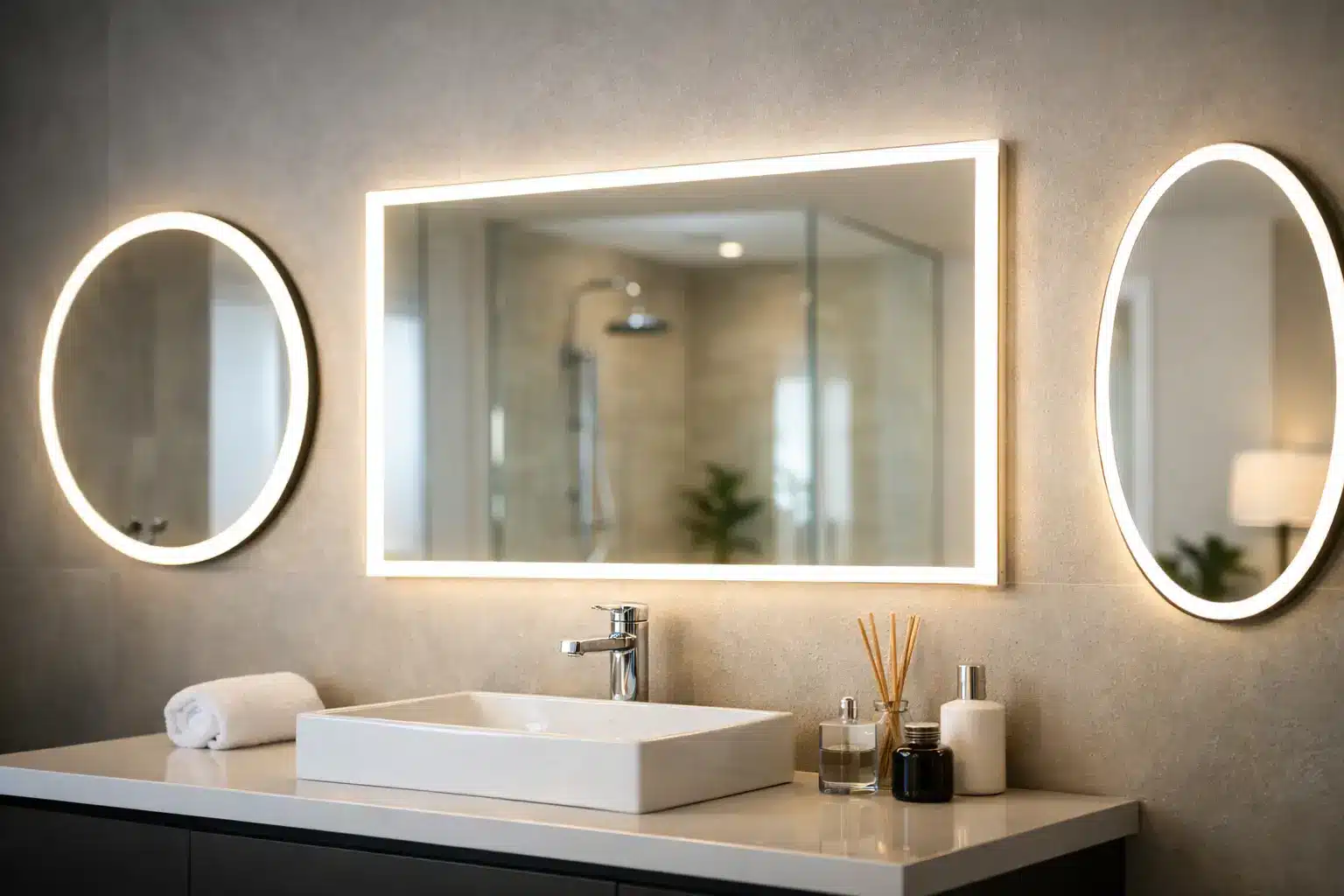
Lighting at mirror level is far more flattering and useful than relying on a single central ceiling light. Overhead lighting tends to cast shadows under the eyes, nose and chin, which is exactly what you do not want when getting ready. Integrated mirror lighting brings illumination closer to the face and spreads it more evenly.
That matters for everyday routines, but it also changes the atmosphere of the room. A bathroom can be purely functional, or it can feel calm, polished and finished. Illuminated mirrors sit comfortably between those two goals. They help the room perform better, yet they also bring a crisp, contemporary look that suits everything from compact en-suites to statement family bathrooms.
There is also a space-saving advantage. In many layouts, an illuminated mirror reduces the need for separate wall lights around the basin area. That can simplify the look and free up wall space, which is especially useful where proportions are tight.
Start with size and placement
The first decision is not the finish or the extra features. It is scale. A mirror that is too small can look mean against the vanity, while one that is too large can dominate the wall and throw off the balance of the room.
As a general guide, the mirror should usually sit comfortably within the width of the vanity or be only slightly narrower. If you have a double basin, a wider mirror can unify the whole run and make the room feel more generous. In a cloakroom or smaller en-suite, a compact illuminated mirror keeps things neat without losing impact.
Height matters too. You want the lighting to work for the people actually using the space, not just to fill a blank wall. Think about eye level, headroom and whether the mirror needs to serve one person or a busy family with different heights. If the room has a feature wall tile or painted finish, placement becomes part of the design story as well.
What kind of light do you want?
Not all illuminated mirrors create the same effect. Some provide a soft glow around the edge, while others offer more direct frontal light. Neither is automatically better. It depends on what the bathroom needs.
If the aim is a relaxed, hotel-style atmosphere, a softer diffused glow often feels more elegant. It adds ambience and gives the room a gentle lift, particularly in the evening. If you want sharper task lighting for grooming, skincare or make-up, stronger and more direct illumination will be more useful.
This is where colour temperature comes in. Cooler light can feel crisp and bright, which some people prefer for precision tasks. Warmer light is more flattering and calming, but if it is too warm it may not give the clearest view for detail work. Many homeowners find that a neutral white strikes the best balance in a bathroom. If an illuminated mirror offers adjustable light temperature, that gives you more flexibility and is worth considering if the bathroom serves different users and routines.
The shape sets the mood
A mirror is not just a mirror once lighting is integrated into it. Shape has a real influence on the character of the room.
Round mirrors soften hard lines and work beautifully in bathrooms that need a more relaxed, styled feel. They pair particularly well with statement basins, timber textures and softer decorative finishes. Rectangular mirrors feel cleaner and more architectural, which suits modern bathrooms with straight edges, fitted furniture and a sharper overall scheme.
Arched mirrors sit somewhere in between. They bring a little more personality than a plain rectangle but still feel structured. If you want the bathroom to feel current without looking too trend-led, this can be a strong choice.
The best shape is usually the one that echoes other elements in the room. Curved mirror, curved basin, softer hardware – that combination feels intentional. Equally, if the room already has plenty of rounded details, a more linear mirror can add needed contrast.
Features worth paying for and features that depend
This is where the decision becomes more personal. Some illuminated mirrors are beautifully simple. Others include demisters, touch sensors, dimming, colour temperature control, shaver sockets and even Bluetooth speakers. The right answer depends on how you use the space.
A demister is one of the most genuinely useful upgrades, especially in busy bathrooms where showers happen back-to-back. It saves the usual wipe-down and keeps the mirror clear when the room is steamy. Touch-sensor operation also adds convenience and keeps the look streamlined.
Dimming is valuable if you want the bathroom to shift from bright morning function to softer evening mood. That said, if you already have layered bathroom lighting and a good switching setup, it may be less essential. Built-in extras can be attractive, but they should support the room rather than distract from it. If you will never use Bluetooth speakers in the bathroom, there is little point paying for them.
Matching the mirror to the rest of the bathroom
A bathroom mirror with lights should not feel like an isolated purchase. It works best when it relates to the wider scheme.
Start with finish and styling. If your brassware is matt black, brushed brass or chrome, think about how the mirror frame or detailing will sit alongside it. Frameless illuminated mirrors create a cleaner, lighter look and suit contemporary spaces well. Framed designs can add definition and help the mirror feel more substantial, especially in larger bathrooms.
Then think about materials and tone. A high-gloss vanity and polished porcelain tiles may call for something crisp and minimal. A bathroom with fluted timber, stone-effect surfaces or warmer neutral tiles may suit a softer shape or a more decorative profile.
This is often where good bathroom design is won or lost. The fittings do not need to match perfectly, but they do need to make sense together. When they do, the room feels calmer, more expensive and easier to enjoy.
Practical points that matter more than people expect
The most stylish mirror still has to cope with bathroom conditions. Moisture resistance and suitability for the intended zone are not glamorous talking points, but they matter. Bathrooms are demanding spaces, and fittings need to be chosen accordingly.
Installation is worth thinking through early as well. An illuminated mirror may need a more considered electrical position than a standard mirror, especially if you are renovating from scratch. It is much easier to plan this before tiling and finishing rather than treating it as a final accessory.
Maintenance tends to be straightforward, but the cleaner the design, the easier it is to keep looking good. Busy edges, awkward joins and overly fussy detailing can collect marks and dust. In a room used every day, simplicity often ages better.
Is one illuminated mirror enough?
Sometimes yes, sometimes not. In a compact bathroom, a mirror with integrated lighting may do enough of the heavy lifting to support the whole basin area. In a larger room, it often works best as part of a layered lighting plan, with ceiling lighting, shower lighting or subtle ambient accents completing the picture.
That is an important distinction. An illuminated mirror is excellent task lighting, but it is not always the only lighting a bathroom needs. If the rest of the room is left dim, the scheme can feel unbalanced. The strongest results come when the mirror is treated as one part of a wider approach to light, comfort and atmosphere.
For homeowners planning a broader update, this is where a specialist lighting retailer can make a real difference. A mirror may seem like a simple category purchase, but when it is matched properly to the room, it helps the whole bathroom feel more resolved.
Choosing with confidence
The best bathroom mirror with lights is not necessarily the one with the longest feature list or the boldest shape. It is the one that suits your daily routine, complements the room and gives you the kind of light you actually want to live with.
If you lean towards sleek contemporary interiors, a frameless rectangular design with crisp integrated light may be exactly right. If your bathroom needs softness and a little more decorative presence, a round or arched option can completely change the feel of the space. And if practicality leads your decision, features like a demister and dimming will quickly prove their value.
A good mirror should make mornings easier, evenings calmer and the room itself more refined. Choose one that does all three, and your bathroom starts to feel less like a necessity and more like a space worth investing in.