A low ceiling can make a bedroom feel slightly boxed in before you have even chosen the bedframe. That is exactly why the right bedroom lighting ideas low ceiling spaces need are less about squeezing in a feature fitting and more about shaping the room with intention. Get it right, and the ceiling feels higher, the layout feels calmer, and the whole space looks more considered.
What works best in a low-ceiling bedroom
The first rule is simple. Avoid fittings that drop too far into the room unless the scale is very controlled and the placement is exact. In most bedrooms with lower ceilings, flush and semi-flush lights do the heavy lifting because they give you overhead illumination without eating into visual space.
That does not mean the room has to look plain. A close-to-ceiling fitting in smoked glass, opal glass, soft brass or matte black can still feel decorative and design-led. The difference is proportion. In a standard-height bedroom, a dramatic pendant can become the focal point. In a lower room, a fitting that hugs the ceiling often looks more expensive because it feels right for the architecture rather than forced into it.
Bedroom lighting ideas low ceiling rooms can carry beautifully
1. Choose a flush ceiling light with presence
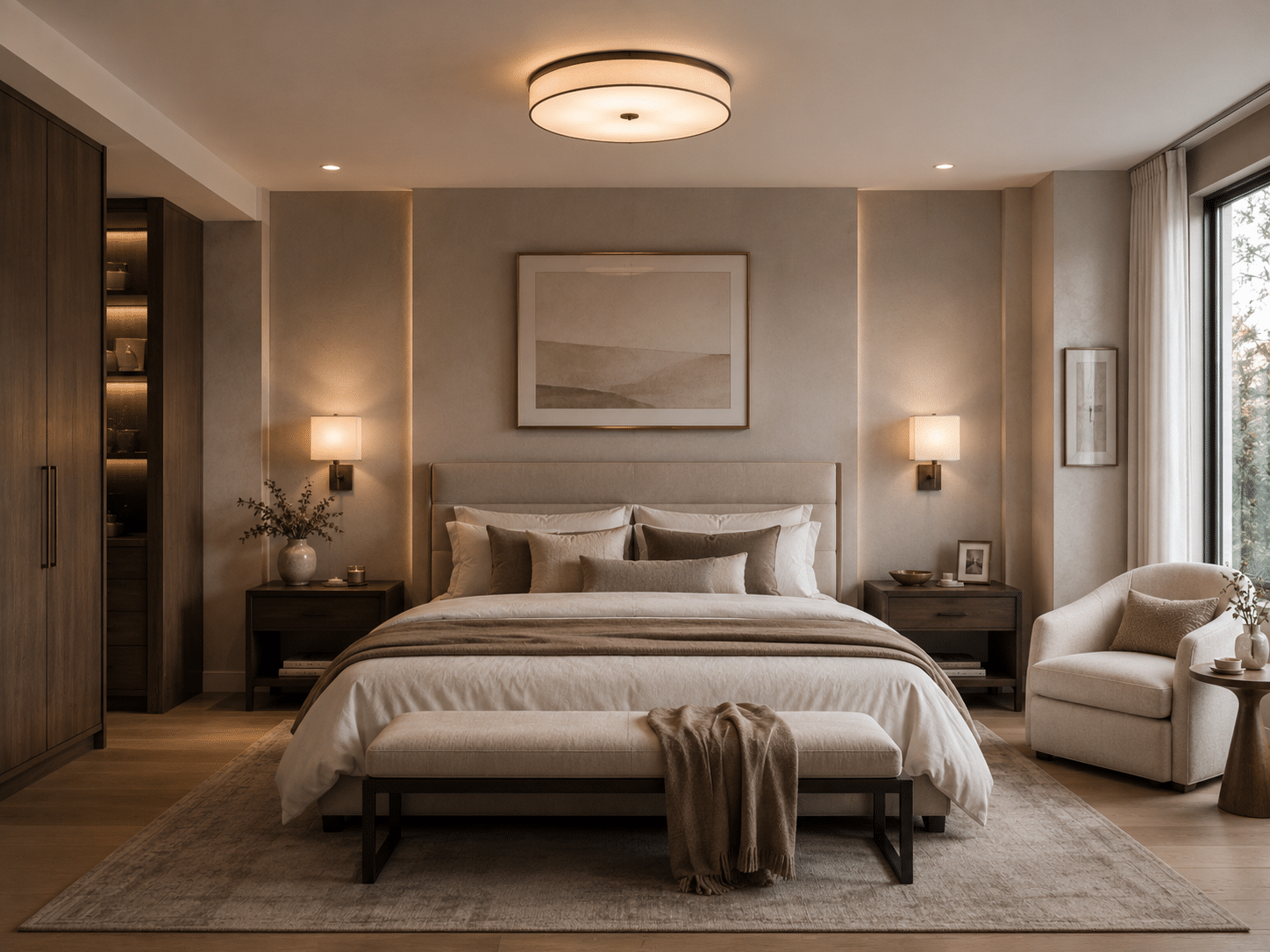
If you only have room for one main fitting, make it count. A flush mount with texture, layered glass or a refined metal finish adds style without the drop of a pendant. This is often the most reliable answer for smaller bedrooms, box rooms and modern new-build spaces where every centimetre matters.
Round designs tend to soften the room and work especially well above a centrally placed bed. More angular fittings can feel sharper and more architectural, which suits cleaner, contemporary schemes. The key is to avoid anything oversized just for drama. In a low ceiling bedroom, restraint usually looks more polished.
2. Use semi-flush fittings when you want a softer statement
A semi-flush light gives a little breathing room between the ceiling and the fitting, so it can feel lighter and more elegant than a completely flush design. This can work well if your ceiling is low but not extremely low, particularly in a main bedroom where you want a bit more decorative character.
It depends on the shape. A shallow cluster or compact glass design can add depth without creating a head-height problem. A long drop with exposed arms is usually less forgiving. If the room is modest in size, choose a semi-flush piece that spreads horizontally rather than vertically.
3. Layer with wall lights instead of relying on the ceiling alone
One central light rarely makes a bedroom feel finished. In low-ceiling rooms, wall lights are often the element that changes everything. They free up visual space overhead and bring light down to the level where you actually use the room – reading, dressing, winding down.
Positioned either side of the bed, wall lights frame the headboard and make the room feel styled rather than simply lit. They are also practical if bedside tables are small. Swing-arm lights add flexibility, while fixed sconces with soft diffusers create a more hotel-inspired look.
If rewiring is not part of the plan, plug-in wall lights can still give you that layered effect. The finish matters here. Matching wall lights to your ceiling fitting or hardware helps the whole scheme feel intentional.
4. Add bedside lamps for warmth and balance
Table lamps might seem obvious, but they are often the difference between a bedroom that looks flat and one that feels inviting. In a room with a low ceiling, lamps are particularly useful because they draw the eye across the space instead of straight up to the ceiling line.
Choose shades that soften the glow rather than leaving the bulb too exposed. Fabric shades in ivory, taupe or muted tones give a gentler evening atmosphere. Glass or ceramic lamp bases can also add interest without cluttering the room. If your bedside tables are narrow, a slim-profile lamp or mini lamp keeps the look clean.
5. Fit LED strip lighting for a cleaner, more architectural finish
For a more contemporary take on bedroom lighting ideas for low ceiling rooms, LED strip can work brilliantly. It adds atmosphere without needing a visible fitting to dominate the space. Used behind a headboard, under floating bedside units, inside shelving or above wardrobes, it gives the bedroom depth and a tailored finish.
This is where lighting starts to feel designed rather than just installed. Warm white LED strip creates a soft, restful glow, while dimmable options let you shift from practical brightness to evening mood. It is especially effective in bedrooms with fitted joinery, where hidden light can make the room feel larger and more refined.
6. Draw the eye upward with vertical light
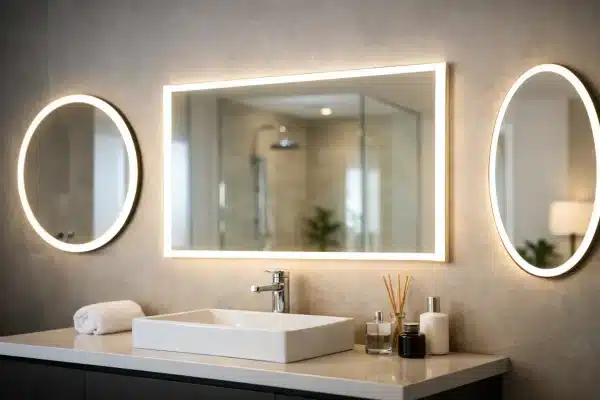
When a ceiling is low, the instinct is often to keep everything compact. That is partly right, but you also want to give the room some vertical movement. Wall lights that throw light up and down can visually stretch the space. So can a tall bedside lamp with a slim silhouette or a lit mirror that brightens the wall rather than the ceiling.
This is less about creating brightness for brightness’s sake and more about changing perception. A room feels taller when light reaches different levels and surfaces instead of sitting in one pool overhead.
Don’t let the bulb choice undo the design
A beautiful fitting can still disappoint if the bulb is too cool, too harsh or simply too bright for a bedroom. In low-ceiling spaces, this matters even more because the light source feels closer to you.
Warm white is usually the best choice for bedrooms. It flatters materials, softens shadows and supports a calmer mood in the evening. If the main ceiling light is your only strong source of illumination, a dimmable bulb or dimmable fitting is worth considering. You get the practical light you need when getting dressed, but you can dial it down when the room is meant to feel restful.
Frosted bulbs are often a better option than clear ones in lower rooms, especially when the bulb is visible from the bed. They reduce glare and help the light feel more even.
Bedroom lighting ideas low ceiling layouts should avoid
Some styles look impressive on a showroom floor but struggle in a lower bedroom. Deep pendant shades can interrupt sightlines. Multi-arm chandeliers can make the ceiling feel heavier. Bare exposed bulbs may create glare if the fitting sits close to eye level when you are lying down.
That does not mean decorative lighting is off the table. It simply needs editing. A compact glass cluster may still work where a sprawling chandelier will not. A sculptural flush fitting can bring the same design confidence with far better proportions.
Scale is the usual issue. If the fitting feels too large for the room, the ceiling will seem lower. If it is too small, the room can feel underlit and unfinished. Balance always wins.
Match the lighting to the bedroom’s role
Not every bedroom needs the same approach. A principal bedroom can usually take a more layered scheme with a central fitting, wall lights and bedside lamps working together. A guest room may only need a well-chosen flush light and simple bedside lighting to feel complete.
Children’s bedrooms often benefit from softer, practical fittings that sit close to the ceiling and leave plenty of clear space. In loft conversions or rooms with awkward angles, directional wall lights and LED strip can be more useful than trying to centre everything around one ceiling point.
If the bedroom also doubles as a dressing area or part-time workspace, think about task lighting early. A low ceiling does not stop the room being versatile, but it does mean each light needs to earn its place.
Think beyond the fitting and consider the finish of the room
Lighting never works in isolation. In low-ceiling bedrooms, finishes around the room have a big effect on how the light reads. Pale walls and ceilings bounce light more easily and help the room feel open. Matt finishes can look sophisticated, but they absorb more light than slightly reflective surfaces.
Mirrors are useful too, especially when they catch light from a wall fitting or bedside lamp rather than reflecting the main ceiling light directly. Glass, soft metallics and lighter textiles all help build a brighter, airier feel without making the room look cold.
This is often where a professionally considered scheme stands apart. The best result is not just a nice fitting in the centre of the room. It is a lighting plan that works with furniture, finishes and the way the bedroom is actually used.
The best low-ceiling bedroom lighting feels effortless
The strongest schemes rarely shout. They make the room feel calm, flattering and easy to live with. A flush or semi-flush ceiling light gives you the practical base, wall lights and lamps bring comfort, and discreet LED details add a more elevated finish.
If your bedroom ceiling is low, you do not need to compromise on style. You simply need lighting that understands proportion. Once that balance is right, the room starts to feel taller, softer and far more luxurious than its ceiling height would suggest.
A low ceiling sets the brief, but it does not limit the result – and that is where good lighting becomes one of the smartest upgrades in the room.