A kitchen island can look expensive, beautifully finished and perfectly styled, then fall flat the moment the lighting goes wrong. Pendants sit right at eye level, so the best kitchen island pendant lights do more than brighten a worktop – they shape the whole feel of the room, from relaxed family breakfasts to polished evening entertaining.
Choosing well means balancing design with performance. The fitting has to look right from every angle, give enough useful light, and sit at the correct height so it feels intentional rather than awkward. That is why pendant lighting over an island tends to make or break a kitchen scheme faster than almost any other decorative detail.
What makes the best kitchen island pendant lights?
The short answer is proportion, purpose and finish. A pendant may be beautiful on its own, but if it is too small for the island, too low over the surface or too decorative to cast practical light, it will not earn its place.
In most kitchens, island pendants need to do two jobs at once. They should create atmosphere, because the island is often the social heart of the room, but they also need to support everyday tasks such as prep, serving and casual dining. That tension matters. A heavily tinted glass pendant can look striking, for example, but it may not deliver enough practical illumination if it is the only light source over the island.
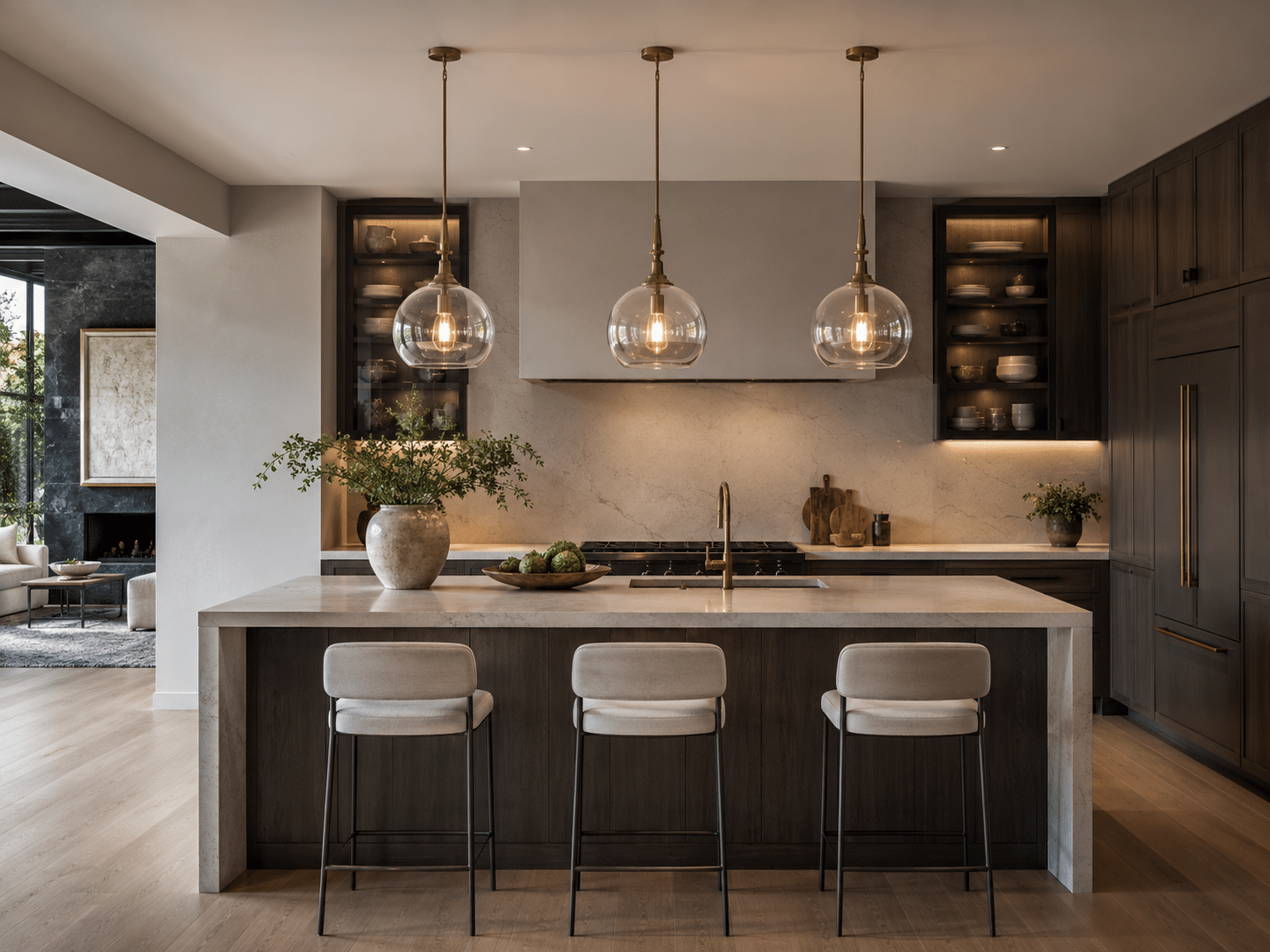
The best choices usually have a clear sense of scale and a finish that complements the wider scheme. Matt black adds definition in contemporary kitchens. Brushed brass brings warmth and softness, especially against shaker cabinetry, timber stools or stone worktops. Smoked glass can feel dramatic and refined, but it works best where there is already good layered lighting elsewhere in the room.
How to choose the right pendant style for your island
The style that works best depends on the shape of your kitchen, the size of your island and how formal or relaxed you want the space to feel.
Glass pendants for a lighter look
Glass pendants are a strong option when you want statement lighting without visual heaviness. Clear glass keeps the room feeling open and is especially useful in kitchens where sightlines matter, such as open-plan layouts. Ribbed or fluted glass adds texture and interest without overpowering the scheme.
This style suits smaller kitchens surprisingly well because it does not block the room visually. The trade-off is that clear glass exposes the lamp, so bulb choice becomes part of the final look. A poor bulb can cheapen the effect quickly.
Metal pendants for stronger definition
Metal shades bring more structure and tend to direct light more effectively onto the island surface. They are ideal if your island is a true working zone and you want focused task lighting with a cleaner, more architectural presence.
Powder-coated black, warm white and brushed metallic finishes all work well, but the right one depends on what else is happening in the room. If your kitchen already has bold handles, taps and appliances, a simpler pendant can stop the space feeling too busy.
Linear pendants for larger islands
A linear pendant can be the smartest choice over a long island, particularly in modern kitchens. Rather than hanging two or three separate fittings, one elongated design gives a more streamlined appearance and can feel calmer visually.
It is not always the better option, though. If your island is modest in size, a linear fitting can dominate too easily. Separate pendants often offer more flexibility and a softer decorative rhythm.
Best kitchen island pendant lights for different island sizes
Scale is where many kitchen lighting decisions go wrong. People often choose fittings in isolation, then realise too late that they vanish above a large island or crowd a smaller one.
For compact islands, two small-to-medium pendants usually feel better than oversized statement pieces. You get balance without clutter, and the lighting feels considered rather than forced. In a medium-sized kitchen, three pendants often create the sweet spot – enough presence to anchor the island, but not so many that the ceiling line feels fussy.
Large islands can handle bigger fittings, but size should still be controlled. Oversized pendants can look impressive in a showroom, yet in a family kitchen they may block views across the room or feel intrusive when seated. Sometimes the best answer is not larger fittings, but slightly wider spacing and stronger light output.
As a rough design guide, pendants should sit comfortably within the width of the island rather than stretching edge to edge. Leave breathing room at both ends so the composition feels centred and polished.
Getting the height and spacing right
Even the best pendant will look wrong if it is hung badly. Over an island, the usual sweet spot is low enough to feel connected to the furniture below, but high enough to protect sightlines and avoid glare.
In most homes, pendants work well when the bottom of the fitting sits roughly 75 to 90 centimetres above the island surface. A little variation is normal depending on ceiling height and the size of the fitting. Taller ceilings may need the pendant lowered slightly to avoid it looking lost, while large shades sometimes need to sit a touch higher to keep the view open.
Spacing matters just as much. If using multiple pendants, keep the gaps visually even and make sure they relate to the island rather than the entire room. Too close together and they read as clutter. Too far apart and the arrangement loses impact.
This is one of those areas where there is no perfect universal formula. A trio of slim glass pendants needs a different approach from two broad metal shades. Looking at the overall silhouette is often more useful than obsessing over exact measurements alone.
Light output, ambience and bulb choice
A pendant can be decorative and still work hard, but it helps to think beyond the fitting itself. Light output depends on the shade material, bulb type and what other layers of lighting are present in the kitchen.
If the island is your main prep space, pendants should contribute meaningful brightness. Clear or open-bottomed shades generally perform better here than opaque or deeply tinted options. If the pendants are mainly there for atmosphere and style, you can lean more into decorative materials, as long as downlights, under-cabinet lighting or wall lights support the practical side of the room.
Warm white light usually flatters kitchens best. It keeps the space welcoming and works well with natural materials, painted cabinetry and stone finishes. Cooler light can make a kitchen feel harsh, particularly in the evening.
Dimming is worth serious thought. It gives you the flexibility to brighten the island for cooking, then soften the room when the day shifts into dining, hosting or a quieter evening at home. That adaptability is often what turns a kitchen from purely functional into genuinely inviting.
Matching finishes to your kitchen style
Pendant lighting should not feel like an afterthought. The best results come when the finish connects with details already in the room, such as cabinet handles, taps, bar stools or appliances.
Brass and warm metallics suit kitchens that need softness and depth. They pair beautifully with greige cabinetry, walnut tones and marble-effect surfaces. Black finishes add contrast and are especially effective in paler kitchens where you want the island lighting to define the space.
Glass remains one of the most versatile choices because it can work across contemporary, classic and transitional interiors. It also layers well with other finishes, which makes it useful if your kitchen already mixes metals.
If you are unsure, restraint usually ages better than novelty. A pendant should still look right when trends move on and the rest of the room evolves around it.
When statement lighting works – and when it does not
Statement pendants can transform a kitchen island, but only when the surrounding space is calm enough to support them. In a minimal kitchen, sculptural lighting can provide exactly the right focal point. In a busier room with patterned splashbacks, bold veining and mixed finishes, the same fitting may push the scheme too far.
This is where a more edited approach often wins. A simple silhouette in a beautiful material can feel more luxurious than something oversized or overly decorative. Good lighting does not always need to shout.
For larger renovations or open-plan spaces, it can help to view island pendants as part of a wider lighting composition rather than a one-off purchase. That is often the difference between a kitchen that simply has lights and one that feels properly designed. For homeowners in Ireland planning a full room update, specialist advice can save a lot of second-guessing, particularly when layout, ceiling height and layered lighting all need to work together.
The right pendant does not just finish an island. It sharpens the proportions, warms the atmosphere and gives the room a stronger sense of purpose. Choose with both the eye and the everyday in mind, and your kitchen will feel better every time you switch the lights on.