A beautifully planned room can still feel unfinished when the lighting is controlled by a row of ageing plastic switches. Smart switches change that small but meaningful detail. They give you more control over how light supports daily life, while offering finishes and functions that sit comfortably within a considered interior scheme.
For homeowners, renovators and hospitality spaces alike, the appeal is not simply switching lights on from a phone. It is being able to create the right atmosphere at the right moment: bright task lighting for the morning rush, softer light for an evening meal, or a welcoming glow before you arrive home.
What smart switches actually do
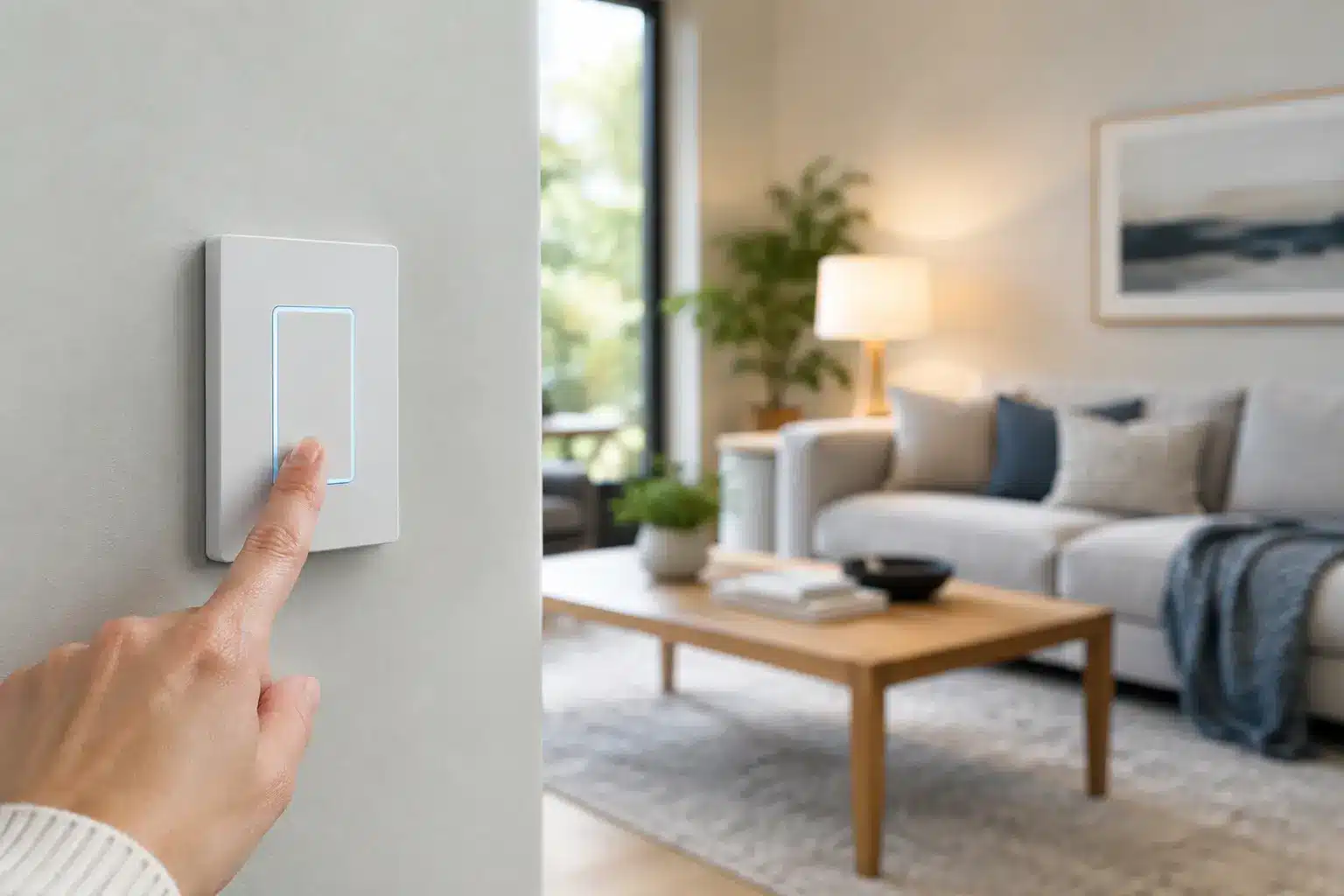
A smart switch replaces, or works alongside, a conventional wall switch and connects your lighting controls to a compatible smart-home system. Depending on the model and setup, you may be able to operate lights by touch, app, voice control, timer or programmed scene.
The difference is especially noticeable in rooms where one light level rarely suits every occasion. A kitchen, for example, may need clear illumination over worktops during the day, then a gentler setting around an island or dining table later on. Rather than walking around the room operating several fittings, a single scene can adjust them together.
Unlike a smart bulb, which adds intelligence at the lamp holder, a smart switch controls the lighting circuit itself. This can make it a cleaner choice where you want to retain decorative pendants, wall lights or quality LED fittings without relying on visible smart bulbs. It also means visitors can still use a familiar wall control, even if they have no access to your app.
That said, the best option depends on the room and your existing wiring. Smart bulbs are often quicker for a single lamp or occasional feature light. Smart switches tend to make more sense for permanent room lighting, multi-light schemes and homes where a polished wall finish matters.
Where smart switches make the biggest difference
The strongest schemes are planned around how a space is used, not around technology for its own sake. Start with the moments you want a room to support.
Kitchens and open-plan living spaces
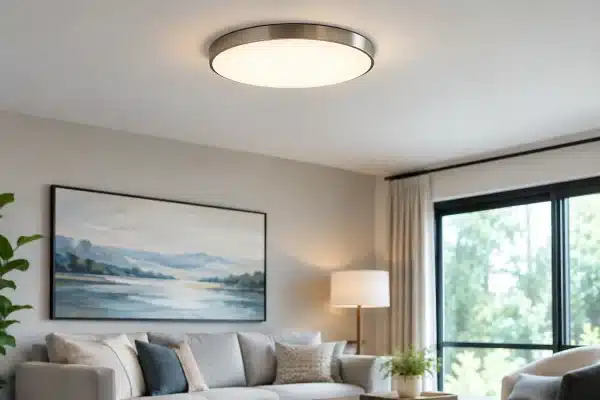
Open-plan rooms benefit enormously from separate lighting zones. Ceiling spots, pendants, under-cabinet lighting and shelving illumination all have different jobs. With compatible smart dimmer switches, you can group these into useful scenes such as cooking, dining, entertaining and late evening.
This preserves the flexibility that makes layered lighting so effective. Instead of flooding the whole space with one bright setting, you can put light exactly where it earns its place. A well-lit worktop and a softly lit dining area feel more relaxed, more intentional and more luxurious.
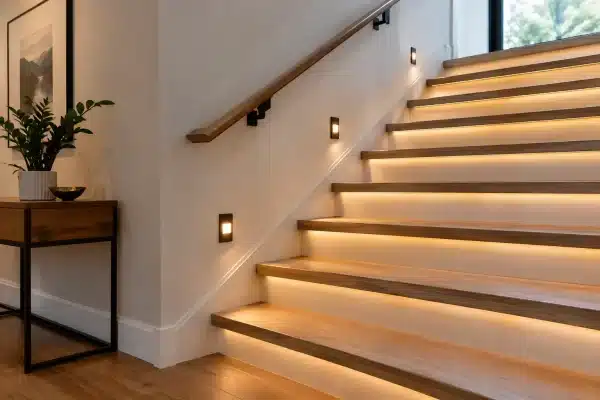
Hallways, landings and stairs
These are practical spaces, but they set the tone the moment someone enters your home. Timed schedules can turn hallway lights on at dusk, while motion-compatible systems can make late-night trips upstairs safer without the harshness of full brightness.
For stair lights and subtle low-level LED lighting, consider a setting that comes on at a reduced level after bedtime. It gives the home a calm, hotel-inspired feel while avoiding unnecessary glare.
Bedrooms
Bedroom lighting should work harder than one central pendant. Smart switches can help coordinate bedside lamps, wall lights and ceiling fittings so the room changes pace with you. A wake-up scene may gradually bring lights up in the morning; an evening scene can lower brightness and leave only the most restful layers on.
Think carefully about switch placement here. A control beside the bed is often more useful than the most sophisticated app feature. Technology should remove friction, not create another task when you are ready to switch off.
Gardens and entrances
Outdoor lighting is one of the most satisfying places to add automation. Schedule porch lights for darker evenings, set garden lighting for a gathering, or use an away mode to make a property feel occupied while you are travelling.
Outdoor fittings and controls must be selected for their environment. Pay close attention to the required IP rating, cable routing and whether the switch itself is located indoors or in a protected external position. A good effect starts with a safe, suitable installation.
Choosing smart switches for your lighting scheme
Smart home products do not all communicate in the same way. Before choosing a switch, check what platform you already use, if any, and whether the switch is compatible with it. Some work directly over Wi-Fi, while others use protocols such as Zigbee, Z-Wave or Thread and may require a hub or border router.
Wi-Fi can be straightforward for smaller installations, but a house with many connected products may benefit from a dedicated smart-home network. The point is not to chase the most technical specification. It is to choose a system that will remain simple for everyone in the household to use.
Next, consider the control type. A standard on-off smart switch suits fittings that do not need dimming. A smart dimmer gives greater control over ambience, but the bulbs and drivers connected to it must be dimmable and compatible. This matters with LED lighting in particular. An incompatible dimmer can lead to flickering, buzzing, reduced dimming range or lights that fail to turn fully off.
If your room has two-way switching, such as a hall light controlled from both ends, confirm that the chosen product supports the required arrangement. The same applies to multi-gang plates, where several circuits share one wall position. Planning this early helps you avoid a mismatched collection of controls later.
Style deserves equal attention. Switches are seen and touched every day, often beside carefully chosen paint colours, tiles and handles. Matte black creates crisp contrast in contemporary spaces; brass or bronze brings warmth to richer schemes; clean white or subtle metallic finishes can disappear into a quieter palette. Choose faceplates that complement the rest of your sockets and hardware for a more cohesive result.
Wiring, safety and the details worth checking
Smart switch installation is not always a straight swap. Many models need a neutral wire at the switch location to power their smart functions. Older properties may not have one present in every back box, so this should be checked before you commit to a particular product.
Back-box depth is another detail that can catch out a renovation. Smart modules are often deeper than traditional switches, and tight boxes leave little room for connections. A professional electrician can assess the wiring, load, back-box space and circuit arrangement before installation.
For mains electrical work, use a qualified electrician who can ensure the installation complies with the relevant local regulations. This is particularly important in bathrooms, outdoors, period properties and commercial settings, where circuit protection and zoning requirements may affect the design.
It is also worth checking the minimum and maximum load specified by the manufacturer. A circuit of low-wattage LEDs can behave differently from a circuit with traditional lamps, and transformers, LED drivers or extractor fans may need specific consideration. The most attractive switch in the showroom is only the right choice when it works reliably with the fittings behind it.
Build scenes around real routines
The most useful smart lighting feels almost invisible because it follows the rhythm of the home. Keep your first scenes simple. You might set ‘Morning’ to bring the kitchen and hallway up to a practical level, ‘Evening’ to soften the living space, and ‘Away’ to turn off selected lighting while leaving a few scheduled lights active.
Avoid creating dozens of scenes just because you can. A small set of controls with clear names is far more likely to be used. If a guest cannot understand how to turn the lights on, the system is too complicated.
Voice control can be convenient when your hands are full, but physical controls remain essential. Good smart switches give you both: the convenience of automation and an immediate, intuitive way to adjust the room. For larger homes, hospitality interiors or projects with bespoke LED tape, a lighting plan can ensure every circuit, dimmer and scene is considered as one scheme rather than added in stages.
Is a smart switch worth it?
For a single rarely used light, perhaps not. For rooms where lighting shapes how you cook, relax, work or entertain, smart control can make a genuine difference. It brings flexibility without asking you to compromise on the decorative fittings that give a room its character.
Choose the technology quietly, choose the finish confidently, and let the lighting do what it should: make every part of your space feel ready for the way you live.