A beautiful pendant can transform a room, but it cannot rescue a space that is lit from one harsh point in the ceiling. Good lighting design considers how you actually live: where you cook, read, get ready, welcome guests and switch off at the end of the day. It gives a room atmosphere without asking it to sacrifice practicality.
The most successful schemes rarely rely on one statement fitting alone. They use different sources of light at different heights, creating a space that feels comfortable in the morning, useful during busy hours and more relaxed after dark. Whether you are renovating one room or planning an entire home, the aim is not simply to make everything brighter. It is to make every area feel right.
What lighting design should achieve
Lighting has three jobs. It needs to help you see clearly, support the task at hand and bring out the best in the room. These priorities change from space to space. A kitchen needs bright, even worktop illumination, while a bedroom benefits from softer layers that make winding down feel effortless.
There is also a visual side to consider. Light can draw attention to a textured wall, make a low ceiling feel less imposing or give a dining table a more intimate focus. In an open-plan space, it can quietly define separate areas without adding walls or clutter.
That is why planning fittings room by room, rather than buying them individually, produces a more considered result. A coherent scheme repeats finishes, shapes or colour temperatures where it makes sense, yet still gives each room its own character.
Start with layers, not a single ceiling light
The foundation of a well-lit room is layered light. This means combining ambient, task and accent lighting so that the room can adapt to different moments of the day.
Ambient lighting is the general level of illumination. Ceiling lights, chandeliers, flush fittings, recessed downlights and wall lights can all contribute. It should make moving around the room easy, but it does not need to be flat or excessively bright. A living room lit only by a grid of powerful downlights can feel more like a workplace than a place to relax.
Task lighting is more targeted. Think pendants over a kitchen island, under-cabinet LED strip along worktops, reading lamps beside a sofa or illuminated mirrors in the bathroom. This is the light that prevents shadows where you need clarity. It should be positioned for the person using it, not merely where there happens to be a cable point.
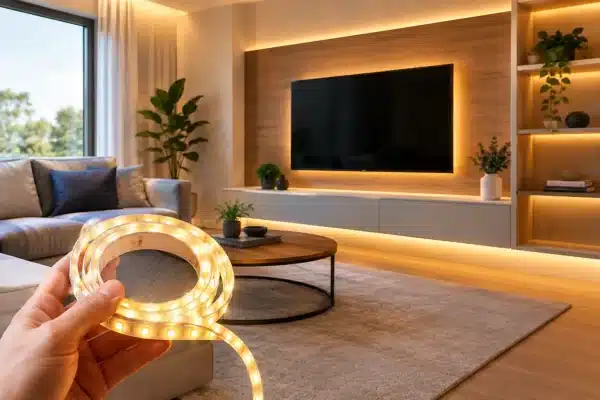
Accent lighting provides the finishing touch. A table lamp on a sideboard, LED tape beneath a floating shelf, a wall light beside artwork or a discreet uplighter around a plant brings depth after the main lights are switched off. It is often the layer that makes a room feel styled rather than simply furnished.
Plan lighting design around how the room is used
Before choosing a fitting, stand in the room and picture its everyday routines. In a kitchen, where do you prepare food? Where do people sit and chat? Is there a dark route between the kitchen and utility room? In a bedroom, do you need individual bedside controls, wardrobe lighting or a soft route to the bathroom during the night?
This approach avoids a common mistake: placing lights according to a furniture plan that may change, rather than according to the function of the space. Kitchen islands move, dining tables get replaced and a spare room may become a home office. Build in enough flexibility for the room to evolve.
Open-plan rooms deserve particular care. Rather than trying to flood the entire area with the same light, create zones. A pendant can anchor the dining table, while directional downlights support the kitchen and floor lamps soften the seating area. Each zone remains connected, but the room gains rhythm and purpose.
Kitchens need precision and atmosphere
Kitchens work hardest when they combine clean task lighting with a warmer social layer. Downlights can provide useful general illumination, but they should not be the only answer. Install lighting beneath wall units or shelves to remove shadows across worktops, then use pendants above an island or dining area to add personality.
Choose fittings with scale in mind. Small pendants can disappear above a large island, while oversized shades can obstruct sightlines in a compact kitchen. If you use multiple pendants, keep their spacing consistent and make sure they sit high enough for conversation across the island.
Living rooms benefit from softer pools of light
A living room should not depend on a central ceiling light once evening arrives. Use a mix of table lamps, floor lamps and wall lights to create gentle pools of light around seating, shelves and corners. This makes the room feel warmer and is kinder to the eye when watching television or relaxing.
A decorative ceiling fitting still has a place, especially where it adds presence above a coffee table or in the centre of the room. Pair it with dimmable secondary lighting so the look remains flexible rather than fixed at one brightness level.
Bedrooms should feel calm, not clinical
Bedside lamps or wall-mounted reading lights allow each person to control their own light without disturbing the other. A ceiling fitting can offer general illumination for dressing and tidying, while wardrobe lighting makes early mornings and darker evenings much easier.
Avoid very cool white bulbs in bedrooms. Their crisp appearance can feel stark when the rest of the room is designed for rest. Warm light is usually the more inviting choice, particularly in lamps and bedside fittings.
Bathrooms require the right fittings in the right zones
Bathrooms need bright, flattering light around the mirror alongside safe, appropriately rated fittings in areas exposed to moisture. An illuminated mirror can give reliable light for shaving, skincare and make-up, while ceiling lighting supports the rest of the room.
Do not treat bathroom lighting as an afterthought. The fitting’s IP rating matters, and the correct option depends on how close it is to a bath, shower or basin. Style is still possible, but safety must lead the specification.
Choose colour temperature with intention
The colour temperature of a bulb changes the entire character of a room. Warm white light, commonly around 2700K to 3000K, suits living rooms, bedrooms, dining rooms and decorative lamps. It has a softer, more welcoming glow that works well with timber, fabric and warm-toned finishes.
Cooler light can be useful where concentration and visibility matter, such as utility rooms, garages, workspaces and some kitchen task areas. However, going too cool in a home can make white paint, tiles and worktops feel unforgiving. If your home has an open layout, keep temperatures reasonably consistent between connected spaces to avoid a jarring shift from room to room.
Bulb quality matters too. Look for good colour rendering, especially near mirrors, in kitchens and around display areas. Better colour rendering helps skin tones, food, artwork and finishes appear more natural.
Give yourself control over the mood
Dimmers are one of the simplest ways to make a lighting scheme work harder. They let bright task lighting become a softer evening setting without changing the fitting itself. Just ensure the bulb, dimmer switch and driver are compatible, particularly with LEDs and integrated fittings.
Smart lighting adds further flexibility. It can be useful for garden paths, kitchen LED tape, bedside lights and routines that turn selected fittings on or off at set times. It is not essential in every room, though. A beautifully planned circuit with well-placed switches can be more valuable than adding technology for its own sake.
Think about controls early. Two-way switching at the top and bottom of stairs, bedside switches for the main bedroom light and separate controls for kitchen task lights all make daily life more comfortable. These decisions are easiest before plastering or decorating begins.
Use decorative fittings as a focal point
Statement lighting earns its place when it relates to the room’s proportions. Over a dining table, a pendant should feel generous enough to define the setting without blocking faces across it. In a hallway, a feature fitting can create a memorable first impression, provided there is sufficient clearance beneath it.
Finishes help tie the scheme together. You do not need to match every fitting exactly, but a repeated thread of black, brass, chrome, smoked glass or natural materials can make different rooms feel connected. Contrast can work just as well when it is deliberate – for example, a sculptural brass pendant against a simple, contemporary kitchen.
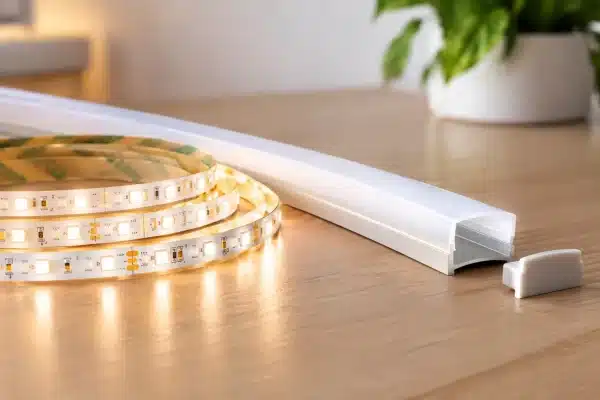
For projects with unusual joinery, stair details, shelving or bar areas, bespoke LED strip lighting can bring the scheme to life. It needs thoughtful placement, proper profiles and suitable drivers to look polished. A visible row of LED dots or badly concealed tape can quickly undermine an otherwise refined interior.
Do not forget the spaces outside
Outdoor lighting improves both the welcome and the usability of a home. A well-placed wall light at the entrance helps visitors arrive safely, while low-level lighting along a path can make the journey from gate to door feel more considered. In the garden, subtle illumination around seating, planting or steps can extend the enjoyment of the space after sunset.
Keep the effect restrained. Too much brightness outdoors can flatten the garden, disturb neighbours and create glare. Choose fittings designed for exterior use, position them to light routes rather than faces, and use warm tones where you want a relaxed, hospitality-inspired feel.
The right lighting design does more than fill a room with light. It gives your home structure, comfort and a sense of occasion. Start with the moments that matter most, then select fittings that make those moments look and feel better. For a larger renovation or a more tailored scheme, expert advice from Lux Lighting can turn a good idea into a space that feels considered from every switch.