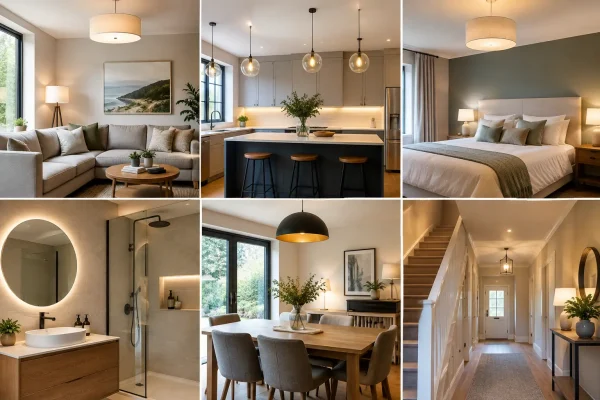
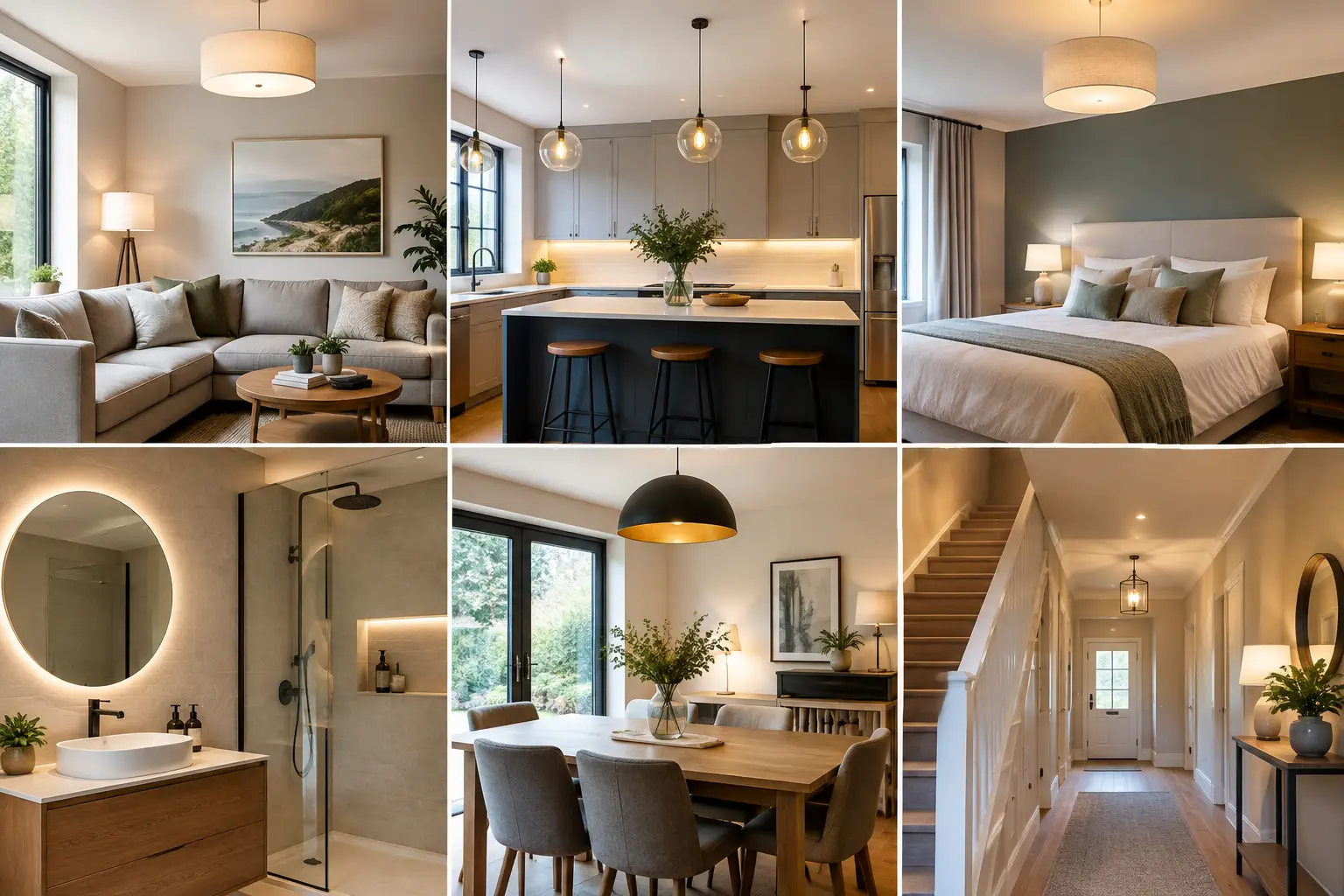
A beautiful pendant over the island can still leave a kitchen feeling flat. A row of spotlights can make a living room bright yet strangely uninviting. The difference is not simply the fitting you choose, but how every source of light works together. This lighting design guide Ireland homeowners can use starts with that simple idea: light the way you live, then add the style that makes a room feel considered.
Whether you are renovating a period home, finishing a new build or refreshing one room at a time, a lighting scheme should give you practical visibility, flexibility and atmosphere. The strongest interiors rarely rely on one central fitting alone.
Start with the room, not the fitting
It is tempting to begin with the statement chandelier or the wall light saved to a mood board. Those pieces matter, but first consider what actually happens in the space. A family kitchen may need bright preparation lighting in the morning, a softer setting for dinner and low-level illumination when someone is making tea late at night. A bedroom needs enough light to dress comfortably, but should also be able to feel calm before sleep.
Look at the room’s proportions, ceiling height, natural daylight and finishes. Dark cabinetry, richly coloured walls and timber panelling absorb more light than pale surfaces, so they often need a little more support. Large glazing can make a room feel wonderfully bright by day, while leaving it notably dark after sunset if the artificial lighting has not been planned properly.
Also think about where furniture will sit. The position of a dining table, sofa, bed or kitchen island determines where decorative fittings and focused task lighting will have the greatest impact. Deciding this before first fix avoids the familiar disappointment of a pendant landing off-centre or a switch being hidden behind a door.
Use three layers of light
A well-planned scheme usually combines ambient, task and accent lighting. Each layer has a different job, and the balance between them will depend on the room.
Ambient light provides the general level of illumination. It may come from ceiling pendants, downlights, track lighting or discreet LED profiles. It helps people move around safely and gives the room its overall brightness, but it should not be expected to do every job alone.
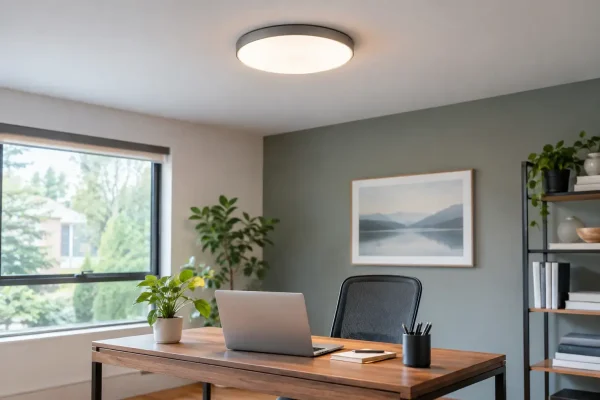
Task lighting is more precise. Under-cabinet LED strip makes food preparation easier without casting shadows across the worktop. A reading lamp beside an armchair, adjustable bedside lights and a focused mirror light all make daily routines more comfortable. In a home office, task lighting is especially useful on darker winter afternoons when a single ceiling fitting can feel harsh and inadequate.
Accent lighting creates depth. It can wash a textured wall, pick out shelving, bring attention to artwork or make a joinery detail feel more architectural. This is where LED tape, wall lights and small directional fittings earn their place. Accent light is not purely decorative, either. A softly lit hallway, stair tread or cabinet interior feels easier and safer to use.
The aim is not to fill every ceiling with fittings. Too many downlights can flatten a room and turn a relaxed space into something closer to a retail unit. Use them where their clean, practical light is needed, then introduce pendants, lamps and wall lighting to create contrast and character.
A room-by-room lighting design guide for Ireland
Kitchens need clarity and warmth
Kitchens work hardest when light is layered. Begin with practical general lighting, then add dedicated worktop illumination. Concealed LED strip beneath wall units is one of the most effective upgrades because it puts light exactly where chopping, cooking and cleaning happen.
A pendant or linear fitting over an island adds a focal point and gives the room personality. Scale matters here. One large statement piece can suit a compact island, while two or three smaller pendants may sit more comfortably over a longer run. Keep decorative fittings high enough to preserve sightlines across the room, especially in open-plan spaces.
Choose a warm white tone for a welcoming finish, but avoid light that is so warm it makes food preparation feel dull. Dimming is worth considering, allowing the same kitchen to move from practical weekday mode to a softer evening setting.
Living rooms benefit from pools of light
A living room should not feel evenly bright from wall to wall. Instead, create small pools of light around how the room is used: a floor lamp by the sofa, a table lamp on a sideboard, a wall light near a favourite chair and gentle illumination around shelving or a fireplace.
A central pendant can provide visual impact, particularly in rooms with generous ceiling height, but it should be supported by lower-level sources. Lamps bring warmth because their light sits closer to eye level. They also make it easy to change the mood without rewiring the room.
If you have artwork, a fireplace surround or a beautifully finished wall, add a directional spotlight or picture light with restraint. The feature should look naturally enhanced, not staged.
Bedrooms need softer control
Bedrooms are one of the clearest cases for separate circuits or dimmable layers. A central fitting is useful for general light, while bedside wall lights or table lamps make reading and winding down far more comfortable. Fittings with an adjustable head are practical in shared bedrooms because one person can read without flooding the whole room with light.
Consider wardrobe lighting too, particularly in deeper fitted units. Sensor-operated LED lighting is a polished solution that makes clothes easier to find and adds a considered finish to a dressing area. Keep the light colour warm and restful rather than cool and clinical.
Bathrooms require careful planning
Bathroom lighting needs both style and the correct protection for its position. Mirror lighting reduces shadows on the face, while ceiling lighting gives the room an even base level. A backlit bathroom mirror can introduce an attractive, low-glare glow, but it should complement rather than replace functional light.
Fittings in and around wet areas must have the appropriate IP rating for the zone in which they are installed. Because bathroom zones and electrical installation requirements are specific, involve a qualified electrician early, particularly when moving lights, adding illuminated mirrors or planning lighting close to a shower or bath.
Hallways, stairs and outdoors set the first impression
Hallways are often treated as a route through the home, but they shape the first and last impression of it. Wall lights can add warmth to a narrow corridor, while a pendant in a stairwell can turn a practical area into a design feature. Low-level stair lights are useful at night and bring a refined, hotel-inspired feel without excessive brightness.
Outside, combine welcome, security and atmosphere. A clear light at the front entrance improves arrival and visibility. In gardens and patios, aim light at paths, steps, planting and seating areas rather than trying to brighten the entire garden. Exterior-rated fittings and thoughtful positioning are essential in Ireland’s wet, changeable conditions.
Choose colour temperature and controls with care
The colour temperature of a bulb changes the feeling of a room as much as the fitting itself. Warm white light is generally the natural choice for living rooms, bedrooms and dining areas because it feels relaxed and flattering. Kitchens, utility rooms and workspaces can take a slightly crisper tone where visibility matters. The key is consistency: moving abruptly from very warm to very cool light across connected rooms can make an otherwise polished interior feel disjointed.
Controls make good lighting more useful. Dimmers give decorative fittings a wider role, while separate switching lets you use task, ambient and accent lighting independently. Smart lighting can be valuable in busy homes, allowing scenes such as cooking, dining, movie night or bedtime, but it is not essential for every project. A well-positioned conventional switch and a thoughtfully chosen dimmer can deliver excellent results.
Give decorative fittings enough space to perform
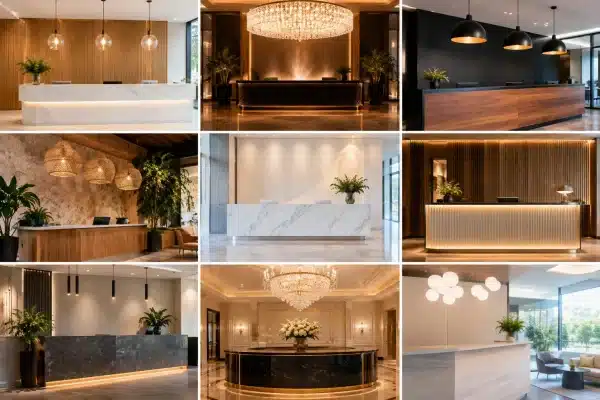
Statement lighting deserves to be seen from the right angle and at the right scale. Over a dining table, the bottom of a pendant should normally sit low enough to feel connected to the table, but high enough for people to see one another comfortably. In a hallway, allow proper clearance beneath the fitting. Above an island, check that the design will not interfere with views, cupboard doors or taller family members.
Finishes deserve the same attention. Brass can add warmth to timber, rich paint colours and natural stone. Black fittings bring definition to contemporary schemes, while glass and lighter metallic finishes can keep smaller rooms feeling open. Repeating a finish in small details, such as handles, sockets or furniture legs, can make the lighting feel part of the interior rather than an afterthought.
Plan early, then refine the atmosphere
The best time to plan lighting is before plastering, tiling and final decorating. This is when you can position wiring, switches, LED drivers and sockets exactly where they will be useful. It is also when bespoke LED strip can be designed into joinery, stair details, alcoves and shelving for a clean integrated look.
That said, not every improvement requires a full renovation. A new pendant, a pair of wall lights, a properly placed floor lamp or layered LED lighting can completely change how a finished room feels. Start with the darkest or least functional area, and let the scheme build from there.
If a space needs more than a simple fitting swap, professional lighting design can turn plans, measurements and finishes into a scheme with real purpose. The right light should make everyday tasks easier, make guests want to linger and make your home feel unmistakably yours.