A garden can look beautifully planned by day, then lose its shape the moment evening arrives. The best garden bollard lights bring definition back to paths, patios and planted borders, creating a more inviting setting while helping everyone move safely around the space. More than a practical outdoor fitting, a well-chosen bollard can give a driveway, courtyard or terrace the same considered finish as the rooms inside.
What makes a garden bollard light worth choosing?
Bollard lights are freestanding outdoor fittings, usually installed at low to mid-level height. They cast light downwards, sideways or through louvres to mark routes and define the edge of a space without relying on a single bright wall light or floodlight.
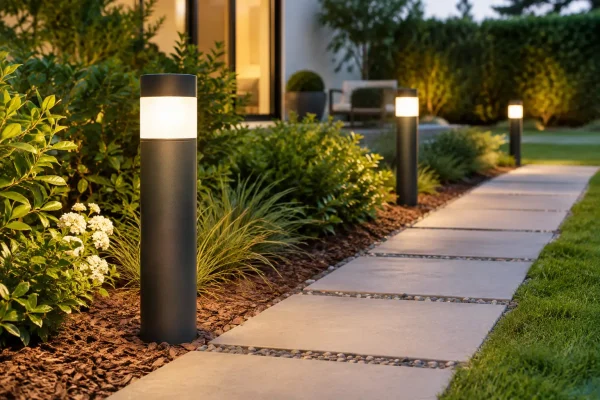
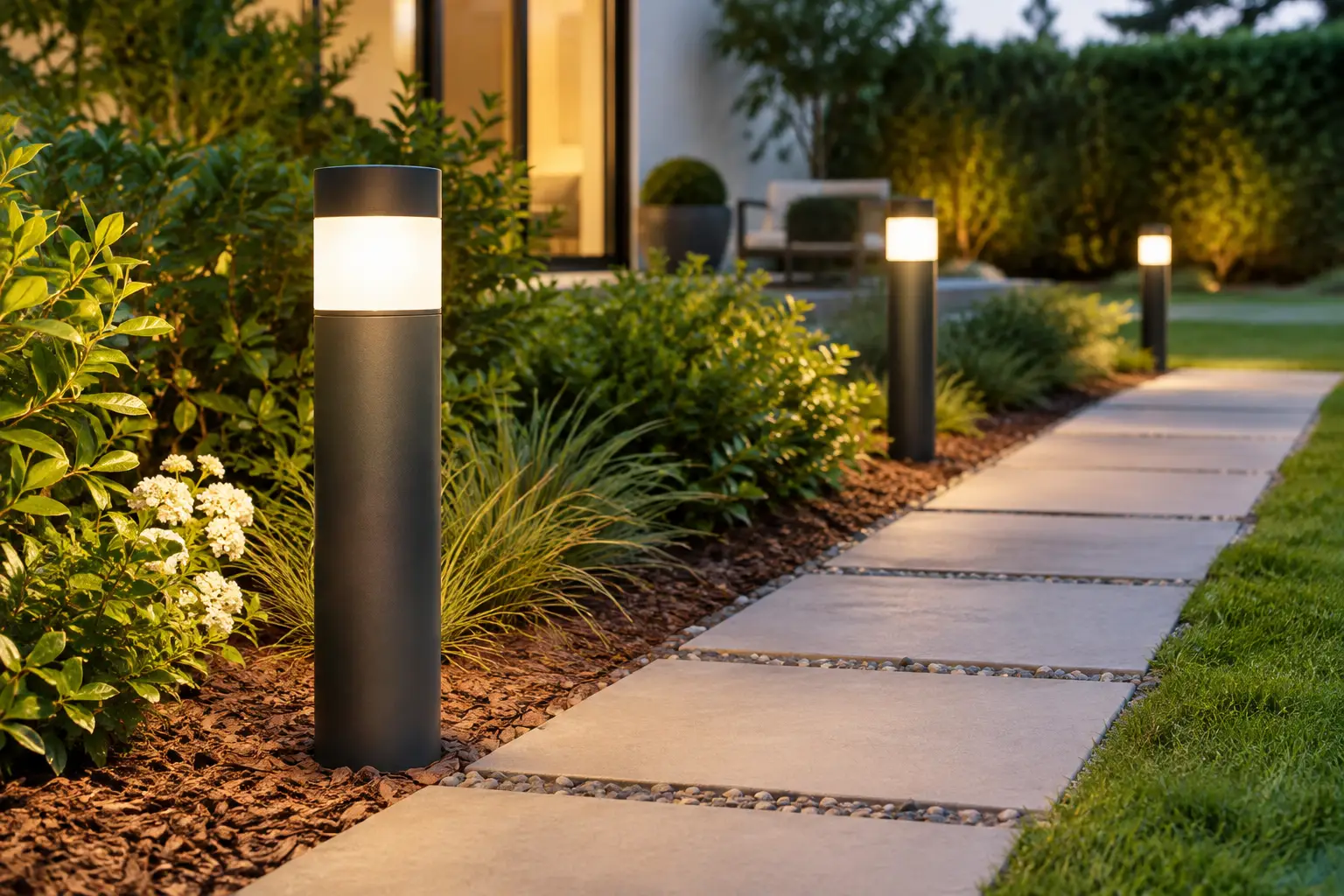
Their strength is visual rhythm. A row of matching bollards can lead the eye through a long garden path, make steps easier to read after dark, or give a driveway a more premium, structured appearance. In a contemporary garden, slim black or anthracite designs work especially well against timber fencing, porcelain paving and architectural planting. Softer finishes can suit more traditional stone, gravel and cottage-style schemes.
The right choice depends on what the light needs to do. A bollard beside a front path should make arrival safer and easier. Around a dining terrace, the priority may be gentle ambience that does not overpower candles, festoon lighting or the glow from indoors. Along a drive, durability, glare control and wider spacing matter more than decorative detail alone.
Choose the best garden bollard lights by location
For paths and side passages
Path lighting should guide rather than dazzle. Look for bollards with a downward-facing light source, a hooded top or louvred sides that conceal the lamp from direct view. This creates a pool of illumination on the ground, helping people see changes in level without producing harsh glare at eye height.
As a starting point, shorter bollards around 40 to 65 cm are often ideal for narrow walkways and side passages. They feel proportionate to the route and are less likely to dominate nearby planting. Positioning is just as important as the fitting: place them consistently along one side for a clean, contemporary line, or alternate sides on a wider path for a more balanced effect.
Avoid placing every fitting too close together. Over-lighting can flatten a garden and make it feel more like a car park than an outdoor room. The spacing will vary with beam spread, planting and the darkness around the property, but a gentle overlap of light is usually enough.
For driveways and entrances
A driveway asks more of its lighting. Bollards need to withstand weather, remain visible from a distance and help drivers judge edges, gates and turning areas. Taller fittings, usually around 65 to 100 cm, can have more presence here, particularly beside a broad entrance or long approach.
Choose a design with a sheltered diffuser and a solid, weighty appearance. An open-sided fitting may look striking, but it can become uncomfortable if the light source is visible when arriving by car. Downward illumination or a frosted, well-shielded diffuser is often the better choice.
Keep bollards safely away from the line of traffic. They should frame a drive rather than create obstacles for doors, tyres or reversing vehicles. If the route is tight, low-level recessed or wall-mounted lighting may be a more practical alternative.
For patios, terraces and outdoor dining
On a patio, bollards work best at the perimeter rather than in the middle of the entertaining space. Use them to mark the transition from paving to lawn, illuminate a route back to the house, or add a soft layer of light around raised beds and seating areas.
Here, lower output is generally more flattering. Warm white light at around 2700K creates a relaxed, welcoming feel and sits comfortably beside interior lighting. Cool white can appear sharper and more functional, which may suit a modern commercial exterior but can make a residential garden feel less cosy.
If your terrace already has wall lights, consider bollards as part of a layered scheme rather than the only source of illumination. Wall lights can provide overall visibility, while bollards add depth at ground level and stop the garden from disappearing beyond the patio doors.
For borders and planting
Bollards are not spotlights, but they can still make planting feel more intentional after dark. Set them just behind the front edge of a border to light adjacent paths while allowing foliage to catch a little reflected glow. This works particularly well with grasses, clipped evergreen forms and sculptural plants that hold their shape through winter.
Be mindful of height. A tall fitting can interrupt the view across a low border, while a short, discreet bollard may disappear into it. In gardens with statement trees or feature planting, pair bollards for navigation with dedicated spike spots for drama. Each fitting then has a clear role.
IP ratings, materials and weather resistance
Outdoor lighting must cope with rain, moisture, frost and the general wear of an exposed location. For garden bollards, look for an IP rating suited to exterior use. IP44 can be appropriate for sheltered outdoor areas, but IP54, IP65 or higher offers stronger protection against water and dust, particularly for open gardens, coastal locations or exposed driveways.
Material affects both appearance and maintenance. Powder-coated aluminium is a popular choice because it gives a clean modern finish and keeps fittings comparatively lightweight. Stainless steel can be smart and durable, although lower-grade steel may show tea staining in coastal or high-salt environments. In these settings, marine-grade materials or quality powder-coated finishes are worth considering.
Matt black and anthracite grey remain versatile choices for contemporary homes because they sit neatly against dark window frames, gates and fencing. For a softer garden scheme, weathered metal tones or textured finishes can feel less formal. The aim is not necessarily to make every bollard a focal point. Often, the most effective fittings are the ones that look considered by day and quietly useful by night.
Integrated LED or replaceable bulbs?
Integrated LED bollards have a neat, compact appearance and often offer excellent energy efficiency. They are particularly useful when you want a streamlined modern fitting with a controlled beam and no visible bulb. Check the fitting’s lumen output, colour temperature and expected LED lifespan before buying, as these details cannot be changed as easily later.
Bollards with replaceable LED bulbs offer more flexibility. You can alter the brightness or warmth of the light, and replacing a lamp is simple if it fails. They can be a sensible option when you want all outdoor lighting around the home to use the same bulb type.
Neither route is automatically better. For a polished, design-led scheme, integrated LED can be the cleaner solution. For homeowners who prefer adaptable maintenance, a replaceable bulb fitting may suit better.
Brightness and colour temperature: keep it comfortable
More lumens do not always mean better garden lighting. A bollard’s purpose is usually orientation, atmosphere and low-level safety, not stadium-level visibility. For a typical path, modest output from each fitting is often enough when several lights work together. If there are steps, uneven paving or a change of level, increase light where it is needed rather than making the whole garden excessively bright.
Warm white, around 2700K to 3000K, is the natural choice for most homes. It flatters stone, timber and planting, and it creates a calm connection between indoor and outdoor living areas. Neutral white can be useful for side passages, driveways and task-led spaces where clearer visibility is the priority.
Also consider glare from the house. A bollard that looks restrained from the garden may shine directly into a kitchen or bedroom if placed opposite glazing. Test the sightlines before final installation, especially around bi-fold doors, bay windows and ground-floor bedrooms.
Installation details that shape the final result
Even the most stylish bollard will disappoint if it is poorly placed or fitted without a proper base. Outdoor electrical work should be planned and installed by a qualified electrician, with cables, connections and switching designed for exterior conditions. This is especially important where lighting runs alongside driveways, lawns or areas that may later be landscaped.
Think about control early. A dusk-to-dawn sensor is convenient for entrances and front paths, while a timer gives more control over running hours. Smart outdoor lighting can be useful when you want to set scenes for entertaining or switch lights on before arriving home, but it should add convenience rather than unnecessary complexity.
For a cohesive result, repeat finishes where possible. Black bollards beside black exterior wall lights, matching gate hardware and a dark-framed pergola can make a garden feel professionally pulled together. Lux Lighting’s approach to outdoor schemes is simple: treat the garden as another room, with layers of light that create function, atmosphere and a confident sense of style.
Before choosing, walk the garden at dusk and notice where you naturally slow down, turn, step up or gather. Those are the places where the best garden bollard lights will earn their place – not by demanding attention, but by making every evening outside feel better planned.