The dining table may be the focal point, but dining room wall lights are often what make the room feel considered after dark. They soften the edges beyond the pendant, bring warmth to quieter corners and give the space a more inviting, layered finish. Whether your dining room is a separate formal space or part of an open-plan kitchen, the right wall lighting makes everyday meals and special occasions feel more atmospheric.
A ceiling fitting gives you the main statement. Wall lights provide the depth. Together, they create a room that looks as good when the table is cleared as it does when it is dressed for dinner.
Why wall lights belong in a dining room
One central pendant can illuminate the table beautifully, yet still leave the surrounding walls looking flat or shadowed. Wall lights solve that problem without crowding the ceiling or competing with a statement chandelier. Their glow adds visual structure, particularly in rooms with high ceilings, dark paint colours, artwork or architectural details worth showing off.
They are also a practical choice for dining rooms used for more than meals. If the space doubles as a homework area, a place for long weekend lunches or a setting for entertaining, layered lighting gives you more control. Use the pendant for clear light over the table, then switch to wall lights for a calmer, more intimate atmosphere once dinner is served.
The effect is especially valuable in open-plan homes. A pair of decorative wall fittings can help define the dining zone, creating a clear sense of occasion between the kitchen and living area without needing a physical divide.
Choosing dining room wall lights for your layout
Start with the shape and proportions of the room, not just the style of the fitting. A compact dining nook may only need one carefully positioned wall light, while a longer room can take a balanced pair or a series of fittings along one wall. The aim is to create a gentle spread of light, rather than a line of bright points competing for attention.
Pair wall lights around a feature
Matching wall lights work particularly well either side of a mirror, artwork, fireplace or sideboard. This arrangement feels composed and gives the room a natural focal point. In a traditional dining room, candle-style sconces or pleated shades can bring softness and character. For a more contemporary interior, slim black, brass or smoked-glass fittings offer a sharper architectural look.
Where a sideboard sits against a blank wall, wall lights above or beside it can turn a useful piece of furniture into a styled feature. The light catches glassware, ceramics and framed prints, adding interest without filling every surface with lamps.
Use uplighters to add height
Uplighting throws light towards the ceiling, making a low room feel more open and giving darker finishes a flattering lift. It is a strong option where you want atmosphere but do not want an exposed bulb shining directly into guests’ eyes.
Downlighters, on the other hand, can create a more defined pool of light and suit modern schemes with clean lines. They can be effective above a console or buffet area, but placement matters. In a small room, too many directional fittings can look severe rather than relaxed.
Consider swing arms and adjustable fittings
Adjustable wall lights are ideal when your dining room needs to work hard. A swing-arm design can provide focused light over a reading chair at one end of the room, then be moved away when you are entertaining. It is a useful compromise in compact homes where every corner has more than one purpose.
For a purely decorative effect, choose fittings with frosted glass, fabric shades or opal globes. These diffuse the light and help the room feel warm from every angle.
Get the height and spacing right
There is no single measurement that suits every dining room, but wall lights are commonly positioned around 150 to 170 cm from the finished floor to the centre of the fitting. This usually places the glow at a comfortable eye level when standing, while keeping it high enough to avoid visual clutter around the table.
If you are placing a pair beside artwork or a mirror, let the feature dictate the composition. The fittings should frame it rather than sit awkwardly above or below it. In rooms with tall ceilings, slightly higher placement can keep the proportions feeling balanced, especially with elongated wall lights.
Avoid positioning wall lights directly behind dining chairs where people may lean back into them, or where a large shade could be knocked. Allow room for chairs to move and for guests to circulate comfortably. This is one reason why wall lighting beside a sideboard or on the shorter walls of a rectangular dining room often works so well.
Before committing to wiring, mark the proposed positions with masking tape and view them from the table, doorway and adjoining room. A fitting can look perfect on a plan but feel too low, too close to a pendant or too dominant once you stand in the space.
Match the finish to the room, not just the ceiling light
Co-ordinating your wall lights with the pendant is usually the safest route, but a perfectly matched set is not the only answer. A layered scheme often has more personality when finishes are repeated thoughtfully rather than identically. For example, a brass wall light can sit beautifully with a black pendant if the dining chairs have black legs and the room includes brass handles, frames or a mirror.
Brass and warm metallic finishes complement timber tables, rich paint colours and softly upholstered dining chairs. Black wall lights suit modern, industrial and monochrome interiors, bringing definition without too much shine. Chrome and polished nickel offer a cleaner, cooler finish, particularly effective in homes with grey, blue or white schemes.
Glass is equally flexible. Clear glass feels light and decorative but can reveal the bulb, so choose the bulb as carefully as the fitting. Smoked glass creates a moodier look and can be particularly striking against pale walls. Opal glass is a favourite for a softer, more diffused glow that does not distract from the table setting.
Choose bulbs for warmth and flexibility
The most beautiful wall light can still feel disappointing with the wrong bulb. For dining spaces, warm white light around 2700K is generally the most flattering choice. It enriches timber, makes food look more appealing and gives skin tones a softer appearance than a cooler white light.
Dimmable wall lights are worth considering wherever possible. Bright light is useful when laying the table, clearing up or helping children with homework. Once guests arrive, a dimmer lets you lower the mood without losing the practical light above the table. If your wall lights and pendant are controlled separately, you gain even more flexibility.
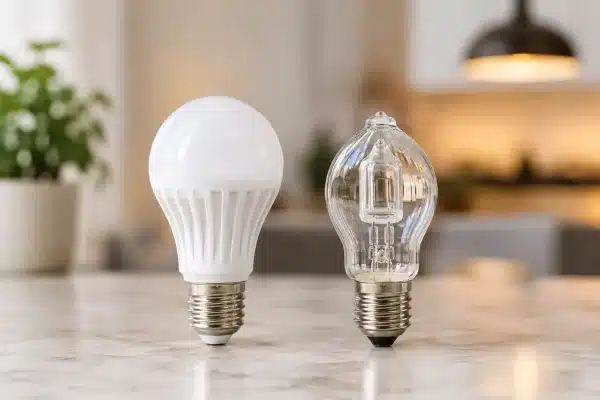
Be mindful of exposed bulbs. Filament-style LED bulbs add character to clear-glass fittings, but a very bright bulb at eye level can cause glare. Choose a lower-lumen option, a warm finish or a frosted bulb where comfort matters more than sparkle.
Create a layered scheme, not a showroom display
The most successful dining room lighting has contrast. Your pendant should remain the hero above the table, while wall lights play a supporting role. If every fitting is equally large, bright or decorative, the room can feel busy rather than luxurious.
Think about what the light is doing at each level. The pendant illuminates the table. Wall lights bring depth to vertical surfaces. A lamp on a sideboard can add a low, intimate glow. In a larger space, subtle lighting within a display cabinet or beneath a shelf can complete the picture. You do not need every layer, but two or three well-chosen sources will always feel more welcoming than one overhead fitting alone.
For period homes, this may mean a central chandelier paired with understated brass sconces. In a newer extension, a sculptural pendant and simple opal-glass wall lights can keep the room contemporary without becoming cold. The right answer depends on ceiling height, natural light, wall colour and how formal you want the room to feel.
Plan wiring early, especially in renovations
Wall lights look their best when cables are concealed, so include them early in a renovation or new-build lighting plan. This gives you freedom over position, switching and dimming before plastering and decorating are complete. A qualified electrician should install fixed wall lighting and advise on the most suitable controls for your setup.
If chasing cables into walls is not practical, there are still attractive options. Plug-in wall lights can work well in dining corners, while a decorative cable can become part of a more relaxed, contemporary scheme. It is less formal, but it may be the right trade-off for a finished room where major electrical work is not on the agenda.
For homeowners planning a full room refresh, Lux Lighting can help bring pendants, wall lights and feature lighting into one cohesive scheme. The goal is not simply to fill a wall. It is to give the dining room a warmer presence, long after the last plate has been cleared.