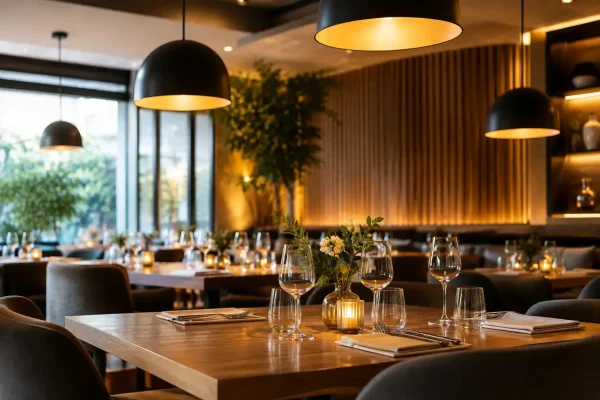
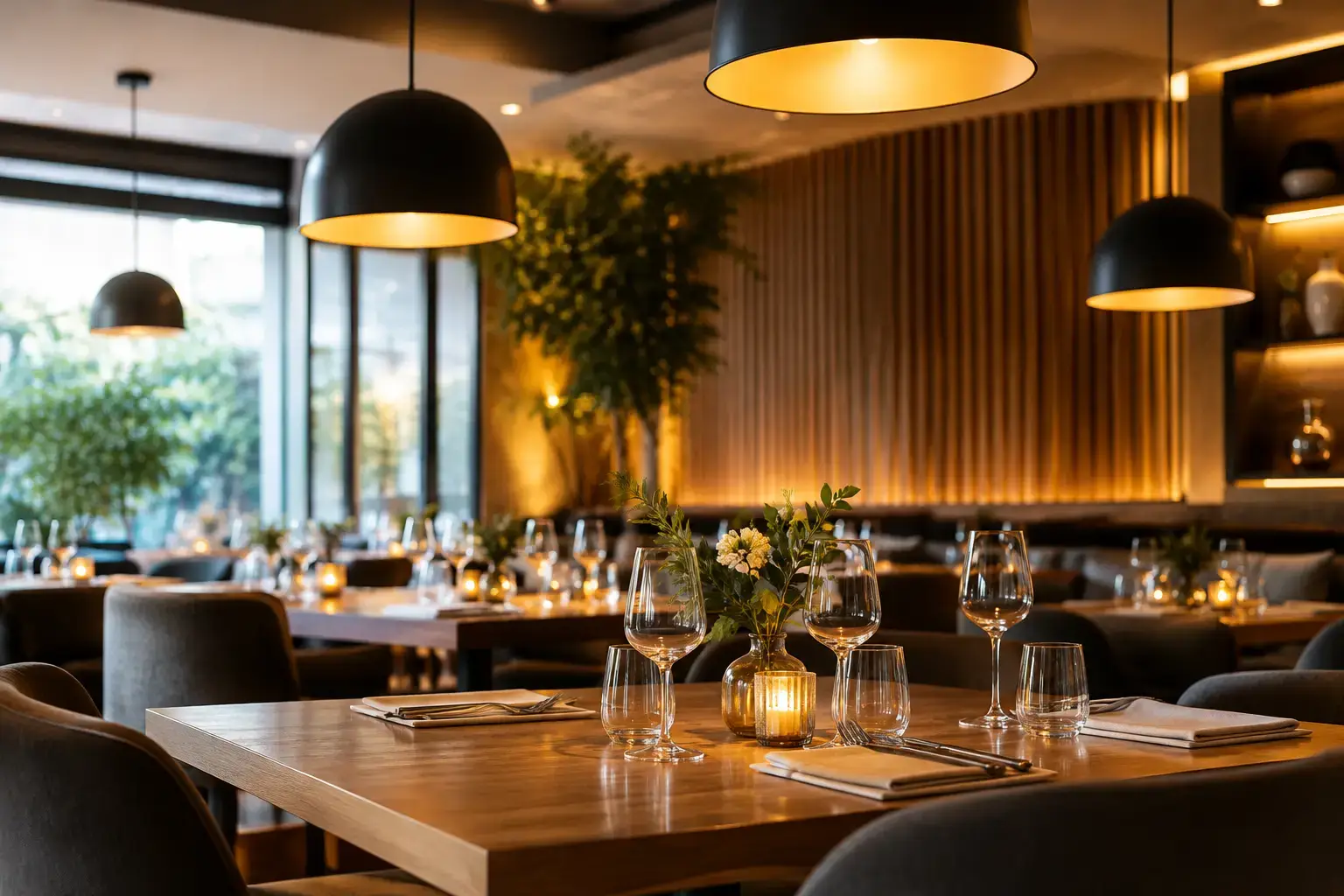
A guest may never mention the lighting when it is right. They will simply stay for another drink, order dessert, photograph the room and remember how the place made them feel. That is the real value of a restaurant lighting transformation: it changes the pace, personality and perceived quality of the whole experience without asking guests to notice the fittings themselves.
For restaurant owners, designers and hospitality teams, lighting is not a finishing touch to be chosen after the furniture arrives. It is a commercial design decision. It affects first impressions from the street, how appetising food appears, whether staff can work accurately, and whether a compact dining room feels intimate rather than cramped.
What a Restaurant Lighting Transformation Should Achieve
The strongest schemes do more than make a restaurant brighter or moodier. They give every part of the venue a purpose. The entrance needs to feel welcoming from the moment a guest approaches. The bar should have energy and visual pull. Dining tables need flattering, useful light, while corridors, toilets and service areas must remain clear and practical.
A single row of downlights rarely delivers that result. It can flatten texture, create glare on glossy tables and leave the room feeling more like a meeting space than a destination. Transformation comes from layering different sources of light, then controlling them carefully throughout service.
Consider the guest journey rather than treating the floorplan as one open room. A warm glow in the window creates curiosity outside. Decorative pendants over selected tables make each setting feel intentional. Low-level lighting along a banquette or beneath a bar adds depth after dark. Accent lighting turns a bottle display, brick wall or artwork into part of the atmosphere.
The result should feel effortless, but it is built from deliberate contrasts: light and shadow, sparkle and softness, drama and visibility.
Start With Mood, Then Build the Lighting Plan
Before choosing fittings, decide what the room should say. A neighbourhood bistro may call for soft pools of warm light, tactile finishes and a relaxed evening glow. A fast-paced all-day café needs brighter, cleaner illumination in daytime, with the option to soften the room for dinner. A cocktail-led venue can support darker corners and stronger visual drama, provided guests can still read a menu and move safely.
This is where many projects lose their direction. A statement pendant may look excellent in isolation but fail when repeated over every table. Equally, an industrial fitting can suit a high-ceilinged dining room but feel heavy in a low-ceilinged space. The scale, finish and beam of every light should respond to the architecture and the brand experience.
Create a lighting plan around three layers. Ambient light establishes the room’s general brightness. Task light helps guests read and lets staff operate comfortably. Accent and decorative light give the restaurant its character. These layers should work together, not compete for attention.
For a more intimate effect, avoid spreading the same level of light across every surface. Guests tend to feel more comfortable when their own table is gently illuminated while the surrounding room recedes slightly. The space remains sociable, yet every setting feels more personal.
Choose a warm, flattering colour temperature
For most dining areas, warm white light around 2200K to 2700K gives food, timber, brass and upholstery a richer appearance. It also feels calmer in the evening. Going too warm can make a contemporary white interior look yellow, while cooler light can make a carefully designed room feel clinical.
Colour rendering matters as much as colour temperature. A high CRI light source presents food, skin tones and finishes more faithfully. It is a detail guests may not be able to name, but they can see the difference in the meal in front of them and in the photographs they share.
Use Decorative Lighting to Define the Experience
Decorative fittings carry much of the visible personality in a restaurant lighting transformation. Pendant lights above a communal table, globe clusters at the bar or sculptural wall lights in a private dining area can make the venue instantly recognisable.
That does not mean every fitting needs to be large or elaborate. A restrained scheme can be just as memorable when it uses repetition, proportion and quality materials well. A row of slim pendants may bring order to a long banquette. Opal glass can soften the room without obscuring the view. Black, bronze, smoked glass and brushed brass finishes can echo furniture details and make the entire interior feel considered.
Pay attention to sightlines. Guests should see a few moments of interest as they look across the room, but fittings should not block conversation or dominate the table. Where a pendant is positioned above dining, its lowest point must suit both the ceiling height and the way people sit, stand and move around it.
Wall lights are often underestimated. They bring light down to eye level, soften large blank walls and reduce dependence on ceiling fittings. In heritage buildings or rooms with limited ceiling access, they can add atmosphere without requiring a major structural intervention.
Bring Depth to Bars, Joinery and Architectural Details
The bar is often the visual anchor of a hospitality space. It benefits from more than overhead lighting. Integrating LED strip lighting beneath the bar top, behind shelving or along toe-kicks creates a layered glow that makes materials and bottles stand out after dark.
Bespoke LED strip is especially useful where standard fittings cannot follow the shape of the space. It can trace a curved counter, illuminate display shelving, define a niche or add a discreet line of light beneath seating. The key is concealment. When guests see the effect rather than the diode points, the detail looks refined rather than improvised.
LED tape should be installed in suitable profiles with diffusers where possible, particularly in visible joinery. This improves the finish, protects the strip and reduces spotting. Specify the right output for the surface too. A reflective marble bar front may need less power than a dark timber display wall.
Architectural features deserve the same attention. Grazing light across textured brick, stone or fluted panelling can create remarkable depth. However, it also reveals imperfections. Test a small section before committing to a full installation, especially on uneven walls or highly reflective finishes.
Dimming Is What Makes One Room Work All Day
A restaurant can have beautiful fittings and still feel wrong if its lighting stays at one fixed level from breakfast through late service. Dimming allows the atmosphere to evolve with the day. Brighter settings support preparation, lunch trade and cleaning; lower, warmer-feeling levels create a more relaxed evening setting.
Controls do not need to be complicated for staff. A few clearly labelled scenes are usually more useful than an app full of options: opening, daytime, early evening, dinner and close. The best approach depends on the size of the venue and how frequently the scene changes, but staff should be able to make adjustments without disrupting service.
Compatibility needs checking early. Not every LED lamp, driver and dimmer works well together, and poor pairing can cause flicker, buzzing or an uneven dimming range. For a project-led installation, this is one of the details worth getting right before fittings are ordered.
Do Not Sacrifice Practical Light for Atmosphere
A moody restaurant still needs safe circulation, visible steps, legible menus and reliable light for service stations. Kitchens, pass areas, storage rooms and washrooms need their own practical specification, often brighter and more neutral than the dining floor.
The transition between those areas should feel intentional. Stair lights, discreet low-level fittings and carefully placed wall lights help guests navigate without flooding the whole venue with brightness. In washrooms, well-positioned mirror lighting is more flattering and useful than a single harsh ceiling fitting.
Glare is another common issue. Bare lamps, exposed spotlights and badly aimed downlights can create discomfort, especially when guests are seated for a long time. Look at the scheme from table height, not only while standing in an empty room. Reflections in glassware, polished tables and mirrors can quickly show where adjustments are needed.
Make the Investment Work Harder
The right lighting can help a restaurant look more premium, but it should also be efficient to run and maintain. LED technology reduces energy use and replacement frequency, while quality fittings and accessible lamps or drivers make future maintenance less disruptive.
Spend where guests will notice it most: the entrance, bar, key dining zones and the focal points visible in photos. Use simpler, durable fittings in back-of-house spaces. This balance protects the budget without diluting the experience.
For operators planning a refurbishment or a new opening, professional lighting design can prevent costly late changes. Lux Lighting can support hospitality projects with decorative fittings, commercial solutions and bespoke LED strip design, helping the visual idea translate into a workable scheme.
The most memorable restaurants rarely rely on one spectacular chandelier or a room full of fittings. They use light with restraint, directing attention to the food, the people and the details that make guests want to return. Start with the feeling you want to create, then let every layer of light earn its place.