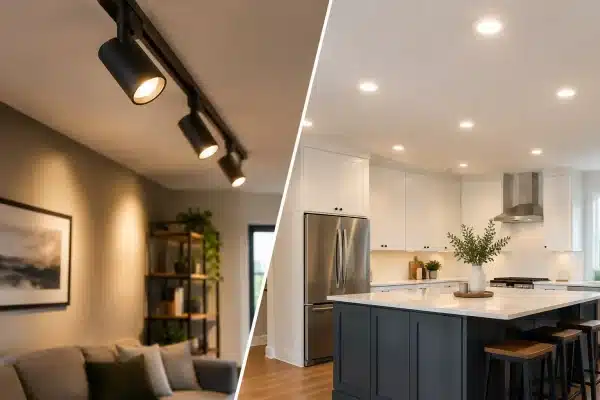
A beautifully finished kitchen can still feel flat if its lighting only comes from one central fitting. The same is true of a carefully styled living room with dark corners, or a bathroom where the mirror is bright but the rest of the room feels clinical. When comparing spotlights vs downlights, the right choice comes down to what you want the light to do: quietly fill a space, direct attention, or create a layered scheme that does both.
The two terms are often used interchangeably, particularly when discussing recessed ceiling lighting. Yet their effect on a room can be very different. Understanding that difference makes it far easier to choose fittings that suit your ceiling, your layout and the atmosphere you want to create.
Spotlights vs Downlights: the essential difference
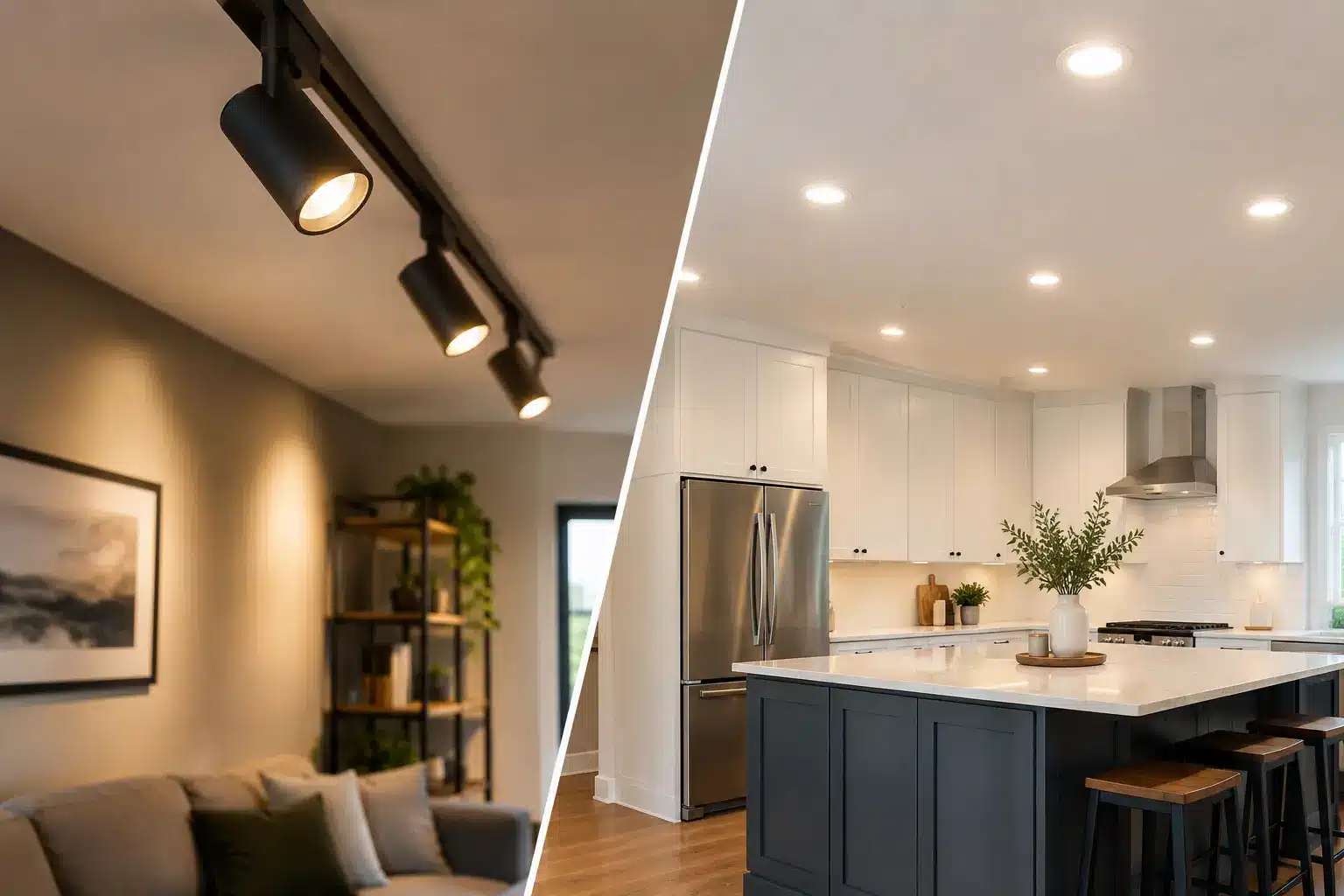
A downlight is usually a recessed fitting set into the ceiling, designed to cast light directly downwards. It sits neatly within the ceiling line, making it a popular choice for contemporary interiors where a clean, uncluttered finish matters. Depending on its beam angle and placement, a downlight can provide general illumination, task lighting or a gentle wash of light across a surface.
A spotlight is designed for direction. Many spotlights can be tilted, turned or aimed towards a particular feature, such as kitchen cabinetry, artwork, shelving, a textured wall or a dining table. They may be recessed, surface-mounted, mounted on a track or grouped on a bar. Their visual presence can be understated or deliberately decorative, especially with modern black, brass or chrome finishes.
The distinction is not always absolute. A recessed adjustable fitting is often called a spotlight, while a fixed recessed fitting is generally described as a downlight. The useful question is not which label appears on the box. It is whether you need focused, flexible light or a more even downward spread.
Choose downlights for a clean, even ceiling scheme
Downlights are a natural fit when you want the ceiling to remain visually quiet. In a low-ceilinged space, a pendant or large statement fitting can interrupt sightlines, whereas recessed downlights keep the room feeling open and polished.
They work particularly well in kitchens, bathrooms, hallways, utility rooms and dressing areas. In these spaces, practical visibility matters every day. Well-positioned downlights reduce shadows around worktops, cupboards and walkways without making the room feel overdesigned.
Beam angle has a major influence on the final result. A narrow beam creates pools of light and can leave visible gaps between fittings. A wider beam spreads light more generously, which is often better for general illumination in a kitchen or open-plan room. For a standard ceiling height, a balanced layout of wide or medium beam downlights will usually feel more comfortable than a grid of intense, narrow beams.
There is a trade-off. A ceiling filled with downlights can look smart on a plan but feel harsh once switched on, especially if every fitting is bright, cool white and controlled by one switch. More fittings do not automatically mean better lighting. A considered arrangement, dimmable lamps and separate circuits give you far more control over the mood.
Choose spotlights where direction matters
Spotlights earn their place when there is something worth looking at. They allow you to guide the eye towards the parts of a room that give it character: a gallery wall, an alcove, open shelving, timber panelling, a feature fireplace or a favourite piece of art.
In kitchens, adjustable spotlights can be useful above a run of cabinets or around an island, particularly where you need to direct light away from your own shadow while preparing food. In living rooms, they can pick out a bookcase or wall finish without relying on a bright central ceiling light. In a home office, an adjustable spotlight can add useful task light without crowding the desk with another lamp.
Surface-mounted spotlights are also worth considering where you do not want to cut into the ceiling, or where ceiling void depth is limited. A compact spotlight bar can bring a contemporary, architectural look to a hallway, kitchen or converted space while offering the same practical adjustability.
The potential drawback is that a spotlight can create glare if aimed carelessly. A strong beam directed towards a sofa, television screen or eye level will feel distracting rather than atmospheric. Aim fittings at surfaces, textures and objects, not at people.
Which fitting works best in each room?
Kitchen
A kitchen rarely needs an either-or answer. Downlights provide a dependable base layer across the room, while spotlights can add focus where it is needed most. If you are lighting an island, consider what happens when someone stands beneath the ceiling fitting. A spotlight positioned and angled thoughtfully can reduce shadowing on the work surface.
For the most inviting result, include a third layer where possible: under-cabinet lighting, pendant lights above the island or LED strip lighting within shelves. This gives the kitchen character after dark, when full ceiling brightness is no longer necessary.
Living room
A living room benefits from restraint. Downlights can be useful around the perimeter of the room, particularly for washing light down curtains or walls, but a full grid often creates a flat, overly bright effect. Use fewer fittings, put them on dimmers and support them with floor lamps, table lamps and feature lighting.
Spotlights are ideal if your living room has artwork, display shelving or a fireplace surround that deserves attention. Their directional quality adds depth, helping the room feel styled rather than simply illuminated.
Bathroom
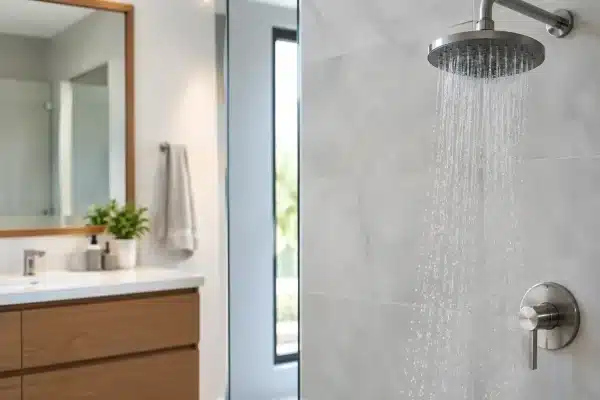
Downlights are often the practical choice for bathrooms because they sit flush with the ceiling and deliver clear, even light. However, bathroom fittings must have a suitable IP rating for their location. Areas close to a shower or bath have stricter requirements than the wider room, so professional advice is essential before choosing a fitting.
Avoid relying on ceiling lights alone around a mirror. Downlight from above can create shadows beneath the eyes and chin. A properly positioned illuminated mirror or wall lighting around face level is far more flattering for shaving, skincare and everyday routines.
Hallway and landing
Hallways are often narrow, windowless and overlooked, yet they set the tone for the rest of the home. Recessed downlights give a tidy, reliable route of light through the space. Where there is a picture wall, staircase detail or console table, an adjustable spotlight can add a more considered finish.
For longer hallways, do not simply space fittings by eye. Consider door openings, the centre line of the walkway and where pools of light will fall. A lighting plan can prevent the familiar problem of a bright patch followed by a dim stretch.
Bedroom
Bedrooms need flexibility more than brightness. Downlights can provide soft general illumination when dimmed, but they should not be the only source. Bedside lamps, wall lights or pendant drops create a calmer, more intimate layer.
Spotlights are useful inside wardrobes, over dressing areas or for highlighting a feature headboard wall. Choose warmer colour temperatures in most bedrooms, typically around 2700K, for a relaxed and welcoming feel.
Practical details that affect the final result
Before choosing a style, check the ceiling construction and available recess depth. Recessed downlights need enough space above the plasterboard, while insulation can affect the type of fitting required. Fire-rated downlights are commonly used where a ceiling forms part of a fire barrier, and insulation-coverable fittings can simplify installation in insulated ceilings. Your electrician can advise on the correct specification for the property.
Colour temperature matters just as much as fitting style. Warm white light tends to suit living rooms, bedrooms and dining spaces, while a neutral white may be preferred for kitchens, utility rooms and work areas. Very cool light can make white surfaces look crisp, but in a home it can also feel stark if used everywhere.
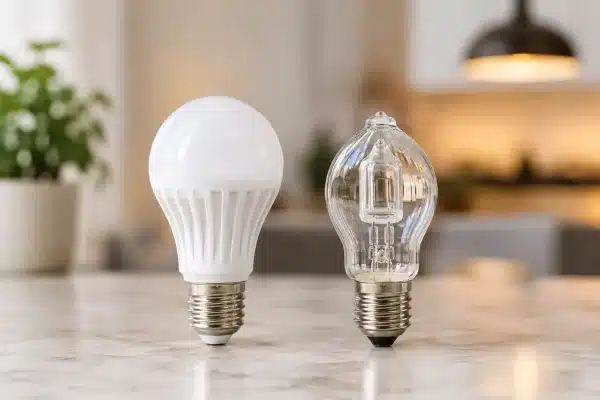
Dimming is another detail worth planning early. Check that the fittings, LED lamps and dimmer switch are compatible. A dimmable scheme lets your kitchen work hard during breakfast and feel relaxed when guests arrive later. It also gives a spotlight scheme more subtlety, turning feature lighting into ambience rather than a fixed statement.
Finally, think about the finish. White trim downlights disappear into a pale ceiling, while black or metallic spotlights can become part of the room’s design language. Matching visible fittings with handles, taps, sockets or furniture accents creates a more cohesive result.
A well-lit home is not about choosing the most fittings. It is about giving each room the right light at the right moment. Start with how you use the space, then let downlights provide the foundation and spotlights bring the details to life. If your project needs a more tailored approach, Lux Lighting can help turn that first idea into a scheme with real atmosphere.