A beautiful wall light can transform a bathroom, and a row of discreet deck lights can make a garden feel considered long after sunset. But before choosing the finish, shape or glow, there is one practical detail to check: what is IP rating lighting, and does the fitting suit the space where you plan to install it?
An IP rating tells you how well a light fitting is protected against solid objects and moisture. It is not a measure of brightness, quality of light or style. Instead, it helps you select lighting that is safe and appropriate for areas exposed to splashes, steam, rain, dust or direct jets of water.
What Is IP Rating Lighting?
IP stands for Ingress Protection. The rating is written as two numbers after the letters IP, such as IP20, IP44, IP65 or IP67. These numbers indicate how effectively the fitting’s housing prevents foreign bodies and water from reaching its electrical parts.
The first digit refers to protection from solid objects, including fingers, tools and dust. The second digit refers to protection from water. Higher numbers generally mean greater protection, but the right choice is not always the highest rating. A decorative pendant above a dry dining table does not need the same sealed construction as a wall light beside an exposed coastal doorway.
For homeowners, the practical question is simple: consider where water, steam and dirt can reach the fitting, then choose an IP rating designed for that level of exposure. This protects the installation while keeping your lighting scheme looking intentional rather than overly industrial.
How to Read an IP Rating
The two digits work together, but they describe different things. An IP44 light, for example, is protected against solid objects larger than 1mm and against water splashing from any direction. That makes it a popular choice for many bathroom fittings and sheltered outdoor locations.
The first digit: solid-object protection
For most decorative lighting decisions, the first digit matters less than the water rating, although it remains useful in dusty workshops, garages and exterior areas. IP2X protects against fingers and similar objects. IP4X offers protection from small wires and objects over 1mm, while IP5X is dust protected and IP6X is dust tight.
You may occasionally see an X in a rating, such as IPX4. This means the fitting has been tested and rated for water protection, but no specific solid-object rating is stated. It does not automatically mean the product is unsuitable; it simply means the second digit is the relevant one for that test.
The second digit: water protection
This is the number most shoppers need to understand. IPX0 offers no water protection. IPX4 protects against splashing water, while IPX5 is designed to withstand water jets. IPX6 offers stronger protection against powerful jets, and IPX7 means the fitting can withstand temporary immersion in water.
A higher water rating can be useful, but it should not be treated as permission to install a light anywhere. The fitting still needs to be installed correctly, with suitable cables, connections and controls. If you are planning lighting in a shower enclosure, swimming pool area or commercial washroom, seek advice from a qualified electrician and follow the relevant installation guidance.
Choosing IP Ratings for Bathrooms
Bathrooms are where IP ratings become essential rather than optional. Moisture does not stay neatly inside the shower tray. Steam moves through the room, condensation settles on surfaces and splashes can reach further than expected, particularly in family bathrooms.
Bathroom lighting is commonly planned around zones. The closer a fitting is to a bath or shower, the higher its required water protection should be.
Inside the bath or shower
This is the most exposed area, often called Zone 0. Fittings installed inside a bath or shower basin need a very high level of protection, typically IP67. These are specialist low-voltage products designed for potential immersion, not standard ceiling lights or wall fittings.
Directly above a bath or shower
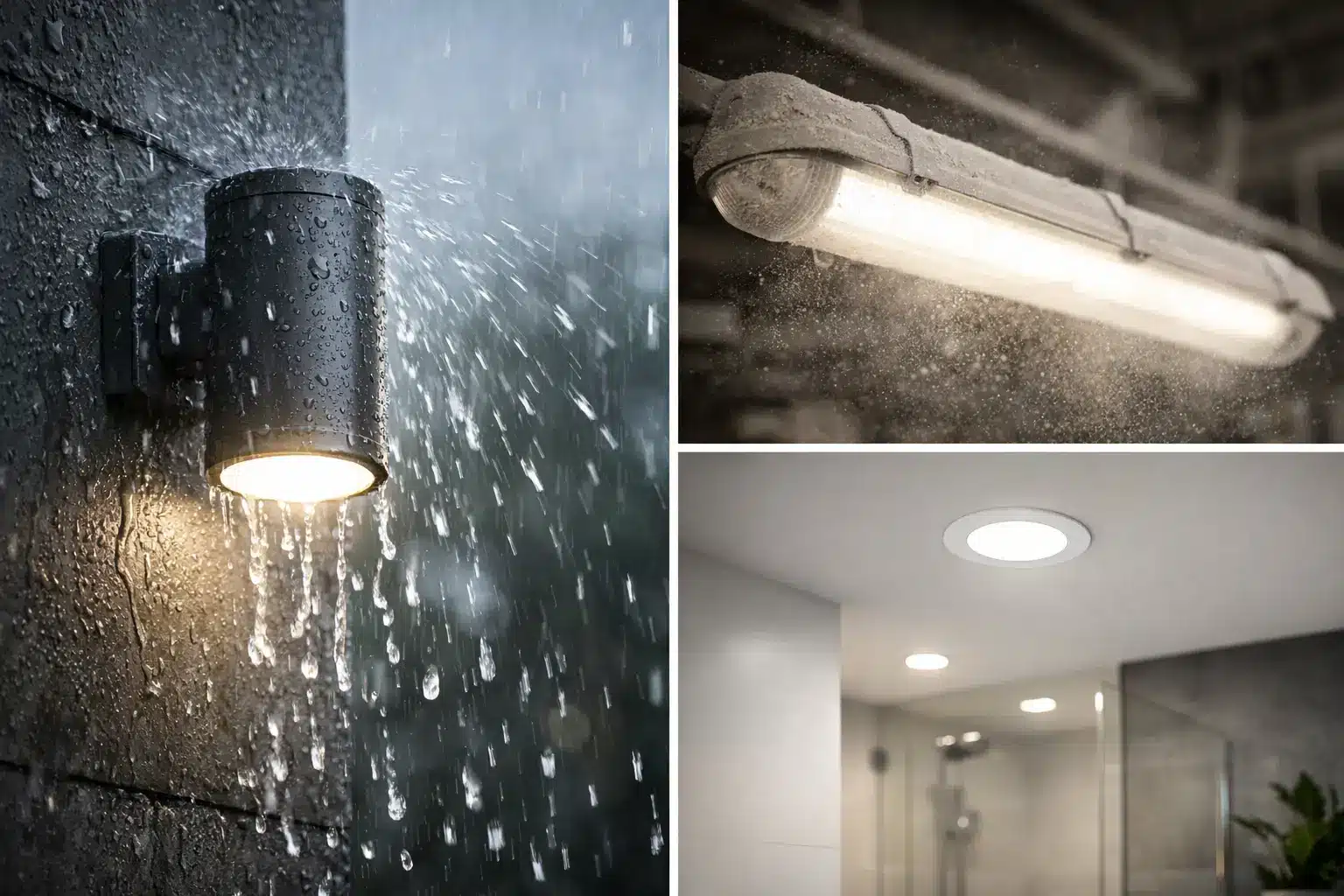
The area immediately above a bath or shower is commonly known as Zone 1. An IP65 fitting is generally required here because it must cope with direct water spray. Recessed bathroom downlights with the correct rating can provide clean, practical illumination without interrupting a calm ceiling design.
Around the bath or shower
The surrounding area, often referred to as Zone 2, needs fittings with protection against splashes, usually at least IP44. This may include a wall light near a basin or an illuminated bathroom mirror outside the direct spray area. Placement still matters, so check the product specification and ask an electrician if your room layout is unusual.
Outside these zones, a lower rating may be suitable, but bathrooms remain humid spaces. Choosing an IP44 fitting beyond the strict zone requirements can be a sensible decision for peace of mind, especially near a basin or in a compact room with limited ventilation.
IP Ratings for Outdoor Lighting
Outdoor lighting must contend with rain, wind-blown dirt, seasonal temperature changes and, in some settings, salt in the air. A light tucked beneath a deep porch has a very different job from a spike light in an open lawn or a wall fitting beside an exposed driveway.
IP44 is often suitable for covered exterior positions where the fitting is protected from heavy, direct rainfall. For garden wall lights, bollards, pathway lights and exterior downlights with more regular weather exposure, IP65 is usually the stronger choice. It is protected against dust and water jets, making it well suited to the realities of a British and Irish winter.
For lights set into decking, patios or paving, consider both the fitting’s IP rating and the product’s stated installation instructions. An IP67 ground light offers a high level of protection against temporary immersion, which can be valuable where puddling is possible. However, drainage is still essential. Water sitting around a poorly installed fitting can create problems that an IP label alone cannot solve.
Coastal properties deserve extra care. Salt-laden air can damage finishes and fixings even when the IP rating is appropriate. In these locations, choose materials designed for exterior durability and maintain them regularly. A correctly rated fitting with a poor-quality finish may lose its appeal faster than expected.
Kitchens, Utility Rooms and Other Practical Spaces
Most kitchen ceiling lights can be IP20 because they are installed well away from water. The exception is lighting close to a sink, boiling-water tap or exposed food-preparation area where splashes are more likely. Here, an IP44 under-cabinet light or wall fitting can be a practical upgrade.
Utility rooms, garages and workshops also benefit from thinking beyond basic indoor ratings. Humidity, dust, accidental splashes and the occasional hose-down can make an IP44 or IP65 fitting a better long-term choice. For commercial kitchens, bars and hospitality washrooms, the decision should account for cleaning methods, heat, steam and the fitting’s location rather than relying on a one-size-fits-all rating.
IP Rating Does Not Tell the Whole Story
It is tempting to see IP65 as a universal answer, but a lighting scheme needs more than water protection. Consider the beam angle, colour temperature, glare control, dimming compatibility and how the fitting works with the room’s materials. A bathroom mirror light should flatter faces and give useful task lighting. A garden wall light should create atmosphere without shining harshly into windows or neighbouring properties.
Also check whether the rating applies to the complete installed unit. With recessed lights, cable joints, drivers and connectors may have their own requirements. With LED strip lighting, the strip, driver and connection points may need different levels of protection. A bespoke run beneath a kitchen plinth has different needs from one installed around an outdoor bar or garden seating area.
A Simple Way to Choose the Right Fitting
Start with the location, not the product image. Is the light in a dry room, a humid bathroom, a sheltered porch or fully exposed outdoors? Next, think about the closest source of water and whether the fitting could be splashed, sprayed or temporarily surrounded by standing water.
Then balance that practical need with the overall design. A higher IP rating can sometimes mean a more enclosed appearance or a narrower product choice, though there are now plenty of stylish rated wall lights, downlights, mirrors and exterior fittings available. The best result is a fitting that feels at home in the space while meeting the demands of its position.
When in doubt, choose the rating for the real conditions rather than the ideal ones. A well-chosen IP-rated light lets you enjoy the atmosphere you have created, whether that is a relaxed bathroom retreat, a polished kitchen or a garden designed to glow well into the evening.