A room can have the right furniture, a beautiful palette and carefully chosen finishes, then still feel unfinished at 5pm. The lighting trends for 2026 are answering that problem with schemes that feel softer, more architectural and far more personal. Rather than relying on one central fitting, the focus is on building atmosphere in layers – with light that works hard when needed and recedes beautifully when it is not.
For homeowners, renovators and hospitality spaces alike, this is good news. The most relevant looks are not about replacing everything each season. They are about choosing pieces and controls that make everyday spaces feel considered, comfortable and easy to live with.
Lighting trends for 2026 favour atmosphere over glare
The move away from bright, flat overhead lighting continues. In its place comes a warmer, more intentional approach: wall lights that soften a hallway, table lamps that make a sitting room feel settled, and concealed LEDs that reveal joinery or texture without announcing themselves.
This does not mean abandoning practical light. Kitchens, utility rooms and workspaces still need clear illumination. The difference is that task lighting is being planned separately from ambient lighting. A kitchen, for example, may use downlights for general visibility, pendant lights over an island for character, and under-cabinet LED tape for precise preparation light. Each layer has a purpose, and together they create a much more polished result.
Warmer colour temperatures are leading the look in living spaces and bedrooms. Around 2700K usually gives a welcoming, relaxed glow, while 3000K can suit kitchens and bathrooms where a little more clarity is useful. Cool white light still has a place in certain commercial or task-led settings, but it rarely creates the inviting feel most homes are looking for.
1. Sculptural pendants take centre stage
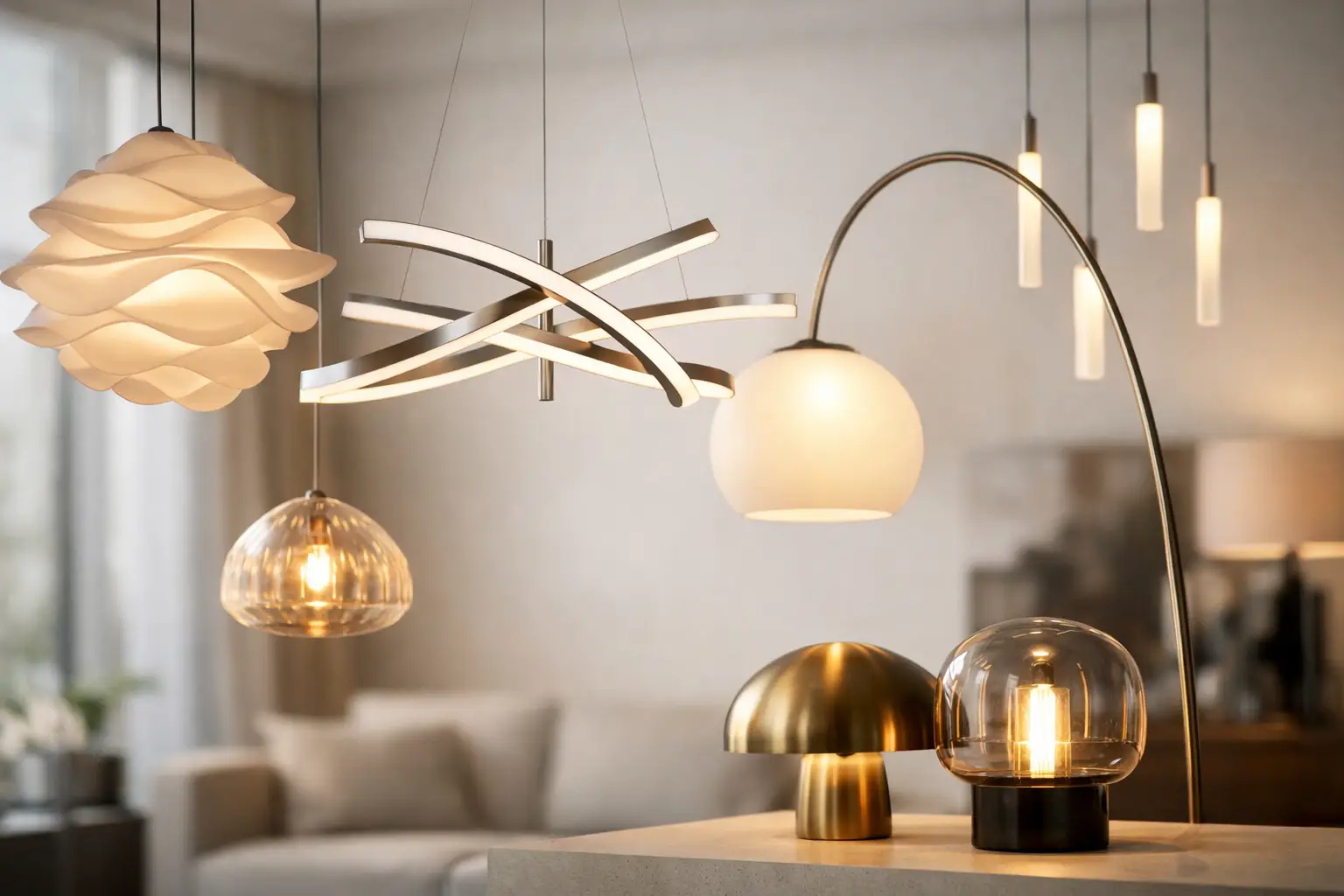
Statement pendants are becoming less formal and more expressive. Expect organic silhouettes, oversized shades, pleated textures, fluted glass and asymmetric forms that read almost like small-scale sculpture. Above a dining table or kitchen island, one strong fitting can give the room an immediate focal point.
Scale matters more than trend chasing here. A tiny pendant over a large table will disappear, while an oversized fitting in a narrow room can feel heavy. For long tables and islands, a linear pendant or a row of smaller fittings often provides better coverage and a cleaner visual rhythm. Keep enough clearance above the surface so people can see each other comfortably across the table.
The finish can quietly tie the whole scheme together. Smoked glass and dark metal bring depth to contemporary spaces, while opal glass, linen-effect shades and soft brass lend warmth without looking overly traditional.
2. Portable lamps make rooms more flexible
Rechargeable table lamps are moving beyond restaurants and terraces into every corner of the home. Their appeal is simple: no trailing cable, no need for a nearby socket, and the freedom to bring a pool of light exactly where the room needs it.
Use one on a shelf, sideboard, bedside table or garden dining table to make a space feel more intimate. They are especially effective in open-plan rooms, where a portable lamp can define a quieter seating zone after dark. Choose dimmable versions where possible. The ability to lower the output is what turns a useful lamp into an atmosphere-maker.
For outdoor use, check that the fitting has an appropriate IP rating and is designed for exposure to the conditions it will face. A covered patio and an open Irish garden need different levels of protection.
3. Concealed LED lighting becomes part of the architecture
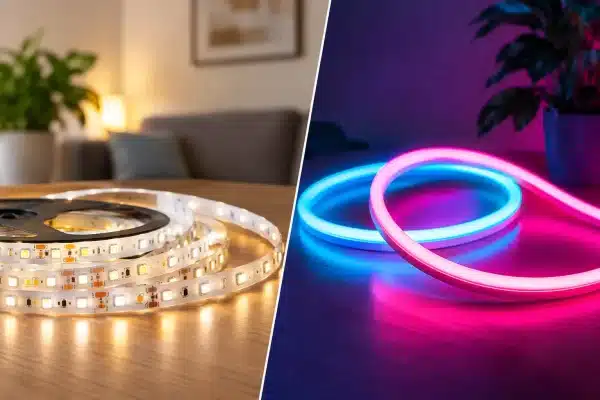
The best LED tape is often the lighting you notice least. In 2026, integrated illumination will continue to shape kitchens, media walls, wardrobes, staircases and shelving, making spaces look more detailed and more expensive without filling them with visible fittings.
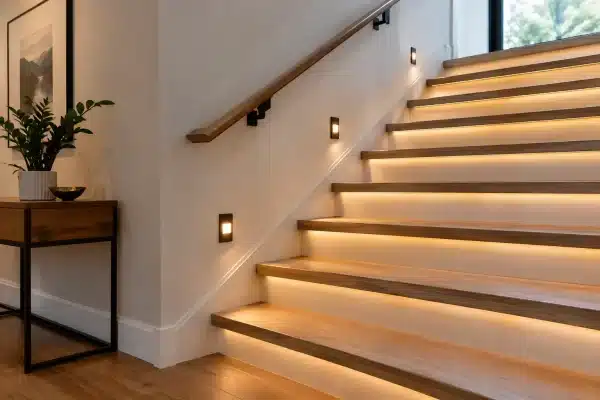
Under-cabinet lighting remains a practical favourite, but the opportunity is wider. A warm LED channel beneath a floating vanity can make a bathroom feel calmer at night. Vertical illumination inside a wardrobe makes dark clothing easier to distinguish. Light set into a handrail or beneath stair treads adds safety while giving a hall a refined, hotel-inspired finish.
The quality of the installation matters. Exposed tape can create dots and harsh reflections, particularly on glossy surfaces. Profiles, diffusers and correctly positioned drivers produce a smoother line of light and a far better finish. For custom joinery, unusually shaped spaces or project-led work, bespoke LED strip solutions are worth considering from the start rather than as an afterthought.
4. Wall lights bring depth to plain rooms
Wall lighting is one of the easiest ways to make a room feel layered. It draws the eye around the space, reduces reliance on ceiling fittings and gives walls a purpose after dark. In hallways, paired wall lights can create a welcoming route through the home. In bedrooms, adjustable reading lights free up bedside-table space. In living rooms, a decorative sconce can make a quiet corner feel deliberately composed.
The 2026 direction is tactile and architectural: ribbed glass, ceramic finishes, curved metal arms and softly diffused shades. There is also growing interest in plug-in wall lights for spaces where rewiring is not practical. They offer much of the same visual impact, though a hardwired fitting will usually give the cleanest, most permanent result.
Positioning is key. Wall lights should illuminate faces and surfaces gently rather than shining directly into someone’s eyes. In a corridor, consistency is more important than cramming in extra fittings.
5. Decorative bulbs stay visible
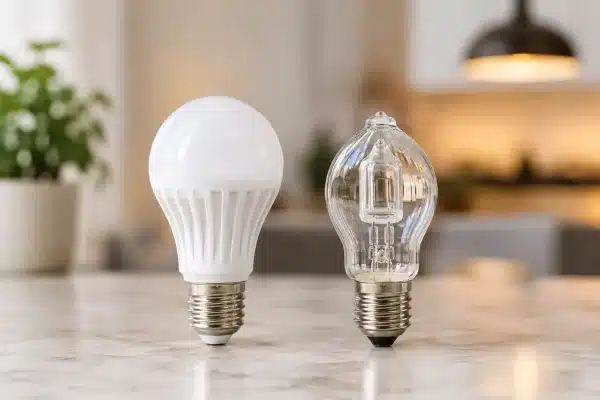
As fittings become simpler in shape, bulbs are being treated as part of the design. Globe bulbs, elongated forms and softly tinted glass work particularly well in open pendants, wall lights and multi-drop clusters. The look is relaxed, but it needs restraint.
A decorative filament bulb can be beautiful at low brightness, yet it may not provide enough light for a room on its own. Pair it with other sources or put it on a dimmer so it can deliver mood without sacrificing function. Avoid overly amber bulbs in areas where colour accuracy matters, such as dressing spaces or kitchens.
6. Smarter controls feel quieter and more useful
Smart lighting is maturing into something less showy and more genuinely helpful. The most useful set-ups let you adjust brightness, warmth and scenes to suit the time of day, then control the room from a switch as easily as from an app.
Think of a kitchen scene for cooking, a lower-level setting for dinner, and a soft route through the house for late evenings. Timers can support security while away, and motion sensors can make utility rooms, wardrobes and stairways more convenient. The right system depends on the property: a simple smart bulb may suit a rented flat, while a renovation is the ideal moment to plan smart switches, dimming circuits and integrated LED drivers properly.
Do not let technology complicate a household. Every frequently used light should still be intuitive for guests, children and anyone who prefers a conventional wall switch.
7. Bathrooms become softer, not dimmer
Bathrooms are moving away from a single bright ceiling light and a mirror that casts shadows across the face. The better approach combines practical, flattering mirror illumination with ambient ceiling or wall light, then adds a lower-level feature where the layout allows.
Backlit mirrors, illuminated cabinets and discreet vanity lighting are leading choices because they help with everyday routines while bringing a calm, spa-like quality to the room. Safety must lead every bathroom decision. Select fittings with the correct IP rating for their zone, and use a qualified electrician for installation.
8. Outdoor lighting extends the evening
Gardens, patios and entrances are being treated as rooms in their own right. Rather than flooding the entire area with one powerful fitting, 2026 schemes use pools of light: a wall light at the door, low-level path markers, gentle illumination around planting and a portable lamp on the table.
This layered approach feels more welcoming and is kinder to neighbours and wildlife than excessive brightness. Aim the beam carefully and choose warm light where relaxation is the goal. For a stronger visual effect, use light to pick out a tree, textured wall or change in level, rather than trying to illuminate every inch of the garden.
How to make 2026 trends work in your home
Start with the room’s real use, not the fitting you first fell for. Ask what needs to be seen clearly, where people sit or move, and when the space is used. Then add decorative pieces where they will have the most impact.
If you are updating one room, prioritise dimming and multiple light sources before chasing a complete matching set. A pendant, a floor lamp and a pair of wall lights do not need to be identical to belong together. Repeating a finish, material or shape is usually enough to create cohesion.
The strongest lighting schemes for 2026 will feel effortless because they respond to real life: bright enough for the busy moments, soft enough for the slower ones, and designed to make every room feel more like yours.