A bathroom can look beautifully finished in daylight and feel completely wrong the moment the lights go on. That is usually not a tile problem or a paint problem – it is a light colour problem. If you are asking what colour light for bathroom design works best, the short answer is this: most bathrooms suit a neutral white light, but the best result depends on where the light sits and how you use the room.
A well-lit bathroom needs to do two jobs at once. It has to be practical enough for shaving, skincare and make-up, while still feeling calm at the start and end of the day. Get the colour temperature wrong, and the room can feel harsh, gloomy or slightly off, even with expensive finishes.
What colour light for bathroom use is best?
For most bathrooms, the sweet spot sits between 3000K and 4000K. That range gives you a clean, flattering light without tipping too far into the cold blue look that can make the space feel clinical.
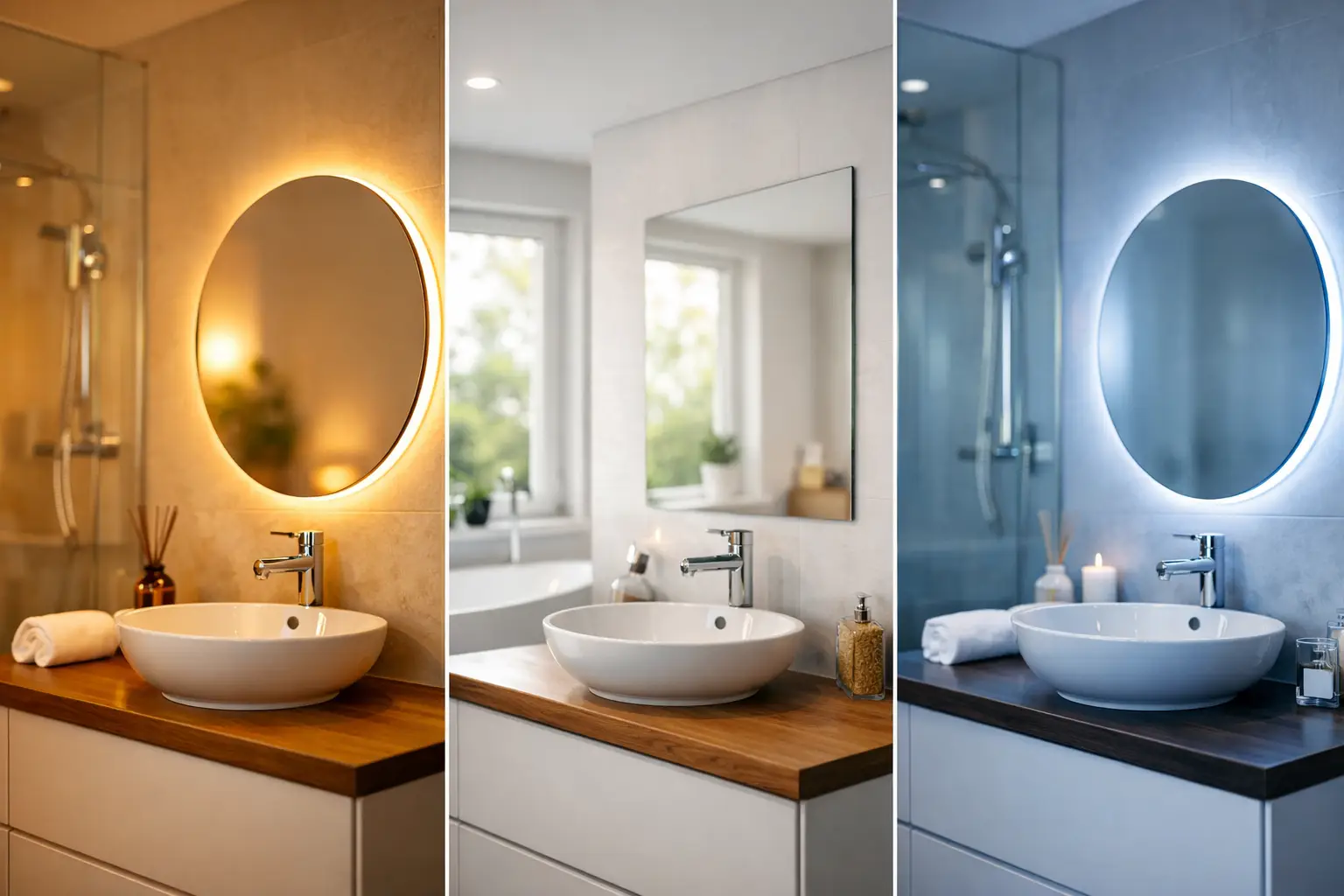
At 3000K, the light is warm white. It feels softer and more relaxed, which works well in bathrooms designed to feel like a mini spa. Stone finishes, brushed brass, warm woods and beige tiles usually look rich and inviting under this kind of light. The trade-off is that very warm light is not always ideal at the mirror, especially if you want clear visibility for grooming.
At 4000K, the light is cooler and crisper. It is often called cool white or neutral white depending on the fitting. This is a popular choice for task-focused bathrooms because it gives sharper definition and helps with everyday routines. White sanitaryware, grey tiles and black fittings often look especially fresh under this temperature.
If you want one simple answer, 3500K to 4000K is usually the safest all-round choice. It keeps the room looking bright and modern while still feeling comfortable.
Why warm white is not always wrong
There is a common idea that bathrooms should always use bright cool lighting. That is not strictly true. A bathroom is not just a task room anymore. In many homes, it is part of a wider interior scheme, and the lighting should support that.
A warm white bathroom can look stunning, especially in en suites, guest bathrooms and spaces where ambience matters as much as practicality. If the room includes decorative pendants, wall lights or LED strip details, a warmer tone can make the whole design feel more considered and more luxurious.
The catch is visibility. If your only source of light is a very warm ceiling fitting, skin tones can look slightly yellow and fine detail becomes harder to judge. That matters when you are applying make-up or shaving. In that case, the better approach is layered lighting rather than relying on one bulb to do everything.
The best light colour for mirror areas
The mirror is where bathroom lighting either works brilliantly or lets the whole space down. Overhead lighting alone often throws shadows onto the face, which is why people end up leaning towards the mirror and still not seeing clearly.
For mirror lighting, a neutral white around 3500K to 4000K tends to be the best choice. It gives a more accurate view of skin tone and detail without feeling too stark. This is especially useful in family bathrooms where the mirror gets heavy daily use.
Placement matters just as much as colour temperature. Lights positioned at the sides of the mirror or integrated around it create a more even effect than a single ceiling spot above. If you prefer a softer overall bathroom mood, you can still keep the mirror area slightly cooler while using warmer ambient lighting elsewhere.
That mix often delivers the best of both worlds – a room that feels stylish and calm, with enough clarity where you actually need it.
Understanding Kelvin without overcomplicating it
When shopping for bathroom lighting, you will see colour temperature listed in Kelvin, usually shown as K. It sounds technical, but the basics are straightforward.
2700K is a very warm white, similar to the cosy glow often used in living rooms and bedrooms. It can work in bathrooms with a soft, boutique look, but it is usually too warm for a main task light.
3000K gives you a warm but cleaner white. It is a strong option if you want the bathroom to feel inviting and design-led.
3500K sits in the middle and is often overlooked, but it is one of the most useful choices for bathrooms because it balances comfort and clarity.
4000K is bright, fresh and practical. For many households, this is the most dependable option.
Anything above that starts moving into a noticeably cooler, bluer light. That can suit some commercial settings, but in a home bathroom it often feels harder than people expect.
How bathroom style affects your choice
The right answer to what colour light for bathroom interiors depends partly on the finishes in the room. Light interacts with surfaces constantly, and some materials look better under certain temperatures.
Bathrooms with warm-toned tiles, timber vanities, brushed brass or soft neutral palettes usually benefit from 3000K lighting. It enhances depth and keeps the scheme cohesive. If the room is designed for relaxation, this warmer tone supports the atmosphere.
Bathrooms with white marble, crisp porcelain, chrome fittings or monochrome styling often suit 4000K better. It keeps everything looking sharp and clean.
Small bathrooms can go either way. A cooler light may make the room feel fresher and more open, while a warmer light can make it feel more inviting. If the room has no natural light, avoid extremes. Very warm light can make it feel dim, and very cool light can feel flat. Neutral white usually lands best.
Layered bathroom lighting works better than one fixed answer
If you want the bathroom to feel high-end, think less about choosing one perfect light colour and more about building layers. This is where a bathroom starts to move from basic to polished.
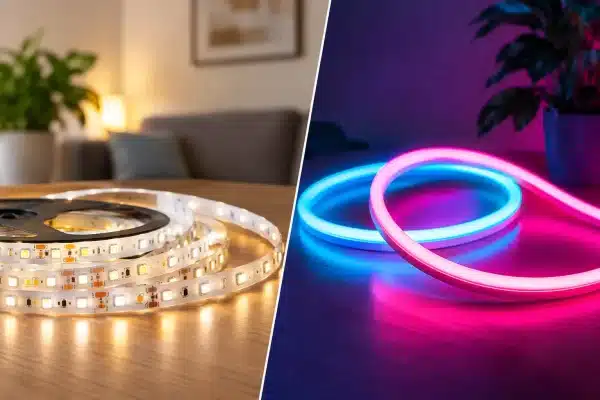
Your ceiling lighting can provide the main illumination, often in the 3000K to 4000K range depending on the look you want. Mirror lighting should usually lean neutral for better visibility. Accent lighting, such as LED strips under a floating vanity or around a recessed shelf, can add softness and make the room feel more considered.
This approach gives the space flexibility. Bright when needed, softer when you want to unwind. It also helps larger bathrooms feel more balanced, because every part of the room does not need the same lighting treatment.
In project-led spaces, this layered effect is often what creates that showroom-quality finish. It looks effortless, but it is usually the result of thoughtful planning.
Common mistakes when choosing bathroom light colour
One of the most common mistakes is matching the bathroom to the rest of the house without thinking about function. A warm 2700K lamp looks perfect in a bedroom, but that does not mean it belongs above a bathroom mirror.
Another mistake is choosing the brightest or coolest option assuming it will feel cleaner. Brightness and colour temperature are not the same thing. A bathroom can be bright without being cold.
It is also easy to overlook consistency. If one fitting is warm white, another is cool white and the mirror has a different integrated LED again, the room can feel disjointed. That patchwork effect is particularly noticeable in bathrooms because surfaces tend to be reflective.
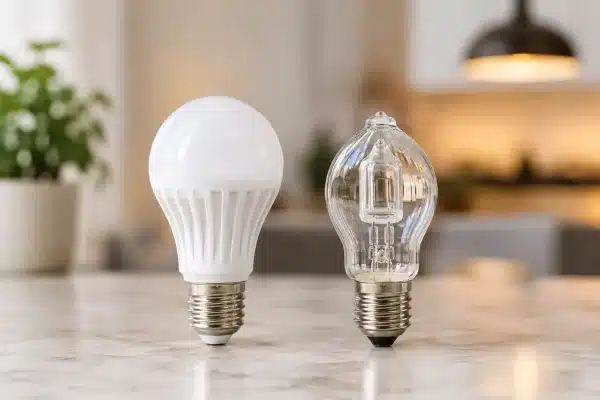
Finally, people often focus on the fitting and ignore the bulb specification. A stylish fitting will not rescue the wrong light colour.
So, what should you choose?
If you want a clear recommendation, choose around 3500K to 4000K for your main bathroom lighting and keep mirror lighting in that same neutral range for the best day-to-day usability. If your priority is a softer, more luxurious mood, bring in 3000K through ambient or decorative lighting rather than making the whole room overly warm.
For bathrooms that need to do everything, from school-run mornings to slower evening routines, the best result is usually a combination of practical neutral light and softer layered accents. That is where style and function finally stop competing.
A good bathroom should flatter the room, the finishes and the people using it. Choose the light colour with the same care you give to tiles, brassware and mirrors, and the whole space will feel better the moment you switch it on.