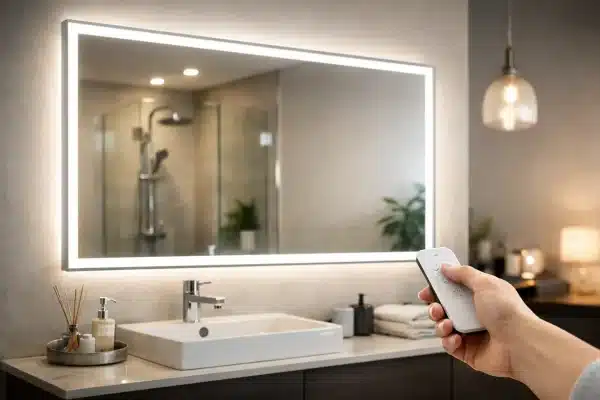
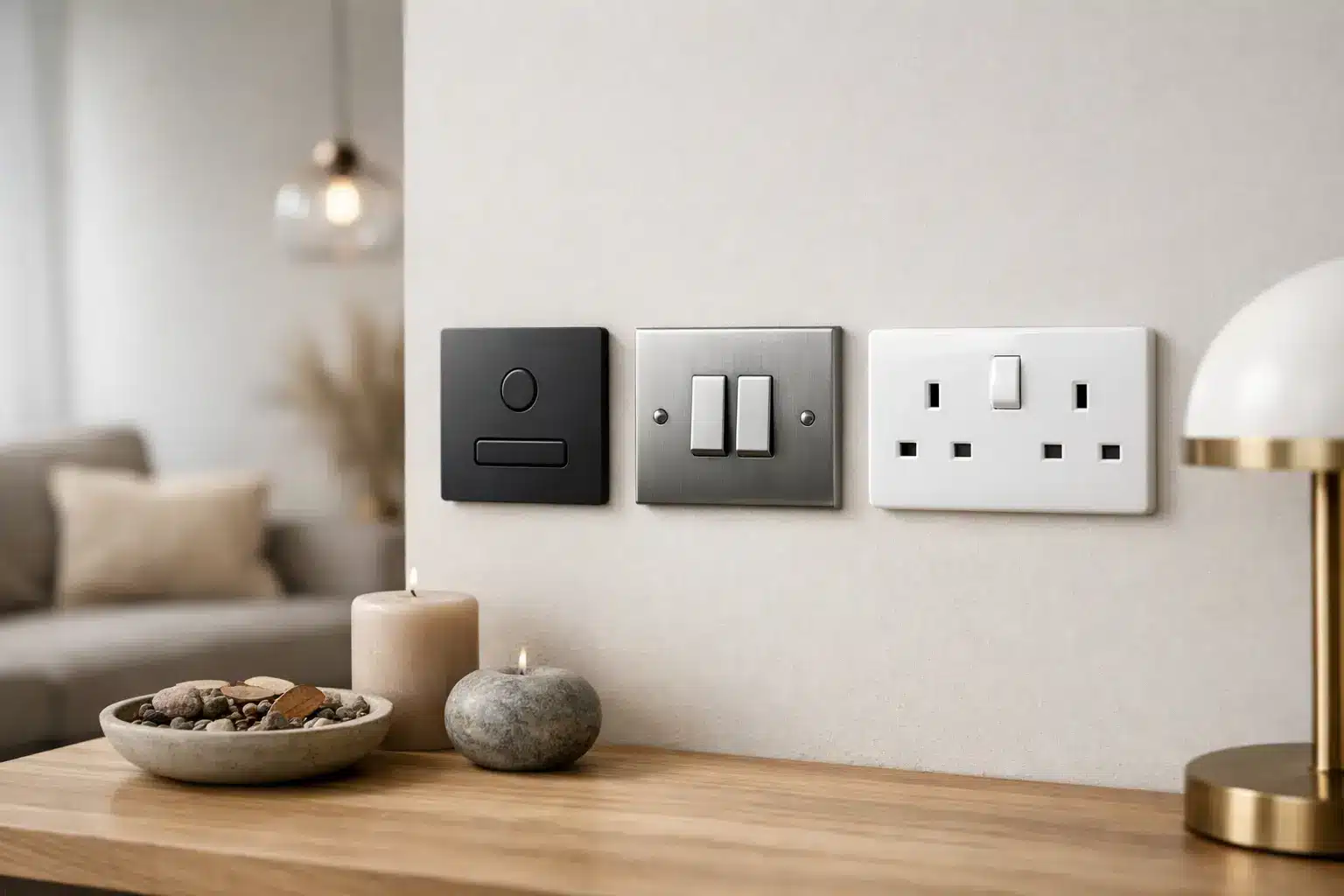
A switch is one of the first things you touch when entering a room, while sockets sit at eye level in kitchens, beside beds and across carefully finished feature walls. This switches and sockets guide will help you treat these everyday essentials as part of the design scheme, rather than an afterthought once the decorating is done.
The right choice brings a room together. The wrong one can interrupt an otherwise beautiful tile, paint colour or lighting plan. Finish, placement and function all deserve a little thought before the electrician starts work.
Start With the Room, Not the Finish
It is tempting to choose a favourite finish first, but the most successful schemes begin with how the room will be used. A kitchen needs accessible outlets for appliances and task lighting controls. A bedroom benefits from switches positioned for both the doorway and the bedside. In a living room, a considered socket layout avoids extension leads trailing across the floor and lets you create different moods with layered lighting.
Walk through each space and picture ordinary moments. Where will you charge a mobile phone? Where will a floor lamp sit? Will the kitchen island need power for a laptop or small appliances? Which lights should be controlled from more than one entrance? This simple exercise identifies the practical requirements before style enters the conversation.
For renovations, it is also worth considering furniture early. A socket placed behind a tall cabinet may be technically available but functionally useless. Equally, sockets hidden behind a wall-mounted television, beside a dressing table or within a kitchen island can make a finished room feel far more considered.
Choosing Switches and Sockets That Suit Your Style
Switches and sockets now come in finishes that can either disappear into the background or provide a crisp design detail. The best option depends on the room’s palette, the hardware already in place and how much contrast you want.
White plastic remains a practical, familiar choice, particularly where a clean and understated look is the aim. It works well in utility spaces, rental properties and bright contemporary interiors where visual calm matters more than contrast. For a more elevated finish, slimline metal plates can bring a stronger architectural feel to walls.
Matt black suits monochrome schemes, industrial-inspired interiors and rooms with black door furniture, window frames or track lighting. It creates definition against pale plaster, warm timber and textured tiles. Brushed chrome offers a cooler contemporary look, while brass and bronze tones add warmth beside oak, natural stone, rich paint colours and traditional detailing.
Consistency helps, but it does not have to mean using the same finish throughout the whole property. You might choose black switches in a kitchen with black handles, then opt for softer antique brass in a warm, layered living room. The key is to make each choice look intentional. Repeating a finish in lighting fittings, cabinet hardware or mirror frames gives the scheme a sense of connection.
Get the Switching Right Before Decorating
A beautiful switch plate cannot compensate for an awkward lighting layout. Think about the journey through a room and the different ways you want it to feel at different times of day.
A one-way switch controls a light from one position, which is suitable for many small rooms. Two-way switching controls the same light from two locations, making it ideal for a hallway, landing, bedroom or room with more than one entrance. An intermediate switch is used where a light needs control from three or more positions, such as a long corridor or a staircase spanning several levels.
In open-plan spaces, avoid putting every light on a single circuit. Separating pendants, downlights, under-cabinet lighting, wall lights and decorative LED tape gives you much more control. During the day, you may only need task lighting around the kitchen. In the evening, a pendant and soft accent lighting can create a more relaxed atmosphere without flooding the room with brightness.
Consider the visual side of the switch plate too. A multi-gang plate groups several controls together, keeping the wall tidy, but it should still be easy to understand at a glance. For larger schemes, discreet labels can save frustration for guests, family members and future occupants.
Dimmers Need a Little Planning
Dimmers are one of the simplest ways to make a lighting scheme work harder. They allow bright, practical illumination for cooking, reading or getting ready, then lower the intensity for dinner, films or a quieter evening. However, the dimmer, fitting and bulb must be compatible.
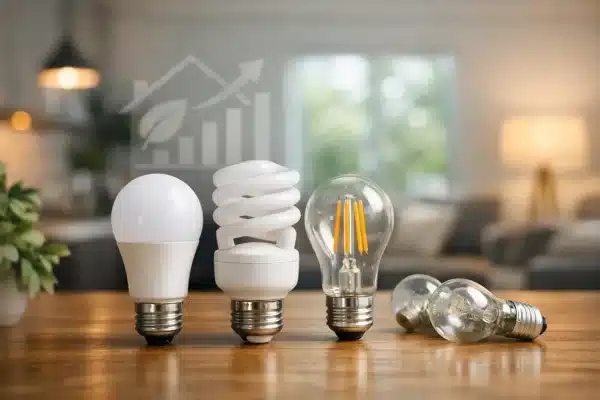
Not every LED bulb is dimmable, and not every dimmer works with every dimmable LED. Flickering, humming, limited dimming range or lights that fail to switch off properly are usually compatibility issues rather than a fault with the fitting. Check the specification of the bulbs and light fittings before choosing a dimmer, and ask a qualified electrician to confirm the correct dimmer type for the load.
For a room with several lighting layers, dimming the decorative and ambient sources often has the greatest impact. Keep task lighting controllable at a useful level, especially in kitchens, home offices and bathrooms where clarity matters.
Socket Layouts That Make Everyday Life Easier
The most common socket mistake is simply not allowing enough of them. Modern homes carry more chargers, lamps, screens, appliances and smart devices than ever, and adding sockets after plastering and painting can be disruptive.
In bedrooms, consider sockets and USB charging where they are genuinely useful, particularly at each side of a bed. In living rooms, allow for lamps, television equipment, routers and occasional charging without relying on multiway adaptors. In a home office, plan for the desk arrangement rather than placing a single outlet wherever it happens to be easiest to wire.
Kitchens require the most detailed planning. Small appliances tend to migrate across worktops, so socket positions should support how you cook, not just meet the minimum requirement. Pop-up or discreet island sockets can be a smart addition where permitted and professionally specified, while under-cabinet outlets may keep splashbacks cleaner and more visually uninterrupted.
USB and USB-C sockets can reduce plug clutter in the right places, but they are not automatically the answer everywhere. Charging standards change, and a conventional socket remains more flexible for lamps, appliances and plug-in charging blocks. A balanced mix is usually the most future-friendly approach.
Safety and Special Locations
Bathrooms and outdoor areas need products selected for the conditions they will face. Moisture, splashes and changing temperatures mean that standard accessories are not suitable in every location. The IP rating tells you how well a fitting is protected against ingress from solids and water, and the correct rating depends on the exact zone and installation position.
Do not make a bathroom or exterior selection based on appearance alone. A qualified electrician should advise on permitted locations, product ratings, circuit protection and local electrical requirements. This matters especially in wet rooms, around showers, near sinks and in exposed garden spaces.
Outside, think beyond a single socket by the back door. Weatherproof outlets can be useful for garden lighting, lawn equipment, festive displays, electric patio heaters or outdoor cooking areas. Position them where they will serve the space without creating visible cables across paths or seating areas.
Smart Controls Without Complicating the Home
Smart switches, touch controls and app-connected lighting can add real convenience, but only when they suit the people using the space. They are particularly effective for layered living rooms, hospitality settings, garden lighting and homes where routines benefit from timed scenes.
The best smart scheme still works manually. Visitors should be able to turn on the lights without downloading an app, and a household should not lose basic control because a mobile phone battery is flat or Wi-Fi is unavailable. For this reason, physical controls remain central even in a connected home.
Think of smart control as a way to support atmosphere. A morning setting might bring on kitchen lighting at a useful brightness, while an evening scene could soften the living area, illuminate a display shelf and switch on exterior lighting. For bespoke LED tape or larger project-led lighting plans, Lux Lighting can help bring the controls, fittings and overall ambience into one considered scheme.
A Finish That Looks Good for Years
Before committing, look at samples in the room where they will be installed. Daylight, warm bulbs and darker paint colours can all change how brass, black or chrome appears. Also consider how often a plate will be touched. Highly polished finishes can show fingerprints more readily, while brushed and matt surfaces tend to be more forgiving in busy family spaces.
Quality matters in the feel of the switch as much as its appearance. A neat plate profile, solid fixing and satisfying action create a small but noticeable impression every day. Match that detail with a well-planned lighting layout, and the room will feel finished from the first click of the switch.