The right outdoor wall lights front door scheme does more than help you find your keys. It gives the façade a finished feel, makes visitors feel expected and brings a reassuring glow to the approach after dark. For a home with a smart new front door, fresh render or considered landscaping, an ill-fitting light can stand out for all the wrong reasons. The aim is simple: lighting that feels like part of the architecture by day and makes the entrance more inviting at night.
Start with the front door and the façade
Look at the entrance as a complete composition rather than choosing a fitting in isolation. The door colour, hardware, house number, porch depth and exterior material all influence what will look right. A traditional brick home can take a lantern-style wall light with warm metal detailing beautifully, while a more contemporary render or cladding finish often suits a clean-lined black, graphite or stainless-steel fitting.
Scale is the detail that makes the biggest difference. A light that is too small can disappear beside a wide door or tall porch, while one that is oversized may crowd the doorway. As a useful starting point, choose a fitting around one-quarter to one-third of the door height. This is not a strict rule, particularly where there is a substantial canopy or double entrance, but it helps prevent a timid result.
For a standard single door, one central fitting above the frame can work well when there is limited wall space. Pairing matching wall lights either side of the door creates a more balanced, premium look and spreads light more evenly across the threshold. It is especially effective on detached homes, period properties and entrances with broad brickwork or panelling.
Outdoor wall lights for front door placement
Position affects both appearance and practical performance. Side-mounted lights should generally sit around eye level or slightly above it, usually between 1.65 and 1.8 metres from the ground. At this height, they illuminate faces, locks and steps without directing glare straight into someone’s eyes.
If your light sits above the door, ensure it projects far enough to light the doorstep rather than simply washing the wall. A deeper porch changes the calculation. In that setting, a light close to the house may leave the outer edge of the canopy and the steps in shadow. You may need a pendant, ceiling light or a supplementary wall fitting nearer the entrance edge.
Avoid placing a bright, exposed lamp directly opposite a glazed panel, polished door furniture or a nearby window. Reflections can be distracting and can make the light feel harsher than its lumen output suggests. Fittings with frosted glass, opal diffusers or a shaded design soften the source and give a more flattering pool of light.
Symmetry is elegant, but not compulsory
A centred pair of wall lights is a classic choice, yet it is not the only good layout. Narrow side access, a gate, a letterbox or an off-centre door can make symmetry impossible. In these cases, use one confidently scaled fitting and let it align with a strong feature, such as the door handle side, a porch column or a wall-mounted house number.
The key is intention. A single fixture chosen because it suits the space looks considered. A single fixture selected simply because the cable happened to be there rarely does.
Choose a finish that belongs outdoors
Your exterior lighting has to handle rain, changing temperatures and the moisture that comes with an Irish winter. A finish should look refined, but it also needs to be appropriate for its position and exposure.
Matt black is a versatile choice for contemporary homes. It creates definition against pale render and pairs naturally with black-framed windows, railings and modern door hardware. Antique brass, bronze and aged metal finishes bring warmth to traditional entrances, painted timber doors and stone façades. Stainless steel offers a crisp, architectural appearance, though coastal or highly exposed locations need extra care. Salt in the air can be demanding, so choose fittings specifically suited to coastal conditions and maintain them as recommended.
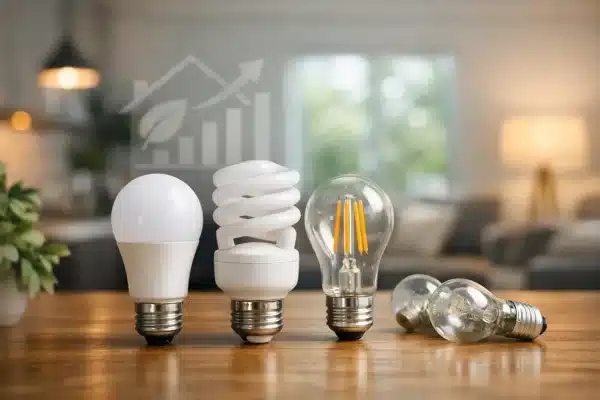
Glass deserves equal attention. Clear glass shows off a decorative filament LED bulb and gives lantern fittings their character. It will also reveal dust, water marks and insects more readily. Opal or frosted glass is lower-maintenance visually and delivers a softer, more even glow. Smoked glass can look striking, but check the brightness is sufficient before using it at a main entrance.
For the most cohesive result, repeat one or two finishes already visible outside. You do not need every surface to match exactly. A black wall light can sit confidently with brushed nickel door furniture, for example, if the overall palette remains restrained. What matters is that the scheme feels edited rather than accidental.
Get the practical specification right
Style is only half the decision. Outdoor fittings must have a suitable IP rating, which indicates protection against dust and water. For a sheltered porch, IP44 is commonly a sensible minimum. Where the wall light is exposed directly to rain, choose a higher rating where possible, such as IP54 or IP65, depending on the fitting and location.
The electrician installing the light should also consider cable routing, existing wiring and whether the fitting needs to work with a sensor or switch arrangement. External electrical work should always be completed safely by a qualified professional. It is tempting to choose a fitting first and think about the connection later, but a quick site check can prevent a beautiful light ending up in an impractical position.
Integrated LED wall lights offer a sleek profile and often create a neat up-and-down wash on the wall. They are ideal for a minimalist entrance and can be highly efficient. The trade-off is that the LED is built in, so replacement options depend on the design of the fitting. A light with a replaceable bulb gives more freedom to alter the brightness, colour temperature and decorative look over time.
Select warmth before maximum brightness
At a front door, brighter is not always better. Light that is too cool or too powerful can make the exterior feel clinical, flatten the texture of brick and create uncomfortable glare. For most residential entrances, warm white light around 2700K to 3000K feels welcoming while still giving clear visibility.
Brightness depends on the surrounding darkness, the size of the entrance and whether other lighting covers the path. A modest wall light may be enough at a well-lit street-facing home. A rural property, long driveway or recessed doorway may need stronger illumination, ideally layered with bollards, spike lights or discreet path lighting rather than relying on one glaring fitting.
Make security lighting feel considered
Sensor lighting has a practical role at the front door, particularly for arriving home with shopping, welcoming late visitors or spotting a slippery step. It does not have to look like a security floodlight. Many decorative outdoor wall lights are available with integrated PIR sensors, while smart bulbs and compatible fittings can offer scheduling and app control.
Set the sensor thoughtfully. A sensitivity level that catches every passing pedestrian, pet or car will quickly become irritating for you and your neighbours. Aim the detection zone at your approach route and set the duration long enough to reach the door comfortably, but not so long that the light remains on unnecessarily.
A dusk-to-dawn setting can be a lovely choice for a visible front entrance, particularly when paired with a low-output warm lamp. It provides a consistent welcome and makes the house feel occupied. If energy use is a concern, use LED lighting and reserve higher-output sensor lighting for side gates, garages or darker paths.
Complete the approach, not just the doorway
A beautiful front-door wall light can lose impact if the route to it is completely dark. Think of the entrance in layers: the wall light gives identity at the door, then softer light helps guide people from the pavement, drive or gate. This could be a low bollard beside a path, a subtle spike light through planting or step lights built into raised levels.
Keep the light levels coordinated. If path lighting is brilliant white and the door light is soft amber, the scheme can look disjointed. Matching the colour temperature across the main entrance fittings brings a quiet sense of quality. It also helps exterior materials look consistent from the kerb to the threshold.
For renovations and new-build projects, plan outdoor lighting before finalising render, paving and planting. That allows cables, switches and wall positions to be properly considered rather than added as an afterthought. Lux Lighting can help homeowners and project clients select decorative exterior pieces that work with the wider lighting scheme, from the first impression at the gate to the atmosphere inside.
Your front door is one of the few parts of your home that welcomes you every single evening. Choose a wall light with enough presence to frame it, enough warmth to make it inviting and enough practical protection to keep performing through every season.