A garden path can disappear completely after sunset, turning a beautifully planned outdoor space into somewhere you rush through rather than enjoy. Knowing how to light garden pathways well gives you more than a safer route to the front door, patio or shed. It gives your garden shape, atmosphere and a welcoming sense of arrival after dark.
The most successful schemes do not simply line every edge with bright fittings. They use soft, considered pools of light to guide movement, reveal texture and keep the garden feeling calm. Whether you are upgrading a compact town garden or planning a larger landscaped setting, the right placement and fittings make all the difference.
Start with the journey, not the fitting
Walk your pathway at dusk before choosing any lights. Notice where the route changes direction, where steps interrupt the surface and where planting or walls create shadows. These are the points that need attention first.
Think about who uses the space and how. A front path needs clear orientation for visitors carrying bags or looking for house numbers. A route between a kitchen and patio benefits from warm, low-level light that feels inviting during an evening outdoors. A side passage may need more practical illumination, but it should still avoid a harsh, over-lit look.
Your aim is to make the route easy to read without making every paving slab equally bright. Light the destination, the turns and the changes in level, then allow darkness to remain in the quieter areas of the garden. That contrast is what gives an outdoor scheme depth.
How to light garden pathways with layers
One type of light can work for a simple straight path, but layered lighting creates a more polished result. Combine a guiding light near the path with subtle illumination of nearby planting, a boundary wall or an architectural feature. The pathway becomes part of the garden design rather than a strip of light floating in darkness.
Use low-level lights to guide the way
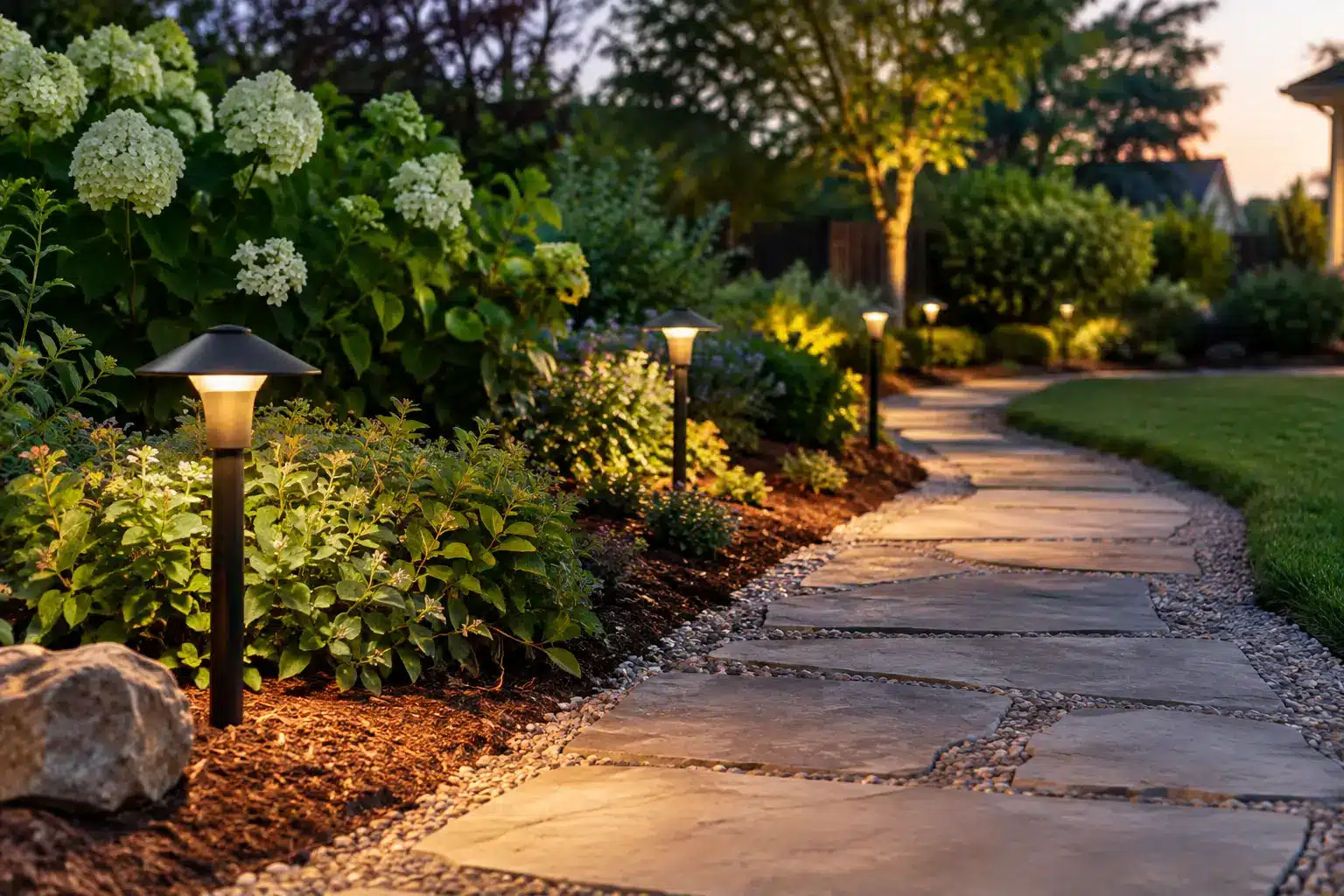
Bollard lights, short post lights and discreet path markers are the most direct way to define a route. They work particularly well beside gravel, paving and formal garden paths, where the fitting itself can contribute to the overall style.
Choose a design that casts light downwards or through a shielded diffuser. This directs illumination on to the walking surface and reduces glare. A bright exposed lamp at eye level can feel uncomfortable, especially when approaching it from a darker area.
As a rule, keep fittings on one side of a narrow path rather than placing them in rigid pairs opposite each other. Alternating the position along a wider route creates a gentler rhythm and avoids the runway effect. Exact spacing depends on the light output, surrounding darkness and path width, but a small overlap between pools of light is usually enough.
Make steps and level changes unmistakable
Steps deserve their own lighting treatment. Recessed step lights, compact wall lights or carefully positioned ground lights can highlight each tread without shining directly into someone’s eyes. This is one place where function should lead the design.
For a contemporary finish, consider lighting the vertical riser of each step rather than the horizontal tread. It creates a crisp line of illumination, keeps the walking surface visible and looks especially effective around patios and raised terraces. If the steps sit beside a wall, integrated low-level fittings can be neater and easier to protect from accidental knocks.
Light nearby features, not just the route
A pathway looks far more inviting when it has something to lead towards. A soft spike light aimed into ornamental grasses, a clipped bay tree or a textured stone wall gives the eye a point of interest beyond the ground. This secondary light also helps users understand the edges of the space.
Keep uplighting restrained. One or two well-placed accent fittings will feel elegant; too many can turn every plant into a stage set. For foliage, aim the beam through leaves or across planting rather than directly at it. The shadows will add movement and character when there is a breeze.
Choose the right type of outdoor pathway light
The best fitting depends on the path material, the style of the property and how much control you want over the scheme. These are the most useful options for most homes:
- Bollard and post lights suit longer routes, drive edges and contemporary landscaping. They provide a visible design feature as well as practical guidance.
- Recessed ground lights create a clean, minimal look in paving, decking or wall edges. They need careful positioning so the beam does not cause glare or collect standing water.
- Spike lights are flexible and ideal for planting borders alongside paths. They can be repositioned as the garden matures or as your planting changes.
- Wall-mounted lights work beautifully for narrow side passages and paths running alongside the house, boundary wall or garage. Downward-facing designs are usually the most comfortable to use.
- Solar path lights offer a quick, cable-free option for lighter-use areas. They are best treated as ambient markers rather than your only source of reliable lighting.
For a cohesive result, repeat a finish already used outdoors. matt black works well with contemporary frames and dark fencing, while bronze, brass-toned or textured finishes can soften traditional brick and natural planting. The light fitting should feel intentional in daylight too, not like an afterthought added only for night-time use.
Get brightness and colour temperature right
More lumens do not automatically mean a better-lit path. In fact, excessive brightness can flatten the garden and make the view from inside the house less appealing. Pathway lighting should normally be modest, with enough output to reveal the surface, edges and hazards comfortably.
Warm white light is usually the most flattering choice for residential gardens. Around 2700K gives a relaxed, golden feel that complements timber, stone and greenery. A slightly cleaner 3000K can suit modern paving and architectural gardens. Cooler white light can appear stark against planting, though it may have a place where a more utilitarian side route needs clarity.
Pay attention to beam direction as much as brightness. A shielded, downward-facing fitting with a modest output often performs better than a stronger lamp that sends light in every direction. If you can see the bare light source from several metres away, consider a lower-glare alternative.
Plan for weather, wiring and maintenance
Outdoor lighting has to cope with rain, dirt, garden tools and the occasional football. Select fittings designed for exterior use and check that the IP rating is appropriate for their location. The more exposed the fitting is, or the closer it sits to the ground, the more important weather protection becomes.
Mains-powered lighting delivers the most consistent performance and is ideal for a permanent scheme, but cable routes need planning before patios are laid or borders are planted. Work with a qualified electrician for fixed outdoor electrical installation. It is safer, neater and gives you the opportunity to position switches, timers and transformers properly from the start.
Low-voltage systems can be an excellent middle ground for garden projects, particularly when several fittings are being installed across beds and paths. They can offer flexibility while retaining a more dependable result than solar alone. For a bespoke layout around decking, retaining walls, seating and steps, professional lighting design can help avoid visible cables, mismatched light levels and poorly placed fittings.
Solar lights are attractive for their simplicity, but performance depends on the panel receiving enough daylight. In shaded Irish gardens, beneath mature trees or during shorter winter days, they may not deliver the reliability needed for a primary access path. Use them where a softer decorative effect is enough, or combine them with a wired scheme at key points.
Make maintenance part of the plan. Clean lenses occasionally, trim back plants that begin to block beams and check that ground-level fittings have not become buried under mulch or gravel. A well-designed system should be easy to live with, not another garden job waiting every weekend.
Add control that suits real life
A pathway light left on at full brightness all night is rarely necessary. Timers and dusk-to-dawn sensors make everyday use effortless, switching lights on when they are genuinely useful. Motion sensors can work well for side gates and practical routes, although they are less suitable beside entertaining areas where frequent activation can feel distracting.
Smart outdoor lighting gives you more flexibility, allowing different scenes for arriving home, dining outside or securing the garden later in the evening. Keep the controls simple. A welcoming front-path setting, a lower ambient garden setting and a brighter maintenance setting are usually all a home needs.
If you are refreshing the whole exterior, Lux Lighting can help bring pathway fittings, wall lights and garden accents into one considered scheme. The result should feel connected to the style inside your home, from the first approach to the last step into the garden.
The best pathway lighting is rarely the feature guests notice first. They simply feel confident walking through the space, pause to admire a beautifully lit plant or terrace, and see the garden as somewhere worth using long after daylight has gone.