A small bedroom rarely feels cramped because of its floor area alone. More often, it is a single harsh ceiling light, a dark corner beside the wardrobe or a bedside lamp that takes up too much room. Knowing how to light a small bedroom means treating light as part of the layout: it should make getting dressed, reading and winding down easier, while giving the room a more considered, spacious feel.
The answer is not simply to make the room brighter. A beautifully lit compact bedroom has layers, gentle contrast and fittings chosen for the space they occupy. From low-profile ceiling lights to wall-mounted reading lamps and discreet LED details, the right combination can make even a modest box room feel calm, polished and personal.
How to light a small bedroom with layers
Relying on one central fitting is the quickest way to create flat, unflattering light. It throws shadows into corners, makes storage feel heavier and gives the room a switched-on or switched-off atmosphere, with very little in between.
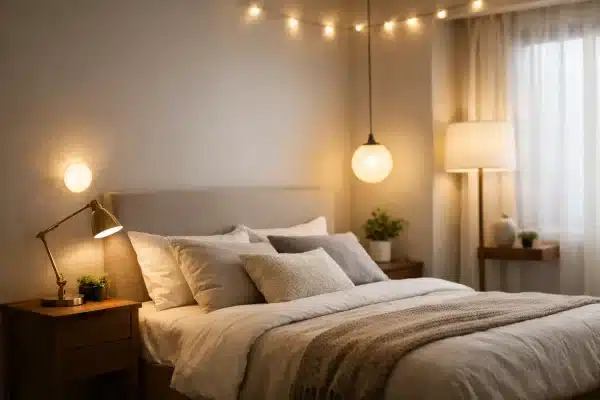
Instead, build the scheme around three jobs: general light for entering and dressing, task light for reading or using a mirror, and ambient light for the quieter moments at the end of the day. You do not need an elaborate system to achieve this. A compact ceiling fitting, two bedside lights and one softer accent source can be enough.
The aim is to spread light around the room rather than pouring it down from one point overhead. When the eye can see the edges of a room clearly, the room tends to feel more open. Soft pools of light also bring texture out of painted walls, timber furniture, bedding and curtains, making a small space feel styled rather than merely furnished.
Start with the ceiling, but keep it slim
Your main light should provide clear, practical illumination without dominating the ceiling. In a low bedroom, a flush or semi-flush ceiling light is often a better choice than a deep pendant. It keeps headroom clear and gives the room a tidier silhouette, particularly where the bed sits beneath the fitting.
If you have a little more ceiling height, a small pendant can still work beautifully. Choose a design with an open shade, glass detail or a light-reflecting finish so it does not create a visual block in the middle of the room. Oversized statement pendants can be effective in a larger bedroom, but in a compact room they need careful placement. They are best reserved for a high ceiling or positioned over a clear area rather than directly above the bed.
For wardrobes, alcoves or an awkwardly shaped room, recessed downlights offer a clean alternative. Use them sparingly and position them to wash light across the walls, not just straight on to the floor. Too many downlights can make a bedroom feel more like a changing room than a retreat.
Free up the bedside table
Bedside lighting is where small-bedroom schemes become genuinely useful. A table lamp brings warmth and character, but it can take up valuable surface space when the bedside table is narrow or already doing several jobs.
Wall lights are an elegant solution. A pair of compact sconces beside the bed leaves room for a book, water glass and charging point, while creating a more tailored hotel-style finish. Adjustable wall lights are especially practical for readers because they direct light on to the page without lighting the whole room.
If wall wiring is not possible, consider slim bedside lamps with a small footprint or plug-in wall lights designed to be fixed beside the bed. A pendant hung at each side can also look striking, but keep the drops short and ensure the shades sit high enough to avoid knocks when sitting up.
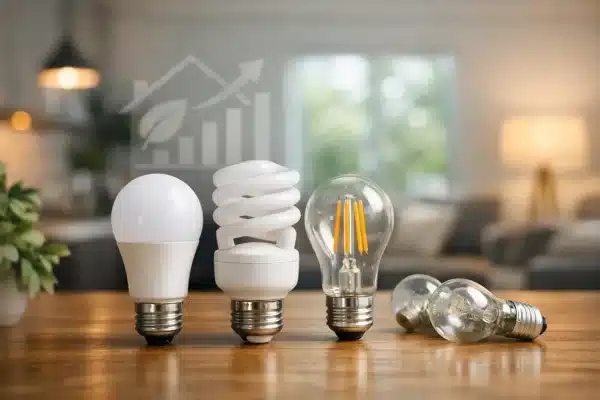
Choose shades that soften the bulb rather than exposing it directly at eye level. Opal glass, fabric and lightly diffused materials produce a kinder glow around the bed. Clear glass can look beautiful, but it works best with a warm decorative filament bulb and dimming control.
Use warm, flexible light rather than maximum brightness
Bedrooms need enough light for everyday routines, yet the brightest bulb available is rarely the right choice. For most bedrooms, warm white light around 2700K creates a relaxed, welcoming atmosphere. It complements warm neutrals, timber finishes and layered textiles particularly well.
A slightly cooler tone can be useful around a dressing mirror or wardrobe, where you want to see colours and details more clearly. The key is balance. If every fitting is cool and bright, the bedroom can lose the softness that makes it restorative. If everything is very dim and warm, getting ready on a dark winter morning becomes frustrating.
Dimmers are one of the best upgrades for a small bedroom because they give the same fitting more than one purpose. The ceiling light can be brighter while sorting laundry or making the bed, then lowered for a gentler evening atmosphere. Always check that both the bulb and fitting are suitable for dimming before installation.
Smart bulbs and smart lighting controls add another layer of flexibility, especially in rented homes or spaces without separate circuits. Set a brighter scene for mornings and a low, warm scene for bedtime, then control it from your phone or voice assistant. This is less about technology for its own sake and more about making a compact room work smoothly throughout the day.
Light the wardrobe and mirror properly
Dark wardrobes make a small bedroom feel less functional and encourage you to turn on the main light at full brightness. Integrated LED strip lighting inside wardrobes or along shelving gives a neat, high-end result, particularly in fitted storage. Sensor-operated lighting is useful here: the light comes on when the door opens and disappears when you are finished.
For freestanding wardrobes, an adhesive LED profile or rechargeable wardrobe light can improve visibility without major electrical work. Position the light towards the front of the interior, angled back towards the clothes, so your body does not cast a shadow over what you are choosing.
A mirror should also have its own considered light source. A lamp placed nearby can work, but side lighting is generally more flattering than a single spotlight overhead. Wall lights on either side of a dressing mirror help reduce shadows on the face and create a more balanced glow. In very tight rooms, a slim illuminated mirror can combine both functions without adding another fitting.
Make the room feel wider with reflected and indirect light
Light does not have to come from a visible lamp to make an impact. Indirect lighting is particularly effective in smaller bedrooms because it adds depth without crowding surfaces.
LED tape beneath a floating shelf, behind a headboard or along the top of a wardrobe can create a soft halo that lifts the eye around the room. This works best when the LED source itself is concealed. You want to see the glow, not individual points of light. A warm white strip in an aluminium profile gives a crisp, finished look and helps manage heat over time.
Mirrors can make this effect work harder. Positioning a mirror opposite or adjacent to a window helps bounce daylight further into the room, while a lamp reflected in the glass can make the space feel more layered after dark. Avoid placing every light directly opposite a mirror, though. Reflected glare is distracting, especially from exposed bulbs.
Lighter wall colours, pale bedding and satin or metallic accents can also support the lighting scheme. They reflect more light around the room than heavy matt black or deep charcoal finishes. That does not mean a small bedroom must be all white. Rich colours can look exceptionally inviting when paired with warm wall lights, soft lampshades and controlled accent lighting. It depends on whether you want the room to feel airy and open or cocooning and dramatic.
Avoid the small-bedroom lighting mistakes
The most common mistake is choosing fittings only for their appearance, then discovering they are too large, too bright or poorly placed. Scale matters. Before buying, measure the width of bedside tables, the available wall space beside the bed and the ceiling height. A compact fitting with a beautiful finish will look more luxurious than an oversized design fighting for attention.
Another issue is placing all light at one level. A ceiling light and two matching lamps can work, but the room becomes more interesting when the sources vary in height. Pair bedside wall lights with a low glow from under a shelf, or add a small floor lamp in an unused corner if there is enough clearance.
Finally, do not forget glare. Bare bulbs, poorly aimed spotlights and cool-white lamps can feel harsh when you are lying in bed. Choose diffused shades, use warm bulbs in relaxation zones and keep directional reading lights adjustable. Good bedroom lighting should never demand attention when it is meant to help you switch off.
A small bedroom does not need more fittings for the sake of it. It needs the right light in the right places: a clear overhead layer, practical bedside illumination and one soft detail that gives the room character. Whether you are refreshing a guest room, planning fitted storage or creating a more restful everyday retreat, a considered scheme from Lux Lighting can make the smallest room feel deliberately designed.