A staircase is more than a route between floors. It is a strong architectural line, often visible from the hall, landing or open-plan living space, and the right light can turn it into a feature after dark. Knowing how to choose stair lighting means balancing safe footing with the softer, considered atmosphere that makes a home feel properly finished.
The best scheme rarely relies on one bright ceiling fitting alone. It uses low-level illumination to define each step, limits glare, and suits the materials, layout and character of the space. Whether you are updating a narrow hallway staircase or planning a dramatic open-tread design, the detail matters.
Start with the staircase, not the fitting
Before choosing a style, look at how the stair is used and what surrounds it. A busy family hallway needs dependable light at the top and bottom of the stairs. A secondary staircase or loft conversion may benefit more from discreet guidance lighting that comes on only when needed.
Consider the stair construction too. Open risers can allow light to travel through the staircase beautifully, but they can also create stronger shadows. A carpeted stair absorbs more light than pale timber or polished stone, so it may need a little more output. Dark walls and a black balustrade can look striking, though they need thoughtful positioning to ensure every tread remains easy to read.
Think about sightlines from adjoining rooms. A row of small wall lights can become part of the interior scheme, while recessed fittings disappear into the architecture. Neither approach is automatically better. The choice depends on whether you want your lighting to make a statement or quietly support the design.
Choose the right type of stair light
There are several effective ways to light a staircase, and combining two approaches often gives the most polished result.
Recessed wall lights
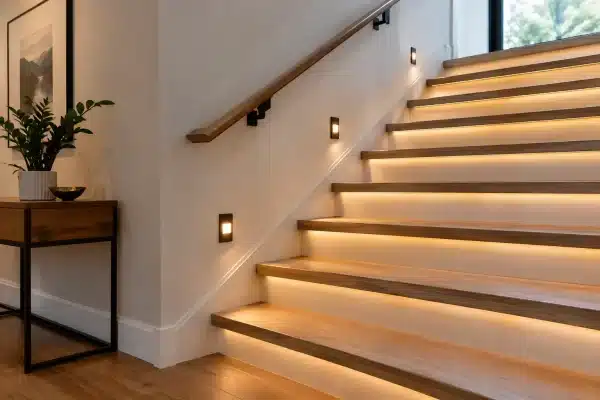
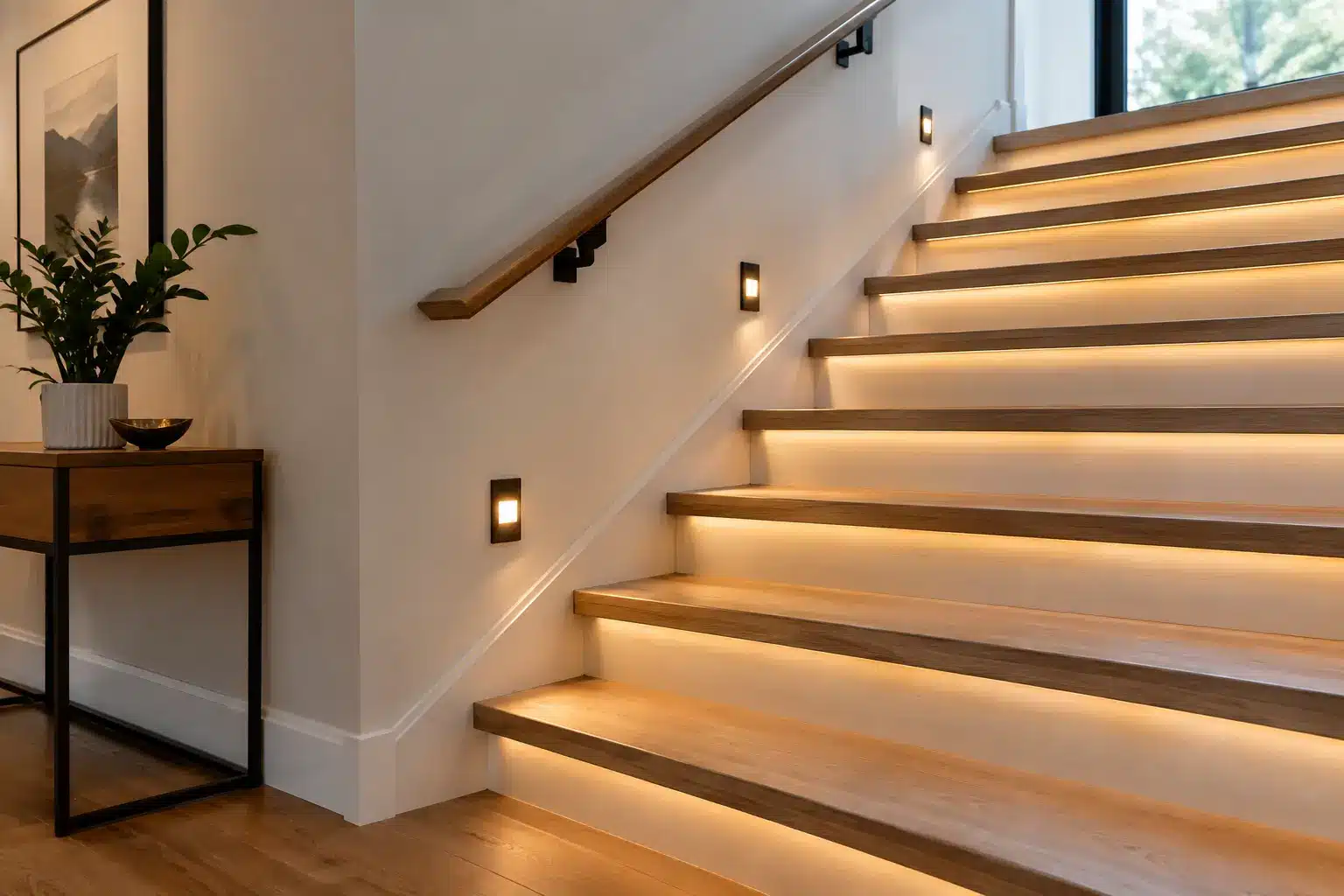
Small recessed wall lights, fitted low along the wall, are a classic choice for stairs. They throw a soft pool of light across the treads without shining directly into your eyes. They suit contemporary homes particularly well, especially where you want a clean, built-in finish.
Position them consistently along the run of the stairs, usually at low level rather than at handrail height. The spacing will depend on the fitting’s beam spread, the stair width and the darkness of the finishes. A lighting plan is worthwhile here: lights set too far apart leave distracting dark patches, while too many can make the staircase look overlit.
Surface-mounted step lights
Surface-mounted step lights offer a similar low-level effect with less need to recess into masonry or plasterboard. They are useful in renovations where cutting into walls is impractical, and they come in finishes that can coordinate with switches, sockets and door hardware.
Choose compact designs with shielded light sources. The fitting should direct light downwards or sideways, not cast a bright point of light across the landing.
LED strip lighting
LED tape is one of the most versatile choices for modern staircases. It can be installed beneath a handrail, under each tread, along a stringer or in a recessed channel to create a precise line of light. On floating stairs, tread lighting creates an especially dramatic effect, making each step appear to hover.
For a refined finish, use quality aluminium profiles and diffusers rather than leaving the tape exposed. They protect the LEDs, soften individual diode points and create a continuous glow. This is also where bespoke LED strip solutions are valuable, as the profile, output, driver and controls need to work together across the full stair run.
Wall lights and pendants
Decorative wall lights can bring warmth and personality to a wider staircase, particularly in period homes or hallways with a generous wall surface. They should complement, rather than replace, practical low-level lighting if the stairs are used frequently at night.
A pendant suspended through a stairwell can be a beautiful focal point in a double-height entrance. It adds scale and visual impact, but does not always provide enough light for individual steps. Pair it with discreet step or wall lighting for a scheme that looks impressive and works every day.
Get brightness and beam direction right
Stair lighting should reveal the front edge of each tread without flattening the space with harsh light. This is why low-output, directed fittings tend to work better than powerful downlights aimed from above.
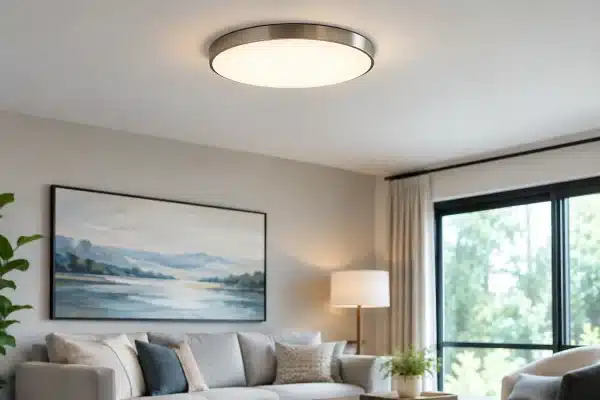
As a guide, step lights are generally about gentle orientation rather than full room lighting. You should be able to move confidently up and down the stairs, but the fittings should not dominate the view from the hall or landing. The main ceiling light, wall lights or daylight can take care of brighter general illumination when required.
Avoid bare lamps, exposed LED points and fittings with an upward-facing beam at eye level. Glare is more than an aesthetic issue on stairs: it can make it harder to judge depth and tread edges. A louvred fitting, frosted diffuser or recessed aperture keeps the source more comfortable to look at.
Select a colour temperature that suits your home
For most residential staircases, warm white lighting around 2700K to 3000K gives the most inviting result. It works beautifully with timber, brass, warm neutrals and soft paint colours, and maintains a relaxed feel during the evening.
If your interior is highly contemporary, with crisp white walls, concrete finishes or cooler-toned joinery, 3000K can provide a clean but still welcoming look. Cooler white light may seem brighter, but it can make a hall feel clinical and can clash with the warm lamps used in nearby living spaces.
Consistency is key. If your hallway ceiling light is warm white, use a matching or closely related colour temperature for the stairs. A mixture of warm decorative lamps and cold step lights can make even an expensive scheme feel disjointed.
Plan switching and sensors early
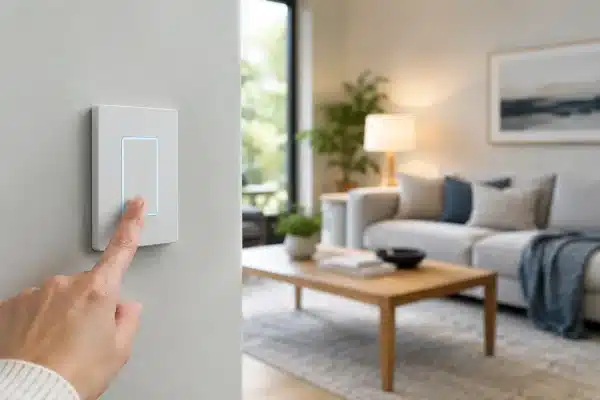
A beautiful stair light is only useful if it is easy to control. At a minimum, stair lighting should be switchable from both the top and bottom of the staircase. This is particularly important in family homes, where the stairs are used at different times of day and night.
Motion sensors are an excellent option for low-level lighting. They allow the stair lights to come on gently as someone approaches, then switch off after a set time. Look for systems that can be adjusted for sensitivity and duration, so a pet or movement in an adjacent hallway does not trigger the lights unnecessarily.
Dimming gives even more flexibility. Brighter settings are useful for cleaning, carrying laundry or helping children get ready in the morning, while a low dimmed level creates calm navigation after bedtime. Smart controls can also be helpful for larger schemes, allowing stair lighting to form part of an evening or night-time scene.
Match the finish to the wider interior
The fitting finish may be small, but it contributes to the sense that a home has been designed as a whole. Black step lights bring definition to a contemporary staircase and coordinate easily with black balustrades or ironmongery. Brushed brass introduces warmth beside timber handrails and neutral walls. White or plaster-in fittings are ideal when you want the light effect without visible hardware.
Do not overlook the quality of the light itself in favour of a fashionable finish. A well-made fitting with a soft, controlled beam will still look good when trends change. Equally, a statement staircase deserves more than a row of generic bright fittings.
Know when to bring in a professional
Stair lighting often involves concealed wiring, drivers, sensors and precise installation points, particularly with LED tape or recessed products. Planning it before plastering, joinery or flooring is fitted gives the cleanest outcome and avoids unnecessary compromise later.
A qualified electrician should install fixed electrical fittings, while a lighting design service can help establish the right spacing, output and controls before work begins. For renovation projects, bring the stair, electrical and joinery plans together early. The handrail profile, wall construction and available voids can all affect what is possible.
The most successful staircase lighting does not announce itself with brightness. It makes every step feel intuitive, gives the space depth after dark and lets the architecture look its best. Choose a scheme that feels considered in daylight as well as at night, and your staircase will become one of the most quietly impressive parts of the home.