A living room can have beautiful furniture, good proportions and all the right colours, then still feel slightly off once the sun goes down. Usually, the problem is the lighting. If you are wondering how to choose living room lighting, the answer is rarely a single fitting in the centre of the ceiling. The rooms that feel warm, polished and easy to live in nearly always use a layered approach.
Living room lighting has to do more than simply brighten the space. It needs to support everyday life – reading, relaxing, entertaining, watching television, helping children with homework, or making the room feel inviting on a dark evening. It also shapes how colours, textures and finishes appear, which is why lighting can make a room feel flatter or far more refined.
How to choose living room lighting without guesswork
The easiest place to start is with the room itself, not the fitting. A large open-plan space needs a different solution from a compact front room with one window. Ceiling height matters. Natural light matters. So does how the room is used at different times of day.
If your living room is mainly a place to unwind in the evening, softer and more flexible lighting should lead the scheme. If it doubles as a family hub, you will need more practical illumination, but it still should not feel harsh. The best schemes balance atmosphere with visibility, which is where layering becomes essential.
Instead of asking, “What light should I buy?”, ask three better questions. What needs to be lit? When does the room need to feel bright? And where do you want to create mood? Those answers shape everything from your ceiling light to your floor lamp placement.
Start with the three layers of light
A well-designed living room usually combines ambient, task and accent lighting. That sounds technical, but in practice it is straightforward.
Ambient lighting is the base layer. This is your overall light, often created by a ceiling pendant, flush fitting, semi-flush fitting, recessed spots or a combination of these. It helps the room feel usable and balanced.
Task lighting is more focused. Think of a floor lamp beside an armchair, a table lamp on a sideboard, or directional wall lights near a reading corner. It gives light where you actually need it rather than flooding the whole room.
Accent lighting adds depth and style. This could be picture lights, LED strip lighting in shelving, wall lights that wash light upwards and downwards, or a statement lamp that draws the eye. Accent lighting is often what makes a room feel considered rather than simply lit.
The real difference between a basic scheme and a polished one is not usually cost. It is whether these layers are working together.
Choose your ceiling light for scale, not just style
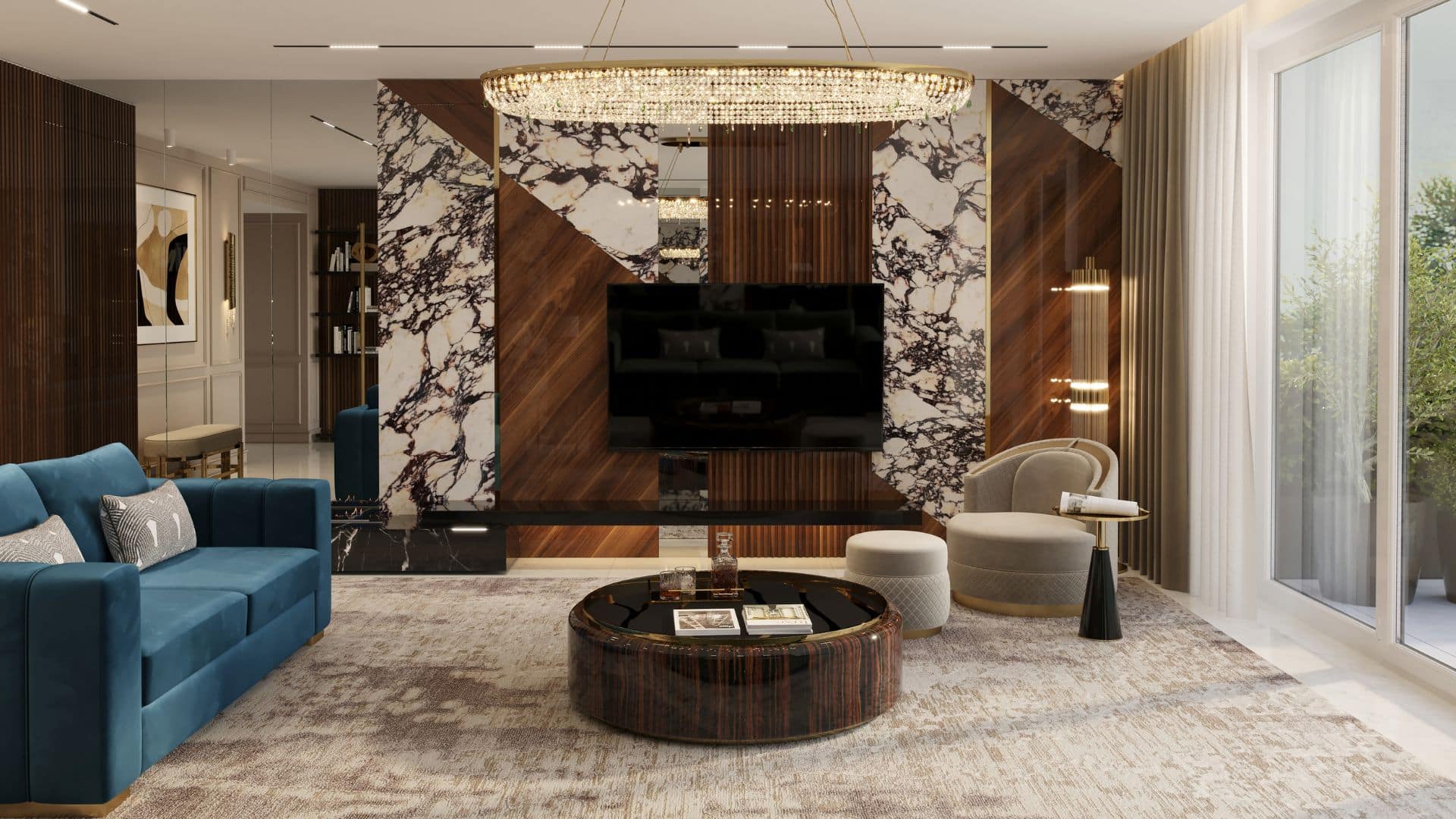
A statement pendant can transform a living room, but scale is where many people get caught out. Too small, and it looks lost. Too large, and it overpowers the room or hangs awkwardly in the sightline.
In a standard living room, the central fitting should relate to the size of the room and the height of the ceiling. If ceilings are lower, flush and semi-flush fittings often make more sense than a low-hanging pendant. In rooms with generous height, a sculptural pendant or multi-arm fitting can add presence and visual structure.
Style matters too, of course. A contemporary brass fitting creates a very different feel from smoked glass, matte black, ribbed ceramic or soft fabric shades. If your room already has strong furniture shapes, you may want the lighting to complement rather than compete. If the scheme feels plain, a bolder centrepiece can do a lot of the design work.
It also depends on what else is in the room. If you already have lamps and wall lights doing much of the atmospheric work, the ceiling light can stay simpler and more architectural.
Use lamps to make the room feel lived in
Table lamps and floor lamps are often where comfort enters the scheme. They soften corners, create pools of warm light and make the room feel immediately more welcoming.
A floor lamp works particularly well beside a sofa, reading chair or unused corner that needs visual height. Arc lamps can be useful over a seating area if there is no ceiling point exactly where you want light. Table lamps are ideal on consoles, side tables and shelves, where they help break up the room and add glow at eye level.
If your living room currently relies on one ceiling fitting, adding two lamps can change the entire atmosphere without any rewiring. That is often the quickest route to a more expensive-looking result.
When choosing lamp styles, think about shade material as much as the base. Opaque shades direct light more deliberately, while linen and fabric shades tend to create a softer, more relaxed effect.
Wall lights can solve more than one problem
Wall lights are useful in living rooms that need atmosphere without sacrificing floor or table space. They are especially effective in narrower rooms, smaller homes, or layouts where every surface is already doing a job.
They can frame a chimney breast, add symmetry beside shelving, brighten a dark side of the room, or support the main ceiling fitting with a softer secondary glow. Uplighters are good for creating a gentle, ambient feel, while adjustable wall lights work better if you want to read or direct light towards artwork.
This is also where decorative lighting starts to shape the room architecturally. A well-placed wall light can draw attention to texture, panelling, alcoves or a fireplace, making the room feel more layered and intentional.
Brightness matters, but softer usually wins
One of the biggest mistakes in living rooms is choosing lighting that is simply too bright. A room used for relaxing should not feel like a kitchen or office once the lights come on.
That does not mean the room should be dim. It means the brightness should be controllable. Dimmable fittings are one of the best upgrades you can make because they allow the room to shift with the moment – brighter for guests, softer for film nights, practical when needed, calmer when not.
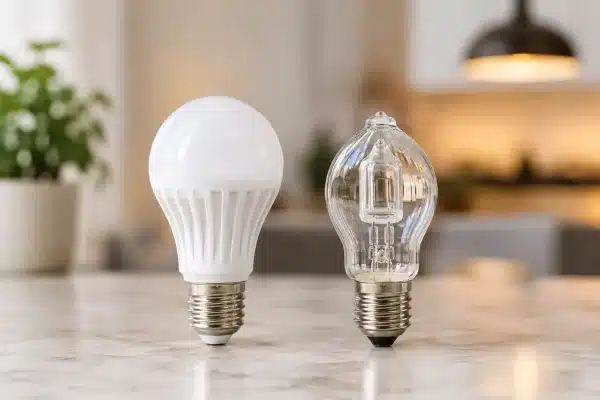
Bulb choice matters just as much as the fitting. In most living rooms, a warm white light tends to be the most flattering and comfortable. Cooler tones can make a space feel sharper, but they often strip away the softness people want in a lounge or family room.
If you have several light sources in one room, keep the light colour consistent. Mixing warm and cool bulbs can make even a well-furnished room feel unsettled.
Think about where shadows fall
Good living room lighting is not just about brightness. It is about direction. A single central fitting often leaves corners dull and creates uneven shadows, which is why the room can feel smaller at night.
By spreading light around the room – with lamps, wall lights or subtle LED details – you reduce those dead zones and make the space feel broader and calmer. Lighting at different heights also helps. Ceiling lights alone can feel flat. Bringing in light at eye level and below creates warmth and visual rhythm.
This is particularly useful in open-plan layouts, where lighting can help define the living zone without adding physical dividers.
Smart features and LED details are worth considering
If you like flexibility, smart lighting can be a practical addition rather than a gimmick. Being able to control brightness, timing or scenes from your mobile phone is useful in busy family homes and in larger spaces with multiple fittings.
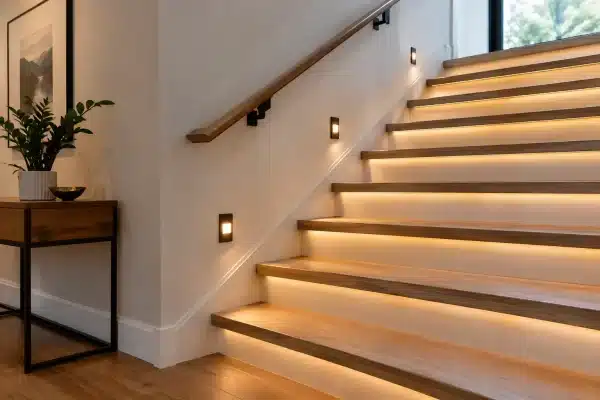
LED strip lighting can also elevate a living room when used carefully. Under shelving, inside media units, beneath floating furniture or around joinery, it adds a clean architectural glow that feels modern and polished. The key is restraint. Too much decorative LED can feel cold or overly theatrical, but the right amount adds depth beautifully.
For more tailored spaces, bespoke solutions can make sense, particularly if you have alcoves, built-in units or a new renovation where lighting is part of the design from the start. That is where specialist advice can save both time and expensive mistakes.
Match the lighting to the mood you want
Every living room has a practical purpose, but it also has a personality. Some spaces are formal and elegant. Others are casual, family-focused and used hard every day. Your lighting should reflect that.
If you want a calm, cocooning room, lean into warm finishes, soft shades, dimmable wall lights and lamps that cast a gentle glow. If you prefer a more design-led look, statement pendants, sculptural floor lamps and architectural wall fittings can bring sharper definition. Neither is more correct. It depends on the feeling you want when you walk in.
That is often the best way to narrow choices. Not by asking what is fashionable, but by asking what would make the room feel right for your life.
For homeowners planning a full refresh, it is worth treating lighting as part of the design scheme rather than an afterthought. At Lux Lighting, that is usually where the strongest results happen – when function, finish and atmosphere are considered together.
A good living room light does not just help you see. It changes how the whole room feels, and once that balance is right, everything else in the space tends to look better too.