A dark corner can make an otherwise beautiful room feel unfinished. The best lamps for dark corners do more than add visibility: they soften hard edges, create depth and make the whole space feel warmer and more considered. Whether it is the unused end of a sofa, a shadowy hallway or a bedroom nook that never quite works, the right lamp can turn it into part of the scheme.
The most successful choice depends on what the corner needs to do. Some spaces need practical light for reading or getting ready; others simply need a gentle pool of light to balance the room after dark. Start with the purpose, then choose a fitting with the scale, finish and light output to suit.
1. Tall floor lamps for empty living-room corners
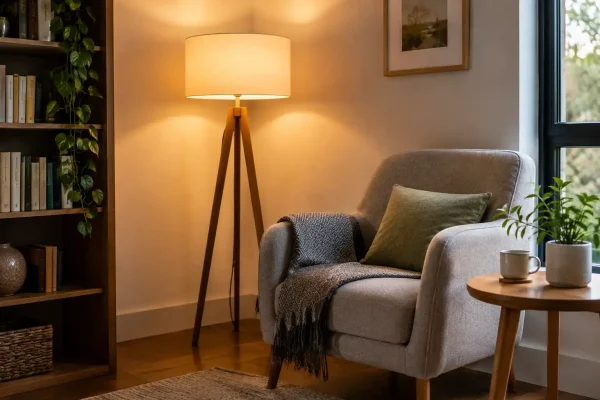
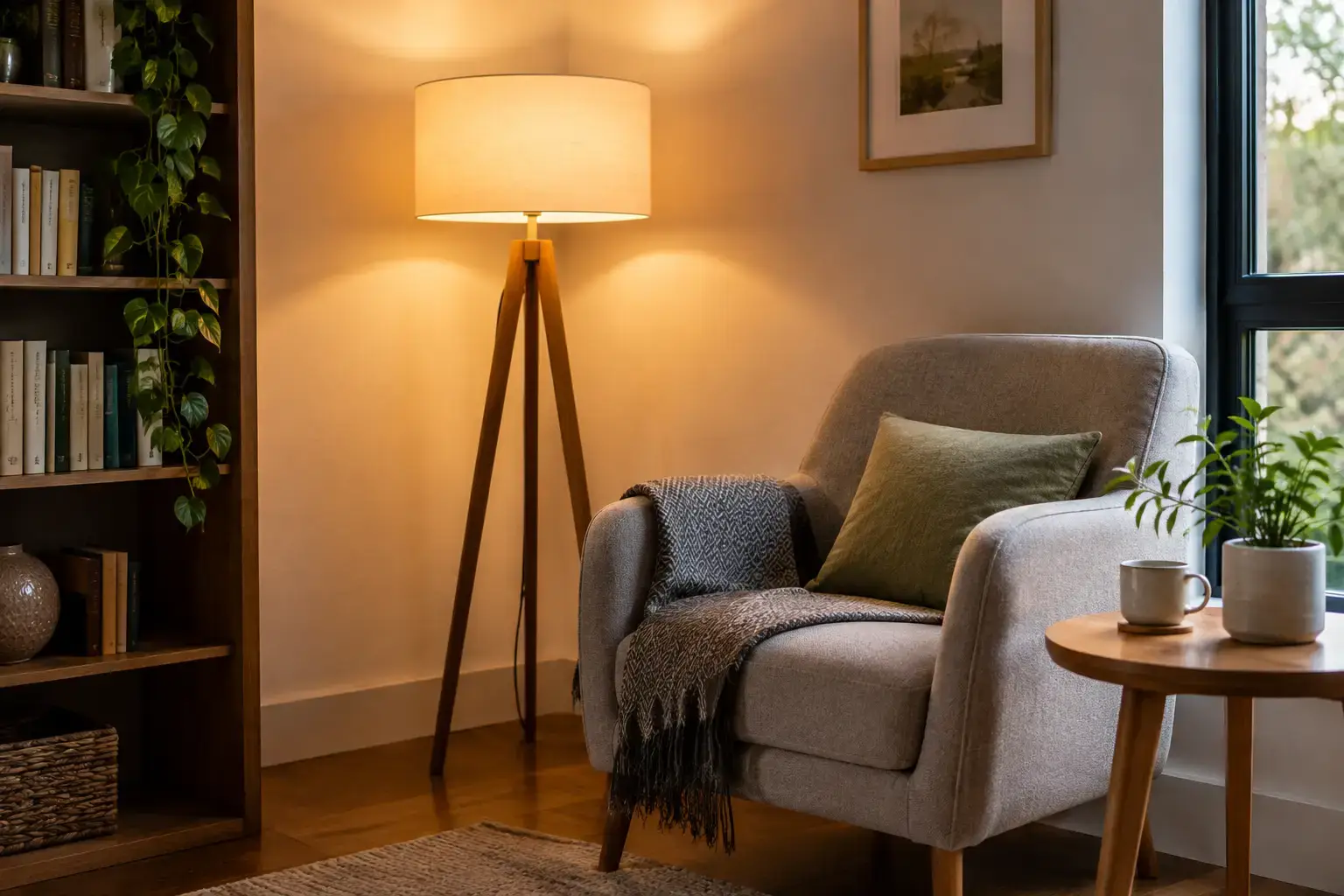
A floor lamp is often the easiest answer to a bare corner beside a sofa, armchair or media unit. It adds height without taking up table space, and it can visually connect low furniture with the ceiling. In a room with neutral walls or soft furnishings, a black metal stem gives definition; brass, smoked glass or a textured shade brings a more decorative feel.
For a relaxed living room, choose a floor lamp with a fabric or linen-effect shade. It diffuses the bulb and gives a flattering, ambient glow rather than a bright spot on the wall. A tripod design works particularly well where there is enough floor space, while a slim single-stem lamp is better for narrow gaps between furniture.
Keep the shade proportionate. An oversized floor lamp can look striking in a generous room with a high ceiling, but may crowd a compact lounge. If the corner is close to the television, opt for a shaded lamp and a warm bulb to avoid distracting glare on the screen.
2. Arc lamps for a reading chair or sectional sofa
An arc floor lamp is a practical statement piece. Its curved arm brings light over a chair or the end of a corner sofa, giving you useful illumination without needing a side table. This makes it a strong choice for open-plan homes, where a lamp can help define a quiet reading zone within a larger space.
Look for an arc with a weighted base and an adjustable head. The base needs room, so this style is not ideal for a tight passageway, but it is excellent in a larger sitting room where the corner otherwise feels sparse. A dome shade directs light downwards, while an open glass shade feels lighter and more decorative.
Use a warm white bulb around 2700K for evening reading and conversation. If you need the lamp to serve several moods, a dimmable fitting paired with a compatible dimmable LED bulb gives far more flexibility.
3. Uplighter floor lamps for low ceilings and darker walls
Where a corner feels gloomy because the ceiling is low or the wall colour is deep, an uplighter can make a remarkable difference. Instead of concentrating all the light at eye level, it sends light upwards and allows it to reflect back into the room. The effect is softer, broader and less likely to create harsh shadows.
Uplighters are among the best lamps for dark corners in contemporary lounges, halls and home offices with limited natural light. Choose a model with an additional adjustable reading light if the corner sits beside a chair. You gain general ambient light and a focused task light from one footprint.
This style works best with a clean ceiling in a pale or mid-tone finish. It will still add atmosphere against dark paint, but the reflected brightness will naturally be more subtle. In that setting, layer it with a table lamp or wall light rather than expecting one fitting to light the whole room.
4. Table lamps for consoles, sideboards and shelving
A table lamp turns a dark corner into a styled moment, especially when there is a console, sideboard, shelf or occasional table already in place. It is one of the simplest ways to introduce colour, texture or a sculptural shape into a scheme. Ceramic, ribbed glass and marble-effect bases can all add character in daylight, while the shade takes over after dusk.
The key is height. A table lamp should not disappear behind furniture or sit so high that the bulb is visible from across the room. On a console, choose a lamp that feels substantial enough to anchor the arrangement, perhaps balanced with artwork, a vase or a mirror above. On a small side table, a compact lamp with a narrow base is usually more practical.
For a darker corner, avoid a very opaque dark shade unless it is purely decorative. Linen, white fabric, pale glass and lightly tinted shades allow more useful light to spread. A darker shade can look beautifully dramatic, but it requires another nearby light source to prevent the area feeling closed in.
5. Rechargeable lamps for shelves and awkward spaces
Not every dark corner has a socket where you need it. Rechargeable table lamps offer a neat solution for shelves, window ledges, alcoves and occasional tables where trailing cables would interrupt the look. They are also useful in rented homes, where you may not want to make permanent changes.
Their light output is usually gentler than a mains-powered floor lamp, so think of them as atmosphere builders rather than the main source of light in a large room. A pair on built-in shelving can make joinery feel deliberate and inviting. One placed on a hall console creates a welcoming glow without the need to switch on overhead lighting.
Choose a design with multiple brightness settings if the lamp will move between rooms. The lowest setting is ideal for late evenings; a brighter mode is more useful for guests, dining or a bedside surface.
6. Wall lights where floor space is limited
If a corner is narrow, busy or part of a hallway, wall lights may be a better choice than lamps on the floor. A pair of decorative wall lights can frame a mirror, artwork or architectural detail while freeing up every centimetre below. They are particularly effective in landings, stairways and compact dining spaces.
A wall light that throws light both upwards and downwards creates a polished wash across the wall. An adjustable reading wall light is ideal beside a bed or armchair, especially when there is no room for a standard lamp table. Hardwiring provides the cleanest finish, though plug-in wall lights can be a sensible option where rewiring is not part of the plan.
Consider the installation early. Wall lighting is more permanent than a floor or table lamp, but it can deliver a more tailored result. For renovation projects, it is worth planning the position before plastering and decorating.
7. Statement lamps for corners that need personality
Sometimes the issue is not simply darkness. A corner can look flat because it has no visual focus. A statement lamp with an oversized shade, unusual base or sculptural silhouette provides both light and a focal point. This approach works well in entrance halls, dining-room corners and beside a feature chair.
Let the lamp earn its place. If the room already has patterned wallpaper, bold art and colourful furniture, a clean-lined lamp in brass, chrome or matte black may be enough. In a simpler interior, a colourful glass base or pleated shade can introduce warmth without needing extra accessories.
The lamp should relate to at least one other finish in the room, such as cabinet handles, picture frames or furniture legs. Matching every metal exactly is unnecessary, but a repeated tone makes the scheme feel intentional rather than accidental.
8. Smart lamps for changing routines
Smart bulbs and smart portable lamps are especially useful in corners used differently throughout the day. A home-office corner may need brighter, clearer light in the morning and a softer setting when the working day is done. In a living room, you can create an evening scene without walking around to several switches.
Warm white is generally the most flattering option for relaxation, while cooler white can suit focused tasks. Colour-changing bulbs can be fun for entertaining, but the most enduring choice is usually a quality warm white setting with smooth dimming. Good lighting should make the room feel better, not turn it into a novelty.
9. Choosing the right bulb for a darker corner
The fitting matters, but the bulb decides much of the final effect. For a shaded lamp used for ambience, an LED bulb of roughly 470 to 806 lumens will suit many corners. For reading or detailed tasks, move towards the higher end, provided the shade and fitting are designed to manage that brightness comfortably.
A warm white bulb around 2700K creates the cosy, welcoming tone most homes want in living rooms and bedrooms. For kitchens, utility areas and workspaces, 3000K can feel a little cleaner without becoming stark. Clear filament bulbs look beautiful in exposed fittings, though frosted bulbs are better when you want an even, glare-free light.
Check the fitting’s maximum wattage and bulb cap before buying. LED bulbs use less energy than traditional incandescent options, but the fitting’s stated limit still matters. If you want to dim the light, both the bulb and the lamp or wall fitting must be compatible.
Make the corner part of the room
One lamp can transform a corner, but it should not be expected to solve every lighting issue alone. The most inviting rooms use layers: ceiling lighting for general brightness, lamps for warmth and focus, and accent lighting to reveal texture, artwork or joinery. Lux Lighting can help bring those layers together, from a single statement floor lamp to a more considered room-wide scheme.
Before choosing, stand in the corner at night and notice where the shadows fall, what you want to see more clearly and how the light will look from your usual seat. The right lamp is not simply the brightest one. It is the one that makes the room feel complete when the day gets darker.