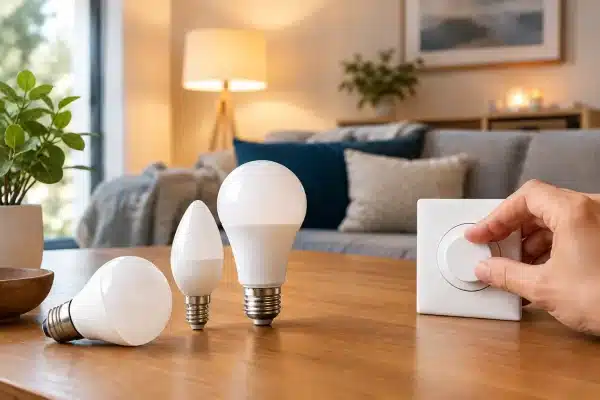
A dining room can feel sharp and overly bright at 7pm, then too dark for weekend lunch the next day, even with the same pendant fitting. That is the appeal of lighting you can adjust rather than simply switch on and off. But are dimmable bulbs worth it for every room? Usually, yes – provided the bulb, fitting and dimmer switch are compatible. The extra flexibility can make a noticeable difference to how a home feels, not just how well it is lit.
Are dimmable bulbs worth it? The short answer
Dimmable bulbs are worth considering wherever a room serves more than one purpose. They allow one lighting scheme to move from practical and bright to relaxed and atmospheric in seconds. In a kitchen-diner, for example, you may want clear light for preparation and homework, then a softer glow when guests arrive. In a bedroom, full brightness helps when getting dressed, while a lower level makes winding down far more comfortable.
The benefit is not simply mood. Lowering light output can reduce glare, make colours and finishes feel warmer, and give statement fittings a more considered presence. A decorative glass pendant or cluster of wall lights has greater impact when it is not always operating at maximum intensity.
There is a cost difference, of course. Dimmable LED bulbs often cost a little more than standard non-dimmable versions, and an older dimmer switch may need replacing. Yet for the rooms where you spend most of your time, the improvement in comfort and versatility tends to justify it.
The real value is in control, not just energy saving
A common reason for choosing dimmable LEDs is the prospect of using less electricity. This is broadly true: when a compatible LED is dimmed, it generally draws less power than at full output. However, energy saving should be viewed as a welcome extra rather than the sole reason to upgrade. LED lamps are already highly efficient, and the exact saving depends on how often and how far you dim them.
The stronger argument is control. Lighting has to work around real life. Families eat late, televisions are watched in open-plan rooms, and the kitchen can become a workspace between meals. A dimmer lets you use the same ceiling lights for each moment without adding several separate circuits or leaving lamps on to compensate.
It can also help a smaller room feel more refined. Bright, direct overhead light has its place, especially for cleaning, cooking and detailed tasks. But a lower setting softens hard shadows and prevents every corner being equally illuminated. That contrast creates depth and atmosphere.
Where dimmable lighting earns its place
Living rooms are the obvious choice. Dimmable ceiling lights, wall lights and table lamps support everything from reading to a film night. The same applies to dining spaces, where a pendant should light the table properly without making the room feel like a restaurant at closing time.
Bedrooms benefit too, particularly with dimmable bedside lamps or wall lights. They provide useful light for reading, then can be reduced for a calmer evening setting. In hallways and landings, dimming can be less essential, but it is a thoughtful touch in homes where a bright ceiling light feels harsh after dark.
Bathrooms are another good candidate when the fittings are correctly rated for the zone. Clear illumination around a mirror is useful for shaving or applying make-up, while dimmable ambient lighting makes a bath feel more restorative. For garden rooms, covered patios and hospitality areas, adjustable light can extend the usable feel of the space long after sunset.
By contrast, a utility room, garage or rarely used cupboard may not need the added expense. In task-first spaces, a simple high-quality LED at the right brightness is often the better decision.
Compatibility is where most dimming problems begin
Not every LED bulb works with every dimmer. This is the detail that determines whether your new lights fade smoothly or flicker, buzz and refuse to dim below a certain point.
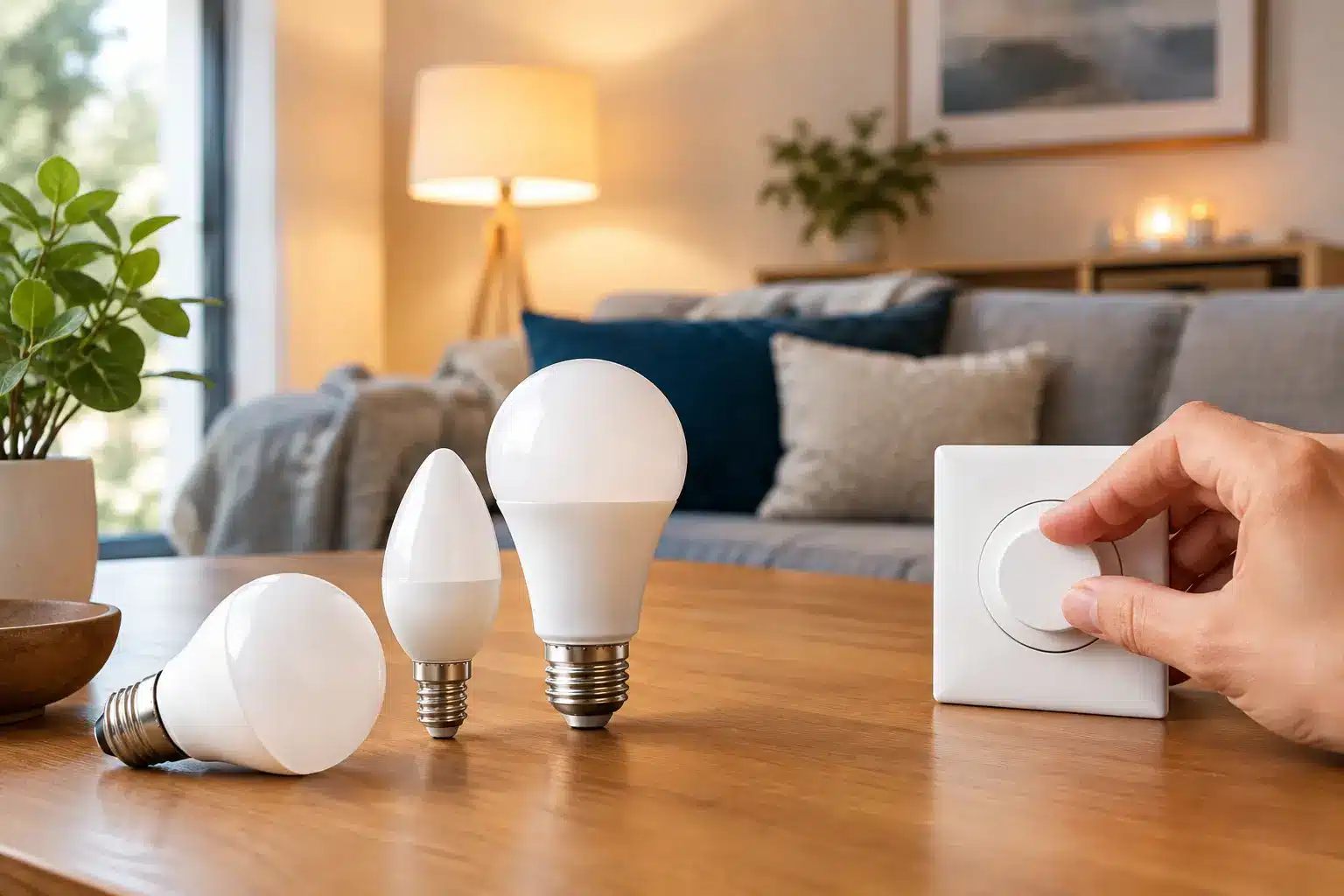
First, check that the bulb itself is labelled dimmable. A non-dimmable LED should not be used on a dimmer circuit. It may flicker, fail prematurely or behave unpredictably. Next, look at the dimmer switch. Many older dimmers were designed for halogen or incandescent lamps, which used a much higher electrical load than modern LEDs.
For LEDs, a trailing-edge dimmer is usually the best choice. It is designed to handle low-wattage lighting more smoothly and is less likely to cause noise or flickering. The dimmer must also support the combined wattage of all bulbs on the circuit. Although LED wattages are low, a dimmer can have both minimum and maximum load requirements.
For example, six 5W LED bulbs only total 30W. An old dimmer with a higher minimum load may not recognise that circuit properly. A compatible LED dimmer resolves the issue in many cases, but it is always sensible to check the specifications before buying.
Common signs the setup needs attention
A small amount of variation at the very lowest setting can occur, but persistent flickering is not something to accept. Humming from the switch, bulbs that flash when turned down, a limited dimming range, or lights that fail to switch off cleanly all point to an incompatibility.
Sometimes the solution is as straightforward as changing the bulb brand or adjusting the dimmer’s minimum brightness setting. Some LED dimmers include this adjustment behind the faceplate. If your wiring or switch arrangement needs altering, use a qualified electrician. It is a small investment compared with repeatedly replacing bulbs or compromising a carefully planned room.
Choose brightness and colour temperature before choosing dimming
Dimmability cannot rescue a bulb that is the wrong brightness or colour temperature. Start by deciding what the fitting needs to do at full power, then use dimming to create flexibility below that level.
For an ambient living room lamp, a modest lumen output may be enough. A central kitchen fitting needs substantially more light, especially if it is the main source of illumination. Lumens describe brightness more usefully than watts, which mainly tell you how much electricity the LED uses.
Colour temperature matters just as much. Around 2700K gives a warm white glow suited to lounges, bedrooms and dining rooms. Around 3000K is still inviting but a little cleaner, making it a popular choice for kitchens and contemporary open-plan spaces. Cooler white light can be practical in utility or work areas, though it can feel clinical in a relaxed setting.
If atmosphere is your priority, consider warm-dim LED bulbs. These mimic the way traditional incandescent bulbs become warmer as they dim, moving from a clear warm white at full brightness to a cosy amber tone at low level. They are particularly effective in decorative pendants, wall lights and exposed-filament fittings where the bulb is part of the look.
Dimmable bulbs versus smart bulbs
Dimmable bulbs used with a wall dimmer are often the simplest and most dependable choice. Anyone can use the switch, there is no app to open, and the lighting remains straightforward for guests, children and future owners of the property.
Smart bulbs offer another level of control. You can often adjust brightness, set scenes, schedule lights and, depending on the product, change colour temperature or colour. They are excellent for lamps, bedrooms and spaces where you want different presets throughout the day.
The two systems should not be treated as interchangeable. Most smart bulbs should be connected to a standard on-off switch and left powered on for app or voice control. Putting them on a traditional dimmer can interfere with their electronics. If you want smart control at the wall, choose a compatible smart dimmer or lighting system rather than combining products at random.
Making dimmable lighting feel designed, not accidental
The best schemes use dimming alongside layers of light. A single dimmable ceiling pendant is an improvement, but a room becomes more inviting when you can balance it with wall lights, floor lamps, table lamps or subtle LED strip lighting.
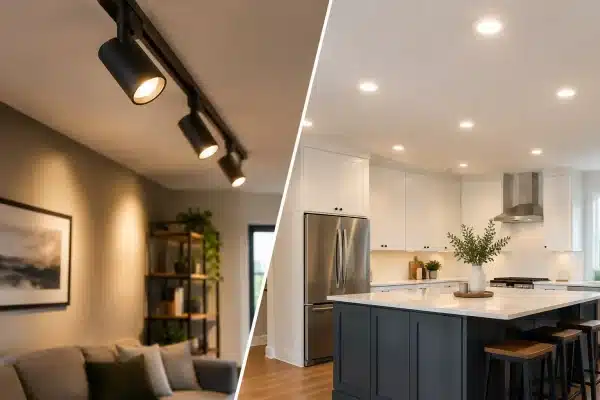
Think of the ceiling light as the practical layer, then use lower-level lighting to shape the mood. A dimmable pendant above a dining table can anchor the room, while a lamp in the corner stops the surrounding space from disappearing into darkness. In kitchens, under-cabinet LEDs and a dimmable island pendant can separate task lighting from evening ambience.
For larger renovations or commercial spaces, planning the circuits early gives far better results than adding dimmers at the end. Separate control for feature lighting, task lighting and general illumination lets each area work properly. Lux Lighting’s design-led approach is especially useful when bespoke LED strip details, feature fittings and everyday usability need to sit together in one scheme.
Dimmable bulbs are not a mandatory upgrade for every fitting. But in the rooms where you relax, entertain and spend your evenings, they give you something a standard switch cannot: the freedom to make the light suit the moment. Choose compatible components, select the right brightness at full power, and let the dimmer do what it does best – turn a well-lit room into one you want to stay in.