A desk placed beneath a single ceiling fitting can look perfectly adequate until 3pm, when the screen begins to glare, paperwork falls into shadow and your video call makes you look tired. The best lighting for home office spaces is not one bright lamp. It is a considered mix of light that supports concentration, flatters the room and still feels like part of your home.
Whether you are creating a dedicated study, working from a spare bedroom or making a corner of the kitchen work harder, good lighting changes how the space performs. It reduces visual strain, makes task-based work easier and gives an everyday workstation a more polished, intentional feel.
Start with layers, not a single fitting
A successful home office lighting scheme usually has three layers: ambient light for the whole room, task light for the desk, and accent light to bring warmth and personality after working hours. This is the same principle used in well-designed living spaces, and it matters just as much where you work.
Ambient lighting prevents the harsh contrast of working at a bright screen in a dark room. A contemporary ceiling pendant, flush fitting or discreet track light can provide an even base layer without making the room feel clinical. If your office is part of a bedroom or living area, choose a decorative fitting that complements the rest of the interior rather than treating the workspace as an afterthought.
Task lighting is the focused light directed where you need it most: on your keyboard, notebook, drawings or paperwork. A desk lamp with an adjustable arm and head lets you aim the light exactly where it is useful. Finally, an accent lamp, wall light or LED strip can soften the atmosphere and create separation between work and home life.
Put daylight to work for you
Natural daylight is a valuable starting point, but it needs managing. Positioning your desk beside a window is often more comfortable than facing directly into it or sitting with it behind you. Side-on daylight can illuminate your face for video calls and reduce dependence on artificial light during the day.
A window directly in front of your screen may create reflections, while strong daylight behind you can turn your face into a silhouette on camera. If the room layout leaves little choice, use a blind or curtain that diffuses harsh sun without making the space gloomy. Adjustable roller blinds are particularly useful for home offices because they allow you to control glare as the sun moves.
Do not rely on daylight alone. Irish winters, overcast afternoons and early starts make a good artificial lighting plan essential for a workspace that feels dependable all year round.
Choose the right colour temperature
Bulb colour temperature has a bigger effect on your working environment than many people expect. It is measured in Kelvin, and the right choice depends on when and how you use the room.
For a home office used mainly during daytime hours, neutral white light around 3,500K to 4,000K often gives the clearest, most alert feel. It is clean and practical without the blue-tinged harshness associated with very cool lighting. This range works particularly well in a study, a converted box room or a desk area used for detailed tasks.
For a multi-purpose room, a warmer 2,700K to 3,000K ambient fitting can make better design sense. Add a neutral-white task lamp at the desk, then switch it off when the working day ends. This gives you focused light when required while allowing the room to return to a calm, welcoming setting in the evening.
Avoid mixing dramatically different bulb colours in the same small space. A warm decorative lamp beside an icy-white desk light can look disjointed and feel uncomfortable. The contrast should be purposeful, not accidental.
Look for good colour rendering
Colour rendering index, or CRI, describes how accurately a light source reveals colour. A lamp with a CRI of 90 or above is a strong choice where you work with paint samples, fabrics, photography, printed material or product presentation. Even for general office work, good colour rendering makes a room feel more natural and considered.
Select a desk lamp that earns its place
The desk lamp is often the hardest-working fitting in the room, so it should be chosen for more than its appearance. A compact lamp may suit a narrow desk, while an adjustable architectural-style lamp gives greater reach across a larger surface. A directional head is especially useful if you alternate between computer work and handwritten notes.
For right-handed users, position the lamp on the left side of the desk to avoid casting shadows across the page. Left-handed users should do the opposite. Keep the source of light slightly forward of your working position rather than directly behind the screen, where it can produce distracting glare.
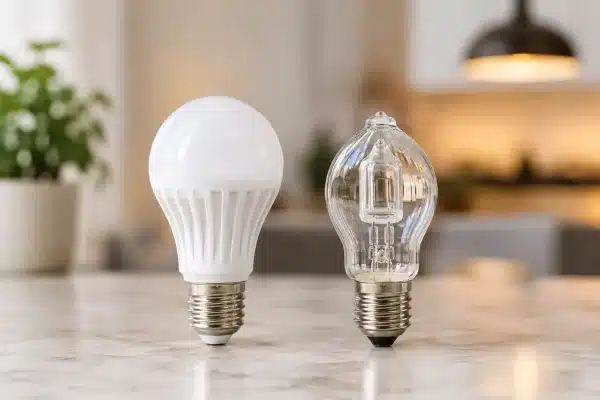
A dimmable desk lamp gives the most flexibility. Brighten it for admin, reading and intricate work, then lower the output for late-afternoon tasks. Integrated LED lamps offer a neat, modern profile and long life, while lamps with replaceable bulbs make it easier to change colour temperature later. Neither option is automatically better – it depends on whether adaptability or a streamlined design matters most to your scheme.
Reduce screen glare without darkening the room
Turning off every light to make a screen easier to see is a common mistake. The stark difference between a bright display and a dark room makes your eyes work harder. Instead, keep a soft level of ambient light in the room and adjust your monitor brightness to suit.
Avoid placing an exposed bulb or bright spotlight where it reflects in the screen. Glass-fronted artwork, glossy desks and mirrored wardrobes can create similar problems. A shaded table lamp, indirect wall light or ceiling fitting with a diffuser helps provide useful illumination without a visible hotspot.
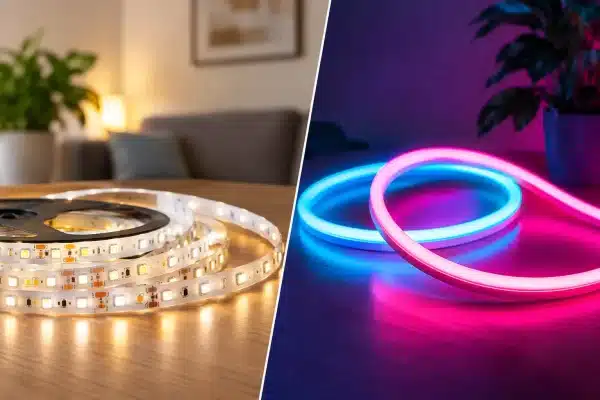
Bias lighting is another effective option for screen-heavy work. This is a soft light placed behind a monitor or along the back edge of a desk, often created with LED tape. It gently lifts the wall behind the display and reduces the feeling of staring into a bright rectangle in a dark space. Choose a warm or neutral white setting rather than coloured effects if the priority is everyday comfort.
Plan lighting around video calls
The overhead ceiling light that works for tidying the room may not work for a video meeting. It can cast shadows beneath the eyes and chin, especially when the fitting sits directly above or behind you. The most flattering setup is usually a soft light in front of you, slightly above eye level, paired with gentle ambient light in the room.
A table lamp placed behind the monitor can work well if its shade diffuses the light. Alternatively, a compact adjustable video light may suit frequent calls, particularly where the desk faces a wall. Keep the brightness low enough to look natural. The aim is to appear clear and engaged, not overlit.
Pay attention to what the camera sees behind you too. A small wall light, a shelf lamp or a subtle line of LED tape can give depth to the background and make the workspace feel more professional. It is a simple detail that has real impact for remote meetings, client calls and online interviews.
Best lighting for home office style and flexibility
A home office should support focus without looking like a corporate cubicle. This is where decorative choices matter. A statement pendant can anchor a dedicated study, while a sculptural table lamp makes a desk feel considered even when it is tucked into a living room. Metal finishes, smoked glass, textured shades and soft opal globes can connect the workspace to the wider style of the home.
If your office doubles as a guest room or family space, use separate switches or smart controls for each layer. You may want the ceiling light for general use, a brighter desk lamp for work, and a warm accent light for evenings. Smart bulbs are particularly useful where one fitting needs to serve several moods, allowing you to tune brightness and colour temperature without replacing the fixture.
For fitted desks, shelving and joinery, bespoke LED strip lighting can create a clean, architectural finish. Concealed beneath shelves or in a recessed channel, it adds practical illumination without crowding the desktop. It is worth planning this before cabinetry is installed, especially in a renovation or more ambitious home office project.
A final check before you buy
Measure the desk, note where power sockets sit and consider what the room needs after work as well as during it. A beautiful lamp that is too tall for a low shelf, or a pendant that hangs into your eyeline, will quickly lose its appeal.
The right lighting should make the first hour of work feel easier and the last hour feel less draining. Build your scheme in layers, choose a style you genuinely want to live with, and give your workspace the same attention as every other room in the home.