A patio can have the best table, chairs and planting in the garden, yet still feel like somewhere everyone leaves once daylight fades. The difference is rarely one brighter fitting. Knowing how to light a patio dining area means creating layers that make food visible, faces flattering and the route back to the house safe – all without turning your garden into a floodlit terrace.
A considered outdoor scheme lets dinner stretch into drinks, family occasions and relaxed summer evenings. It also gives the patio a polished presence when viewed from inside, even when nobody is sitting outside.
Start with the dining table, not the whole garden
The dining table is the centre of the scheme, so begin by deciding how it will be used. A compact bistro set for two needs a softer pool of light than a large table used for weekend entertaining. Think about where people will sit, where serving platters will land and whether an umbrella, pergola or covered roof changes the available mounting points.
The goal is enough light to see a meal comfortably without a bare lamp shining into anyone’s eyes. A warm white lamp, usually around 2200K to 2700K, is the most inviting choice for dining. It softens stone, timber and planting, while cooler white light can make an otherwise elegant patio feel overly harsh.
As a guide, a dining setting should feel bright enough for conversation and serving, not bright enough to read fine print outdoors. Dimmable fittings are especially worthwhile here. They allow a little more brightness while food is being served, then a lower, warmer-feeling setting once the evening settles in.
How to light a patio dining area in layers
The most successful patios combine several gentle sources rather than relying on a single central fitting. This creates depth, avoids dark edges and gives the space a more considered, hospitality-inspired finish.
Add a flattering overhead light
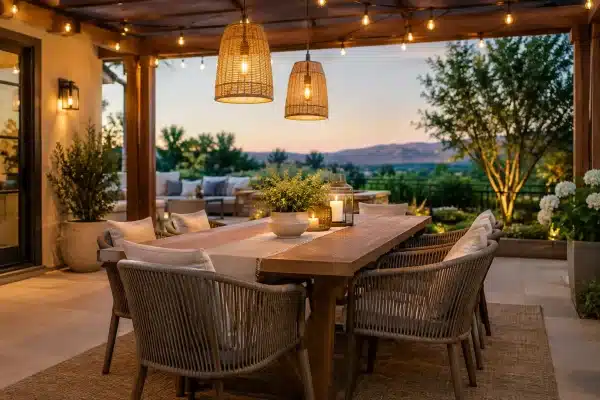
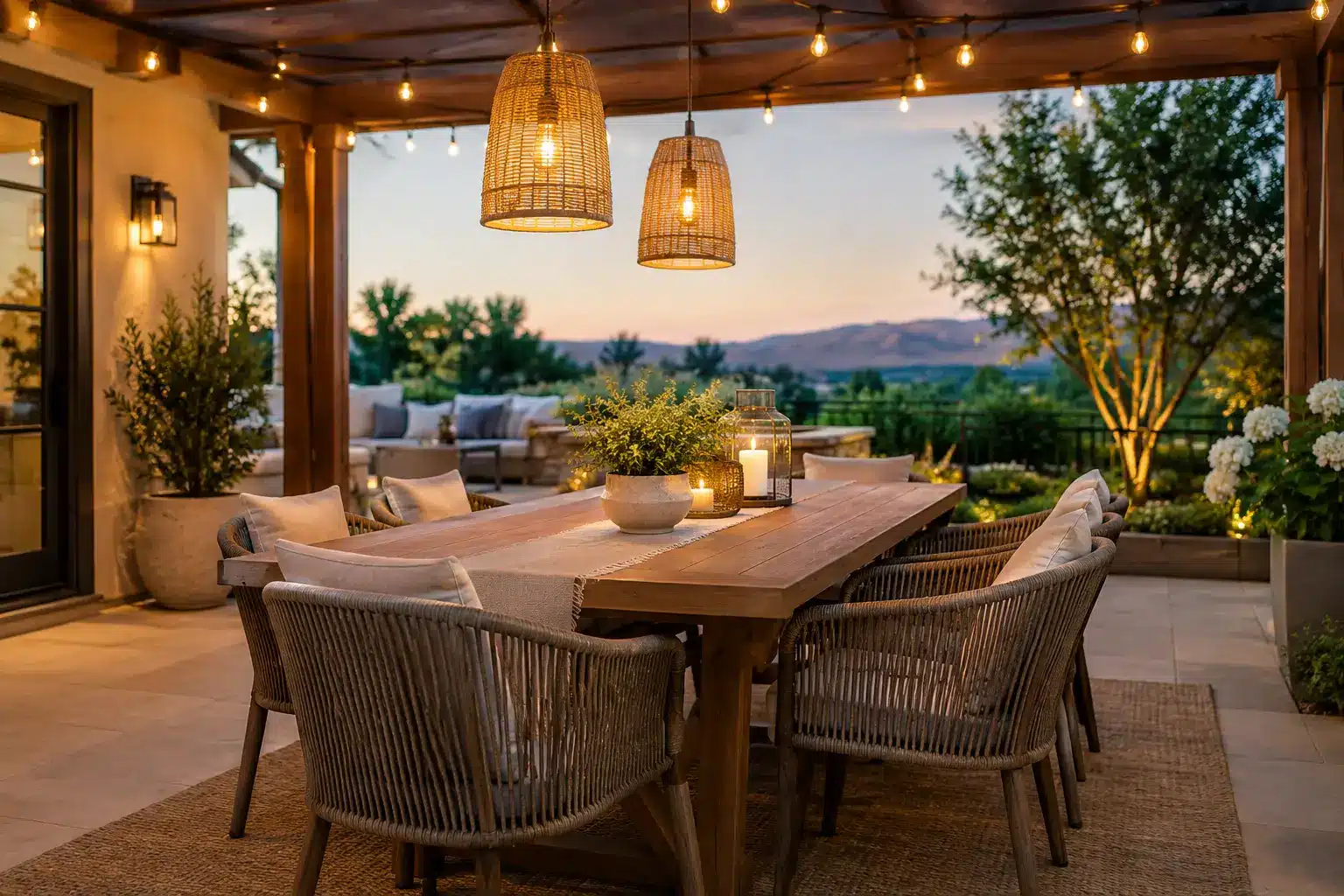
If the table sits beneath a permanent pergola, canopy or covered patio, an outdoor pendant can create a clear dining-room feel. Position it centrally over the table, rather than in the middle of the patio, and choose a fitting with a shade or diffuser that directs light down while shielding the bulb from view.
Keep clearance practical. A pendant should sit high enough that guests can see one another across the table and stand up easily, but low enough to define the dining zone. If there is no fixed cover overhead, weather-rated festoon lighting is often the more flexible answer. Strung between secure anchor points, it adds a relaxed, celebratory glow without demanding a major installation.
Festoons work best when they frame the dining area rather than criss-cross directly above every chair. A slight sweep along a pergola edge or between posts looks intentional. Too many strands, or lamps placed too close together, can quickly look cluttered.
Build soft light around the perimeter
Wall lights, outdoor lanterns and discreet post lights give the patio its ambient layer. They stop the garden boundary disappearing after sunset and make the dining table feel part of a complete outdoor room.
Where a wall is nearby, downlights or shaded wall lights can wash light gently onto paving. Choose a design that limits glare and avoids throwing light directly at seated guests. Up-and-down wall lights can look striking on textured brick or stone, though they are best used with restraint. One or two well-positioned fittings will have more impact than a row of bright beams.
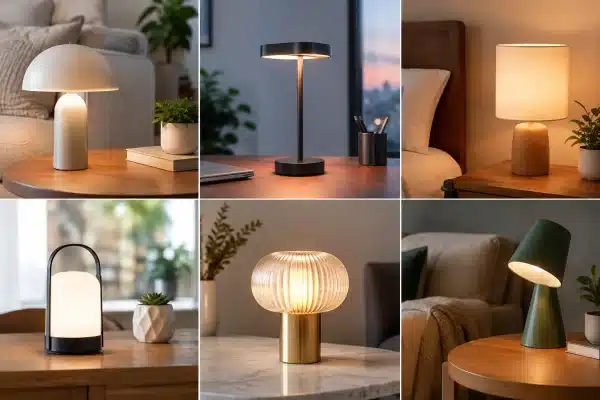
Portable rechargeable lamps are another useful layer, particularly for renters or anyone who does not want to add wiring. Place one on a side table, bar trolley or low wall rather than directly in the centre of the dining table, where it may obstruct conversation. Their real strength is flexibility: move them closer for a late supper, then carry them to a lounge corner afterwards.
Light routes and level changes
A beautiful table setting loses its appeal if guests cannot see the step at the patio door. Low-level lighting on pathways, steps and changes in surface height is not merely decorative. It helps people move confidently between the house, dining space and garden.
Small recessed step lights, low bollards or spike lights can define an approach without spilling glare across the table. Aim them downwards and keep the output modest. The eye adjusts to a lower light level outdoors, so a series of subtle markers is generally more effective than a handful of powerful fittings.
If the patio has built-in seating, a retaining wall or raised planters, concealed LED strip lighting can provide an elegant line of light beneath a bench edge or coping. This is where bespoke LED solutions make a noticeable difference: the strip can be cut, positioned and controlled to suit the exact shape of the space, rather than forcing the design around standard lengths.
Choose fittings made for the British and Irish weather
Outdoor lighting must be selected for its location, not only its appearance. Rain, wind, coastal air and winter damp all place demands on fittings and connections. Check the IP rating before buying. For exposed areas, look for a fitting rated appropriately for rain and water ingress, while covered locations may allow more decorative options.
Material matters too. Powder-coated aluminium, quality stainless steel and durable outdoor-rated finishes tend to be practical choices, but even these benefit from occasional cleaning. In coastal areas, salt can accelerate wear, so regular maintenance and a finish designed for demanding conditions are worth prioritising.
Any permanent mains-powered installation should be planned and fitted by a qualified electrician. This is especially important for cable runs, outdoor switches, transformers and fittings close to water. Solar lights can offer a simple supplementary glow, but they should not be relied on as the main dining light in a shaded garden or through darker months.
Control the mood without complicating the patio
Lighting control is what turns a pleasant patio into a space you will genuinely use more often. At the simplest level, separate the dining light from pathway and planting lights. You may want the table softly lit while keeping a route to the house brighter, or switch off decorative lights after guests have gone in.
Dimmers are ideal for pendants, wall lights and compatible LED fittings. Smart outdoor lighting adds further flexibility, allowing scenes for dinner, entertaining or a quiet evening outside. The best scheme does not need an app for every action, however. It should still feel easy to operate from a practical switch near the patio door.
Timers and sensors have their place, particularly for access routes. A motion sensor can make a side passage safer, but it is rarely the right choice beside the dining table, where sudden brightness can interrupt the atmosphere. Use sensors for circulation and manual or smart control for the spaces where people linger.
Avoid the common patio lighting mistakes
The most common mistake is choosing one very bright security-style fitting and asking it to do everything. It may illuminate the paving, but it flattens texture, creates sharp shadows and offers little warmth. Divide the job between table lighting, ambient boundary lighting and low-level guidance instead.
Glare is another frequent issue. Exposed bulbs at eye level, badly aimed spotlights and reflective glass tabletops can make people uncomfortable even when the overall light level is low. Before fixing anything permanently, test a fitting at night from a seated position. What looks subtle when standing may feel blinding across the table.
Finally, do not forget the view from indoors. A patio is often seen from the kitchen or living area for far more hours than it is occupied. A softly lit planter, a warm pendant beneath a pergola or a few carefully placed wall lights make the garden feel connected to the home after dark.
Create a patio that invites people to stay
The right outdoor lighting does more than extend dining hours. It makes the patio feel intentional, welcoming and ready for the moments that happen after the meal: another round of drinks, children telling stories at the table, or a quiet cup of tea under the stars.
Start with a warm, glare-free focus on the table, then add subtle light for edges, routes and planting. If your patio has an unusual layout, built-in seating or a pergola project in mind, Lux Lighting can help shape a scheme that feels tailored to the space rather than simply lit.