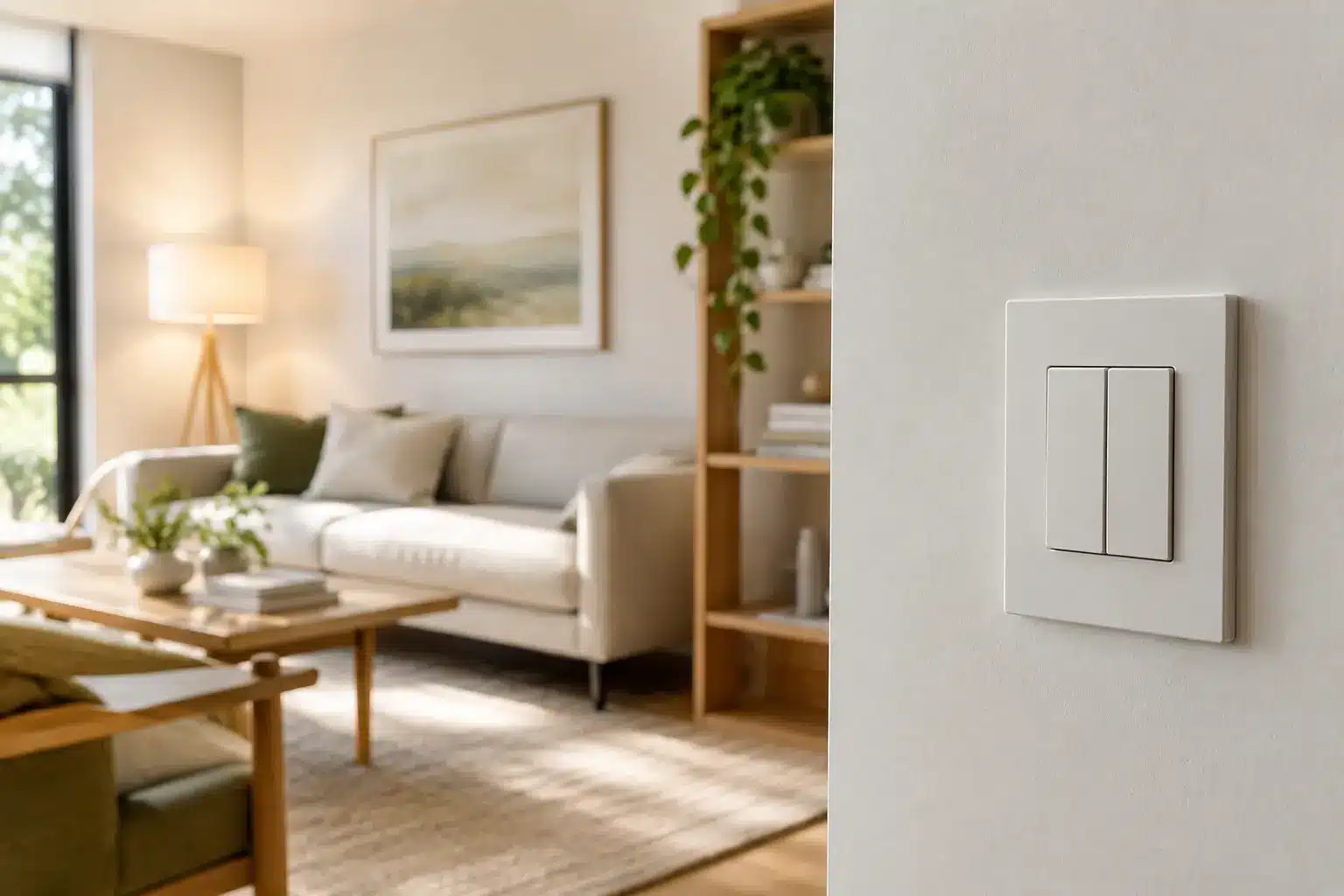
Wall Switches That Make Rooms Feel Considered
Choose wall switches that complement your interiors, simplify everyday routines and bring a polished finish to every room, from hall to kitchen with ease.

A beautiful lighting scheme can lose its impact at the point where you actually use it. A dated plastic plate beside a statement pendant, or a poorly placed switch by the door, can make an otherwise considered room feel unfinished. Wall switches are small details with a daily role: they control the mood, affect how a room functions and sit in plain sight at a natural touchpoint in your home.
For renovations, new builds and one-room refreshes alike, choosing the right switch is about more than turning lights on and off. The finish, profile, number of gangs and dimming capability all shape the final result. Treat them as part of your interior scheme from the start and they become one of those quiet details that make a space feel designed rather than simply fitted.
Switches are often selected at the end of a project, when the paint is dry and decisions need to be made quickly. That is understandable, but it can limit your options. By thinking about switches alongside lighting fittings, door hardware, sockets and cabinetry, you can create a more cohesive visual language throughout the house.
A crisp white switch can disappear neatly into a pale contemporary wall. Black switches bring definition to light plaster, natural timber and industrial finishes. Brushed chrome, polished chrome, brass and bronze-toned plates can echo tapware, handles or picture lights, adding a layer of detail without making the room feel overdone. The best choice depends on whether you want the switch to blend in or become a deliberate accent.
There is also a practical reason to plan early. Kitchens, open-plan living spaces and hallways frequently need more than one lighting circuit. You may want ceiling lighting, pendants over an island, under-cabinet LEDs and feature lighting controlled independently. A well-chosen multi-gang plate keeps that control organised and avoids a cluttered collection of mismatched switches.
The most suitable switch is rarely the same across every space. Consider the way the room is used, the lighting layers within it and what needs to happen at different times of day.
In a hallway, convenience leads. Two-way switching lets you control the same light from two locations, such as the top and bottom of a staircase or either end of a long corridor. It is a simple upgrade that feels particularly valuable on dark winter mornings and busy evenings.
A slim, tactile plate in a finish that reflects your door furniture helps give an entrance a polished first impression. If the hallway has wall lights, a pendant and stair lighting, separate controls make it easier to create a welcoming arrival rather than lighting every fitting at full brightness.
These are the rooms where dimmers earn their place. A central pendant may be perfect for everyday visibility, while wall lights, floor lamps and LED tape create atmosphere once the day winds down. Dimming the main circuit prevents the room from feeling flat and lets decorative fittings look their best.
For dining areas, plan controls around how the room changes. Bright light works for homework, entertaining preparations and family meals, while a lower level creates a more relaxed setting later on. Make sure lamps and bulbs are compatible with the chosen dimmer. Not every LED bulb dims in the same way, and the wrong pairing can cause flickering, buzzing or a limited dimming range.
Kitchens demand clear, purposeful lighting. Separate switches for general ceiling light, task lighting and decorative pendants give you flexibility without compromising visibility at worktops. Under-cabinet lighting is particularly useful for evening use, when you may want gentle illumination without the full brightness of downlights.
Choose a finish that works with the room’s harder materials. Matte black can look sharp against pale cabinetry and stone-effect worktops, while brushed metal suits contemporary appliances and neutral schemes. A clean, screwless plate is often a smart choice here because it feels refined without distracting from the kitchen design.
A bedroom should not require a trip across a dark room to turn off the light. Two-way switching between the entrance and bedside is a practical luxury, particularly in a main bedroom or guest room. For a tailored finish, pair this with dimmable ambient lighting and separate controls for bedside reading lights.
Avoid overcomplicating a smaller bedroom. One well-positioned switch for the main light, plus accessible bedside controls, is usually enough. The aim is an easy wind-down routine, not a wall full of controls.
Bathrooms require extra care because electrical zoning and IP ratings matter. A standard switch may not be suitable within certain areas of the room, so the switch location and fitting type should be planned with a qualified electrician. Pull cords, external switches and correctly specified controls all have their place depending on the layout.
From a design point of view, matching switch finishes to mirrors, vanity lighting and brassware can make a compact cloakroom feel especially considered. Good lighting here should be flattering, clear and easy to use, with task lighting around the mirror thoughtfully separated from general illumination where possible.
Once you know what each switch needs to control, the details become easier to narrow down. Plate finish is the visual decision, but profile matters too. Flat plates suit clean-lined contemporary interiors, while raised or more traditional designs can complement period features and classic joinery.
Screwless designs offer a streamlined appearance, particularly in spaces with refined plasterwork, large-format tiles or minimalist décor. Visible screws are not necessarily a compromise, though. They can suit more utilitarian, industrial or heritage-led settings when the finish is consistent with the rest of the hardware.
The rocker itself affects everyday feel. Wider rockers are easy to operate and suit modern homes, while toggle switches create a more decorative, characterful look. For a family home, think about usability as well as appearance. A beautiful switch that is awkward to find in the dark or difficult to operate is unlikely to feel like an upgrade for long.
A standard on-off switch does one job well. A dimmer gives a room range. Smart controls add scheduling, remote operation and, depending on the system, scene-setting through an app or voice control. The right choice comes down to how you live in the space.
Dimmers are often the strongest value choice for living rooms, dining areas and bedrooms because they change the atmosphere instantly without adding visual complexity. Smart switches and smart lighting controls can be useful for households that want timed routines, holiday-mode lighting or the ability to control multiple zones from one place. They are also valuable in hospitality and commercial settings where lighting scenes need to be repeatable.
There are trade-offs. Smart systems need compatible products, a reliable set-up and a little patience during installation. They are not always necessary for a small room with a single ceiling fitting. In an open-plan kitchen-living area, however, the ability to set distinct scenes for cooking, dining and relaxing can be transformative.
If you are combining dimmers with LED lighting, check compatibility before purchase and installation. A quality dimmable bulb and compatible dimmer are essential for smooth performance. For bespoke LED tape around shelving, joinery, staircases or coving, the driver, controller and switching arrangement need to be considered as one system rather than selected separately.
Even the best-looking switch cannot compensate for poor positioning. A switch should be intuitive when you enter a room, placed where your hand naturally reaches rather than hidden behind an open door or furniture. Think through the route you take in and out of each space, especially in halls, utility rooms and bedrooms.
In larger rooms, zoning prevents a single bank of controls from becoming confusing. Label-free controls can still be easy to understand when they are arranged logically: general lighting first, then task lighting, then decorative or feature circuits. An electrician and lighting designer can help establish this early, before walls are closed and finishes are chosen.
For renovation projects in Ireland, it is sensible to involve a qualified electrician before moving or adding switches. Electrical work must be assessed and completed appropriately, and early advice can save disruption later. It also gives you the chance to make a better plan for future needs, whether that means adding a bedside circuit, allowing for garden lighting or preparing for smart controls.
You do not have to use the same switch finish in every room, but there should be a reason for any change. Matte black might run through an open-plan ground floor with black-framed doors and lighting, while brushed brass can bring warmth to bedrooms and bathrooms with softer finishes. Consistency within connected spaces is usually more important than rigid uniformity across the whole house.
Look beyond switches alone. Matching or complementary sockets, USB outlets, dimmer knobs and data plates prevent an otherwise polished scheme from looking pieced together. In a newly renovated kitchen or living room, these details sit alongside expensive surfaces every day. They deserve the same level of consideration as the pendant above the table.
Lux Lighting can help bring fittings, lamps, LED solutions and finishing details into one considered scheme, whether you are updating a single room or planning a complete project. Start with how you want each room to feel at different moments of the day, then choose controls that make that atmosphere easy to create.
Choose wall switches that complement your interiors, simplify everyday routines and bring a polished finish to every room, from hall to kitchen with ease.

Choose commercial LED panel lights with the right output, colour temperature and glare control for offices, retail, schools and hospitality spaces today.
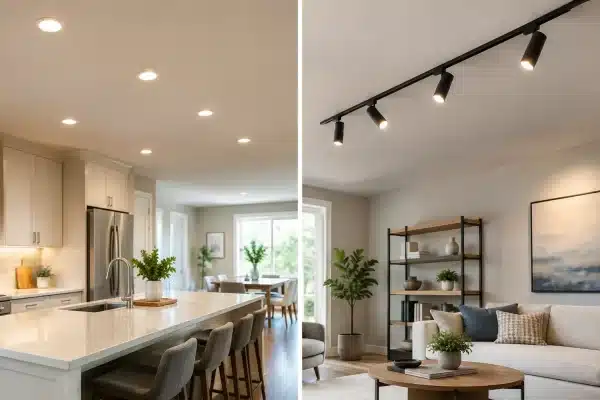
Compare downlights versus track lighting for kitchens, living spaces and renovations, with practical advice on style, glare, control and installation.
Choose wall switches that complement your interiors, simplify everyday routines and bring a polished finish to every room, from hall to kitchen with ease.
Choose commercial LED panel lights with the right output, colour temperature and glare control for offices, retail, schools and hospitality spaces today.
Compare downlights versus track lighting for kitchens, living spaces and renovations, with practical advice on style, glare, control and installation.
| Cookie | Duration | Description |
|---|---|---|
| cookielawinfo-checkbox-analytics | 11 months | This cookie is set by GDPR Cookie Consent plugin. The cookie is used to store the user consent for the cookies in the category "Analytics". |
| cookielawinfo-checkbox-functional | 11 months | The cookie is set by GDPR cookie consent to record the user consent for the cookies in the category "Functional". |
| cookielawinfo-checkbox-necessary | 11 months | This cookie is set by GDPR Cookie Consent plugin. The cookies is used to store the user consent for the cookies in the category "Necessary". |
| cookielawinfo-checkbox-others | 11 months | This cookie is set by GDPR Cookie Consent plugin. The cookie is used to store the user consent for the cookies in the category "Other. |
| cookielawinfo-checkbox-performance | 11 months | This cookie is set by GDPR Cookie Consent plugin. The cookie is used to store the user consent for the cookies in the category "Performance". |
| viewed_cookie_policy | 11 months | The cookie is set by the GDPR Cookie Consent plugin and is used to store whether or not user has consented to the use of cookies. It does not store any personal data. |