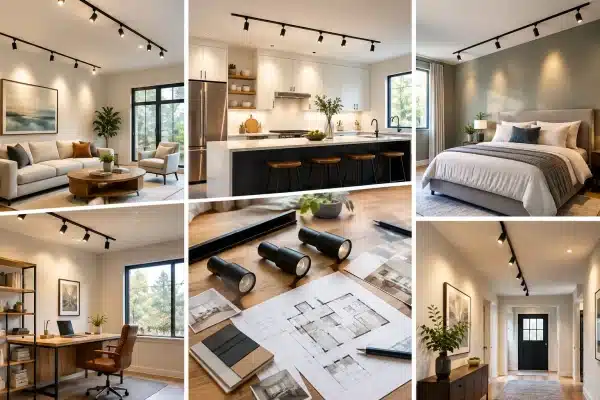
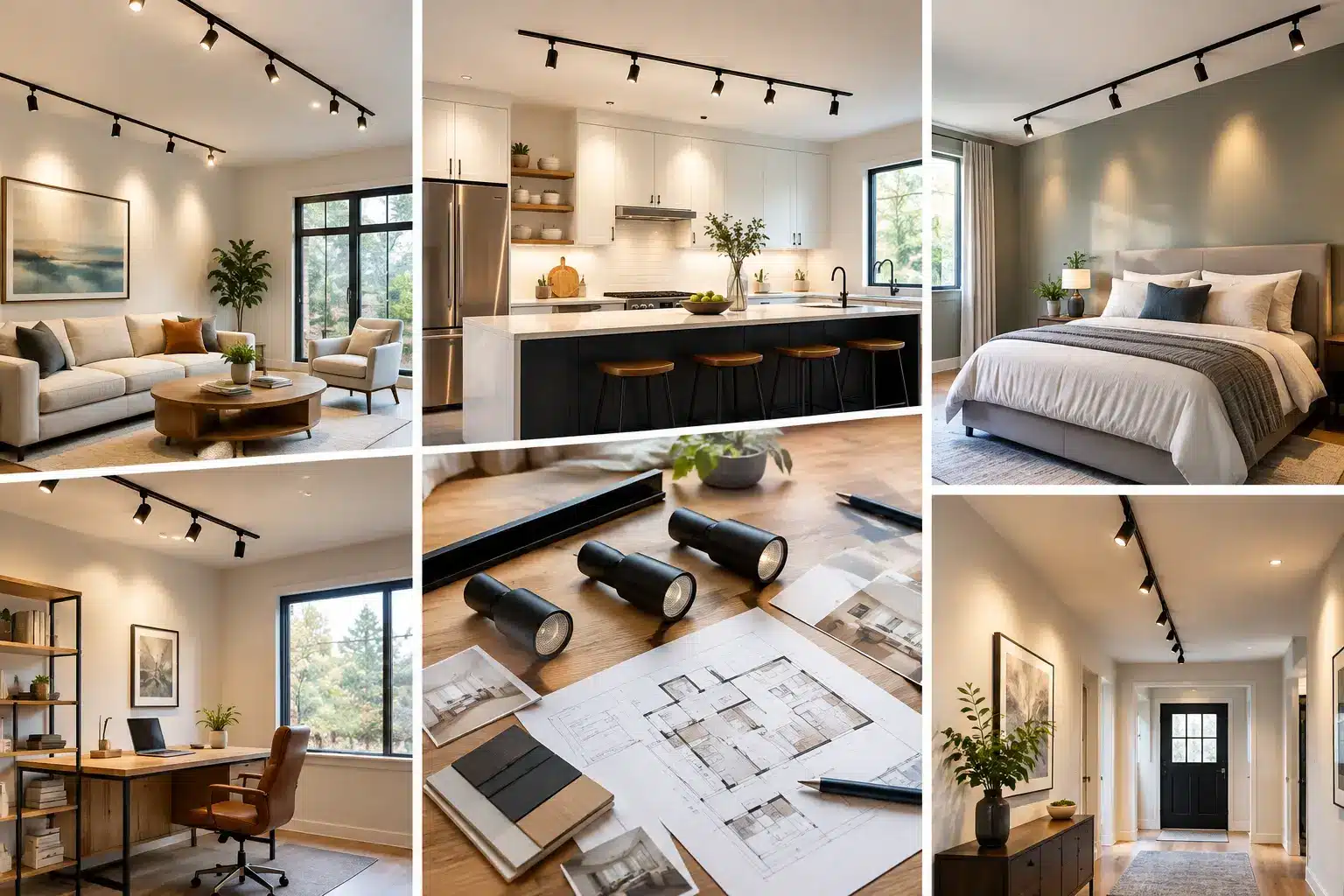
A well-planned track can make a kitchen island feel more purposeful, turn artwork into a focal point, or bring flexible light to a living room without filling the ceiling with individual fittings. This track lighting planning guide will help you choose a layout that looks considered, gives you light where it is needed and suits the way your space is actually used.
Track lighting is often chosen for its clean, contemporary look, but its real strength is adaptability. Individual heads can usually be aimed, moved and added along the run, making it an excellent option for open-plan rooms, changing furniture layouts and project spaces that need both atmosphere and practical illumination.
Start with the job the light needs to do
Before choosing a track length or a finish, look at the room after dark. Identify the surfaces and activities that need light: a worktop, dining table, reading chair, display shelf, wardrobe, artwork or reception desk. This is more useful than simply trying to light every square metre evenly.
A kitchen, for example, benefits from focused light across preparation areas, while a lounge may need a softer mix of directed light for features and wider light for everyday comfort. In a hallway, track heads can pick out a picture wall or console table while avoiding the flat, over-lit effect of a single central fitting.
It also helps to think in layers. Track lighting is especially effective as task and accent lighting, but it does not always need to carry the entire room alone. Pair it with a decorative pendant, table lamps, wall lights or concealed LED strip lighting for a richer scheme with more control over mood.
Choose the right track lighting layout
The layout should follow the architecture and furniture, rather than sit in the middle of the ceiling by default. A straight track is ideal over a kitchen run, island, long dining table, corridor or wardrobe wall. Position it so the adjustable heads can point towards the working surface or feature, not back towards the person using it.
For a larger open-plan kitchen and living area, consider two parallel tracks or an L-shaped configuration. This can divide the room into useful zones without using different ceiling fittings in every area. One line might cover the kitchen, while the other highlights a dining area, shelving or artwork.
In a narrow room, a central track can work well if the heads are directed outwards to wash light across walls. Lighting the vertical surfaces makes the room feel broader and more welcoming than aiming every fitting straight down. For sloped ceilings or awkward extensions, check that the chosen heads have enough adjustment to direct light properly.
Allow room for movement and glare control
Track heads need space to do their job. Keep the track clear of tall cabinetry, beams and open cupboard doors, and avoid positioning it where low-hanging heads may interrupt sightlines. In kitchens, consider where people stand at the hob and sink. A fitting placed directly behind a person can cast their shadow across the worktop.
Glare is another detail that separates a polished scheme from one that merely looks bright. Avoid aiming powerful spots directly at sofas, beds or seated dining positions. Instead, angle them towards surfaces, textures and features. Light reflected from a pale wall, timber finish or artwork is often more comfortable than a bare, visible beam.
Plan brightness, beam angles and colour temperature
The number of heads you need depends on ceiling height, room size, wall colours and the output of each fitting. More fittings do not automatically mean better lighting. A small kitchen may only need a short track with three or four carefully aimed heads, while a larger room might need several runs or another light source to prevent dark corners.
Beam angle matters as much as output. Narrow beams create drama and definition, making them a strong choice for art, alcoves, textured walls and display pieces. Wider beams spread light across worktops, dining areas and general circulation routes. A combination of both can make a room feel deliberately designed, particularly in open-plan interiors.
For most homes, warm white light around 2700K to 3000K creates a comfortable, inviting feel. It suits living areas, bedrooms and dining spaces particularly well. Kitchens, utility rooms and work-led areas can benefit from a slightly clearer white light, but very cool light can make finishes feel harsh and less flattering. If you are matching existing lamps, under-cabinet lighting or LED tape, choose a colour temperature that keeps the whole scheme visually consistent.
Check colour rendering for kitchens and displays
Colour rendering is worth considering where food, artwork, timber, fabrics and paint finishes matter. A good-quality LED track head will show colours more naturally, helping a green splashback look green rather than grey and ensuring materials retain their depth after sunset. This is a small specification detail with a noticeable effect in a finished room.
Decide on the track system before falling for the fitting
Not all track lights fit every rail. Track systems vary in their electrical configuration and adapters, so the heads, connectors, power feed and track must be compatible within the same system. Choose the system first, then build the look with matching spotlights, pendants or linear modules where available.
Think ahead about how flexible you want the installation to be. A simple straight run is easy to plan and suits many rooms. If you may extend around a corner or add heads later, make sure the system offers the connectors and accessories required. This is especially useful in retail, hospitality and commercial settings, where displays and furniture may change over time.
The finish should sit comfortably with the rest of the interior. Black track lighting gives definition against white ceilings and works beautifully with black hardware, industrial details and contemporary joinery. White track can disappear into a pale ceiling for a quieter, architectural effect. Brass or metallic finishes bring warmth, but they tend to make more of a statement and work best when repeated elsewhere in the space.
Put control at the heart of your plan
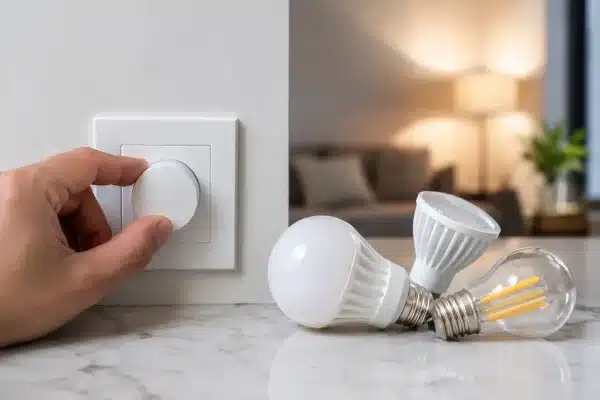
Dimming turns track lighting from a practical ceiling solution into a true mood-setting tool. Bright light is useful for cooking, cleaning and finding the right outfit; lower light makes the same room feel ready for dinner or a relaxed evening. If dimming is part of the plan, confirm that both the fittings and the dimmer are compatible before installation.
Consider switching zones too. In an open-plan room, it can be useful to control the kitchen track separately from the dining or living area. This gives you the freedom to keep a worktop bright while allowing the rest of the room to soften. Smart-compatible lighting can add further convenience, although a well-positioned dimmer remains a simple and reliable choice.
For commercial projects, zoning is even more valuable. A café may need brighter counter lighting during service, then warmer, more selective light after hours. In a showroom or reception area, adjustable heads make it easier to refresh feature displays without reworking the entire lighting scheme.
Get the installation details right
Track lighting should be installed by a qualified electrician, particularly where new wiring, dimming controls or multiple circuits are involved. They can confirm the ceiling fixing is secure, the electrical feed is correctly positioned and the load is appropriate for the planned fittings.
Before the electrician arrives, finalise the furniture layout and mark the most important focal points. It is much easier to move a track head than a ceiling feed, but the starting position still shapes the whole result. If you are renovating, plan lighting alongside kitchen drawings, joinery and electrical points rather than treating it as a final decorative purchase.
For homes and projects across Ireland, Lux Lighting can help bring together track fittings, decorative lighting and bespoke LED solutions so the room feels connected rather than assembled piece by piece. Bring measurements, photos and a simple furniture plan to the selection process. The right track lighting plan should not only brighten the space – it should make every surface, task and evening in it feel more intentional.