A beautiful fitting can lose its impact in seconds if the bulb is wrong. The choice between LED versus halogen affects far more than your electricity bill: it changes the warmth of a dining table, the clarity of a kitchen worktop, the sparkle of a bathroom mirror and the way artwork or textured finishes look after dark.
For most new lighting schemes, LED is the clear practical choice. It uses less energy, lasts longer and offers far more control over colour temperature and dimming. Halogen still has a place in certain existing fittings and specialist applications, but it is no longer the automatic answer for crisp, warm light. The best decision starts with the room, the fitting and the mood you want to create.
LED versus halogen: the key difference
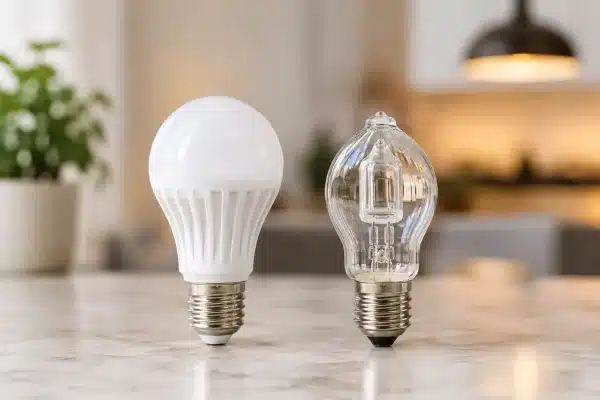
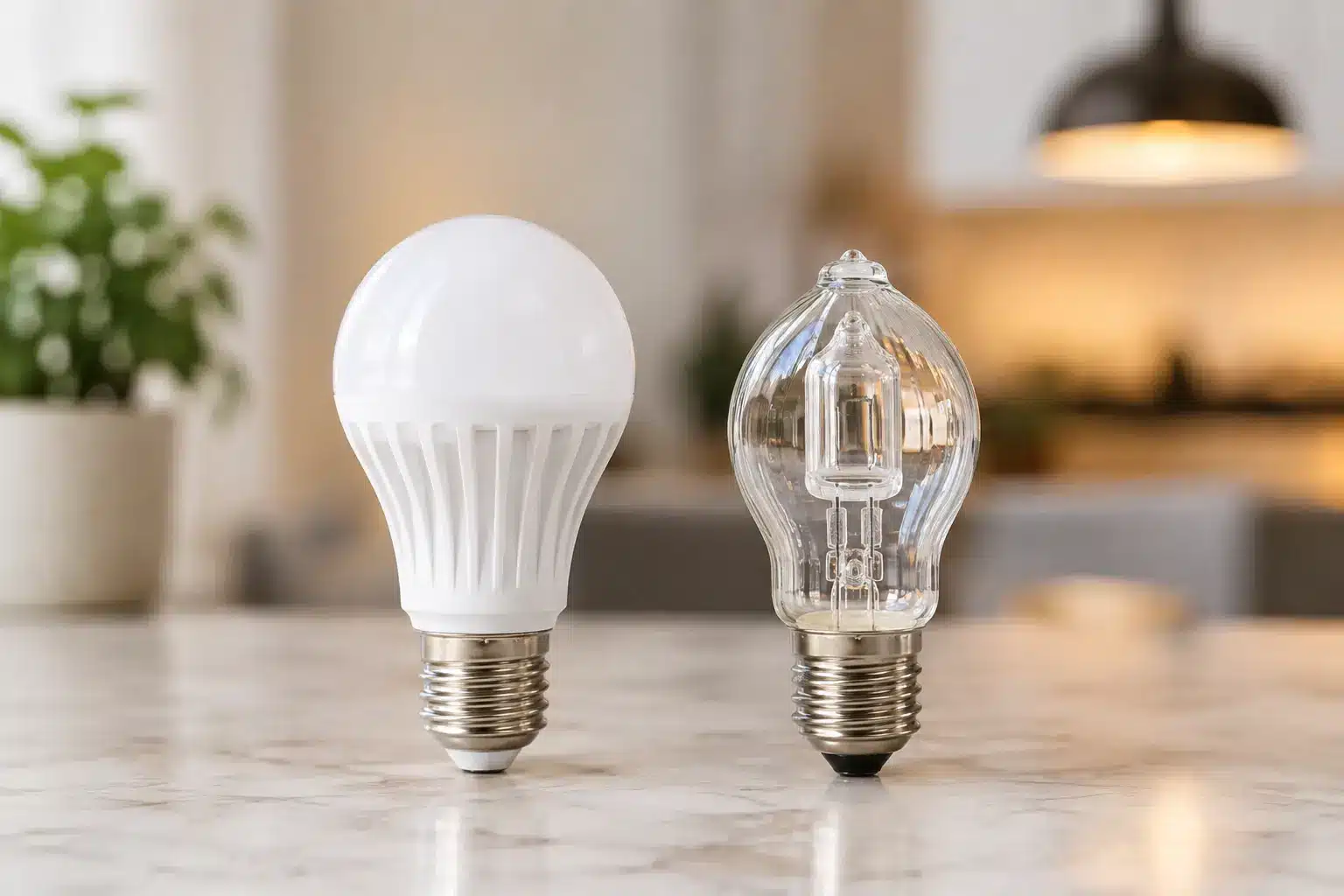
Both LED and halogen lamps can produce a bright, attractive light, but they create it in very different ways. A halogen bulb works like an enhanced incandescent bulb. It heats a tungsten filament until it glows, producing a naturally warm, bright light. Much of the energy is released as heat rather than visible light.
An LED produces light through a semiconductor. That makes it dramatically more efficient and much cooler to operate. It also gives you a wider choice of colour temperatures, beam angles, bulb shapes and smart-control options, from a soft bedside glow to focused task lighting over a kitchen island.
The difference is especially noticeable when several lamps are used together. A row of halogen downlights can make a room feel hot and demand frequent bulb changes. A well-planned LED scheme delivers the same useful light with lower running costs and less maintenance, while leaving more freedom to layer decorative pendants, wall lights, cabinet lighting and feature illumination.
Brightness: compare lumens, not watts
Watts used to be a quick way of judging brightness because most homes used incandescent or halogen bulbs. With LEDs, watts tell you how much power a lamp consumes, not how bright it looks. Lumens are the figure to compare.
As a rough guide, a traditional 50W halogen spotlight is often replaced by an LED of around 5W to 7W, depending on the lamp and its beam angle. Both may deliver a similar level of useful light, but the LED uses a fraction of the energy. For standard bulbs, look at the lumen output on the packaging rather than choosing by wattage alone.
Beam angle matters just as much with spotlights. A narrow beam throws a defined pool of light, ideal for highlighting a painting, a feature wall or a dramatic display shelf. A wider beam spreads light more evenly across a kitchen, hallway or dressing area. A bright LED with the wrong beam angle can feel harsher or dimmer than expected because the light is simply landing in the wrong place.
Warmth and colour: why LEDs are no longer cold-looking
Many people still associate LED lighting with the bluish white lamps found in early energy-saving fittings. Modern LEDs are very different. They can recreate the familiar warmth of halogen beautifully, provided you choose the right colour temperature.
For living rooms, bedrooms, dining spaces and decorative lamps, warm white around 2700K usually creates the most inviting effect. It flatters timber, brass, soft furnishings and warmer paint shades, and it helps a room feel settled in the evening. If you love the traditional halogen look, this is the LED tone to start with.
For kitchens, utility rooms and bathrooms, 3000K offers a cleaner, slightly brighter white without feeling clinical. It is a popular choice where you want a polished, contemporary finish but still want the space to feel comfortable. Cooler colour temperatures can work in practical commercial settings, garages or task-heavy areas, but they are rarely the first choice for a relaxed home interior.
Colour rendering is another detail worth checking. This is measured by CRI, or Colour Rendering Index, and it describes how accurately colours appear under a light source. A high-CRI LED is particularly valuable around wardrobes, vanities, food preparation areas, artwork and retail displays. It helps painted walls, fabrics and finishes look closer to how they do in natural daylight.
Running costs and lifespan
The strongest case for LED is long-term value. Halogen lamps use significantly more electricity and tend to have a much shorter working life. In a home with multiple downlights, that difference becomes meaningful quickly, particularly in kitchens, open-plan spaces and hallways where lights may be on for hours each day.
LED lamps cost more upfront in some cases, but their lower energy use and longer lifespan usually make them the better investment. They are also a sensible option for hard-to-reach fittings, such as stairwells, high ceilings, exterior soffits and statement pendants, where changing a failed lamp is inconvenient.
Heat is part of that value calculation too. Halogen bulbs become extremely hot in use, which can be uncomfortable in enclosed fittings and requires sensible clearance from shades, fabrics and surrounding materials. LEDs run much cooler, although quality fittings still need appropriate ventilation. Heat management is one reason it pays to choose reliable lamps and fittings rather than treating every LED bulb as interchangeable.
Dimming and control: check compatibility before you buy
Halogen lighting is known for smooth dimming. It becomes warmer as it dims, creating an atmospheric, candle-like effect that suits dining rooms and hospitality spaces. LEDs can also dim exceptionally well, but the result depends on the bulb, driver and dimmer working together.
If you want dimmable LED lighting, choose lamps clearly marked as dimmable and use a compatible LED dimmer. An older dimmer designed for a higher halogen load may cause flickering, buzzing, a limited dimming range or lamps that do not switch off cleanly. This is not a failure of LED itself, but a compatibility issue within the circuit.
For a more refined scheme, consider dim-to-warm LEDs. These lamps become warmer in colour as they dim, echoing the character of halogen while retaining LED efficiency. They are particularly effective above a dining table, in a lounge with layered lighting, or in bedrooms where you want bright practical light earlier in the evening and a softer glow later on.
Smart LED bulbs and integrated smart fittings add another level of flexibility. They can let you adjust brightness, set scenes or change colour temperature without altering the physical layout. They are useful in multi-purpose rooms, but for a whole-home scheme, properly planned circuits and switches still give the cleanest, most intuitive result.
When halogen can still make sense
Halogen is not automatically wrong. If you have a much-loved fitting that requires a specific halogen capsule or reflector lamp, replacing like for like may be the simplest short-term solution. Some specialist lamps, appliance bulbs and older low-voltage systems may also need more careful consideration.
That said, many halogen replacements are now limited in availability, while LED alternatives have become easier to source and more convincing in appearance. Before replacing bulbs across a room, check the cap type, voltage, fitting depth, transformer or driver, dimmer type and whether the lamp is enclosed. A GU10 LED, for example, is a straightforward upgrade in many mains-voltage spotlights, while older 12V MR16 systems may need an LED-compatible transformer.
For outdoor lighting, LEDs are usually the better route. They reduce energy use, cope well with frequent switching and make it practical to illuminate paths, planting, patios and entrances for longer. Choose fittings with the correct IP rating for their location, and use warmer light around seating areas to preserve a relaxed garden atmosphere.
Choosing the right option room by room
In a kitchen, combine practical 3000K LED downlights with pendant lighting over an island and discreet under-cabinet lighting for shadow-free preparation. The layered result feels considered rather than overly bright.
In a living room, warm-white LED table lamps, wall lights and a dimmable central fitting offer far more flexibility than relying on one ceiling light. Use a high-quality dimmable LED or dim-to-warm lamp if you want the cosy character traditionally associated with halogen.
In bathrooms, clear task lighting around the mirror matters more than simply adding stronger ceiling lights. High-CRI LEDs help with shaving, skincare and make-up, while suitable IP-rated fittings provide the protection needed in wet areas.
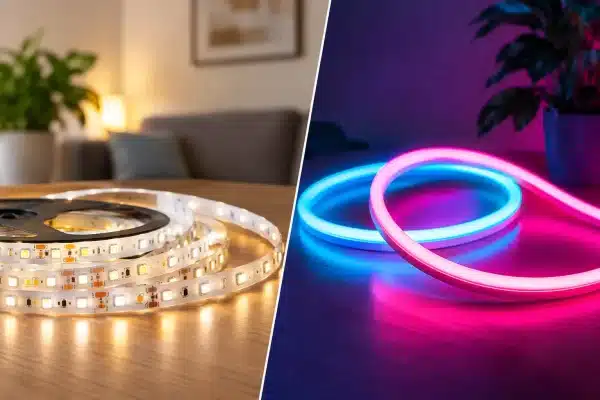
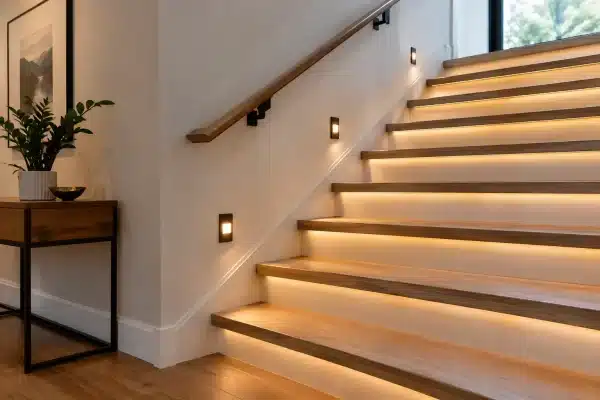
For hospitality and commercial interiors, LED is particularly compelling because maintenance and running costs scale quickly across a larger project. The creative opportunity is just as important: bespoke LED strip lighting can define joinery, shelves, bars, stairs and architectural lines without cluttering the space with visible fittings.
Make the bulb part of the design
The right lighting is never only about choosing the brightest lamp or the lowest wattage. It is about using light with intention: warm where people relax, clear where they work, focused where details deserve attention and layered wherever a room needs depth.
For most homes, upgrading from halogen to quality LED is a straightforward way to improve efficiency without sacrificing style. Start with the atmosphere you want to create, then choose the colour temperature, brightness and control that will make the space feel right every time you switch it on.