A beautifully chosen pendant or table lamp can transform a room, but the bulb inside determines how that space feels every evening – and what it costs to light. If you are asking which bulbs save most energy, the clear answer for almost every home is LED. Modern LEDs use a fraction of the electricity of older incandescent and halogen bulbs while delivering the same useful brightness, in a far wider choice of warm, cool, dimmable and decorative styles.
That does not mean every LED bulb is automatically the right choice. The best result comes from matching its brightness, colour temperature, fitting and dimming compatibility to the room. A soft, warm filament LED suits a relaxed dining room very differently from the crisp task lighting needed above a kitchen worktop.
Which bulbs save most energy? LEDs lead by a wide margin
An LED converts much more of the electricity it uses into light rather than wasted heat. This is why wattage is no longer the best starting point when replacing a bulb. Look first at lumens, which measure brightness, then compare the wattage to see how efficiently that brightness is produced.
For a familiar reference point, an old 60W incandescent bulb produced roughly 800 lumens. A quality LED can produce a similar level of light using around 7W to 10W. Over a year of regular use, particularly in kitchens, hallways and living areas, that difference adds up quickly.
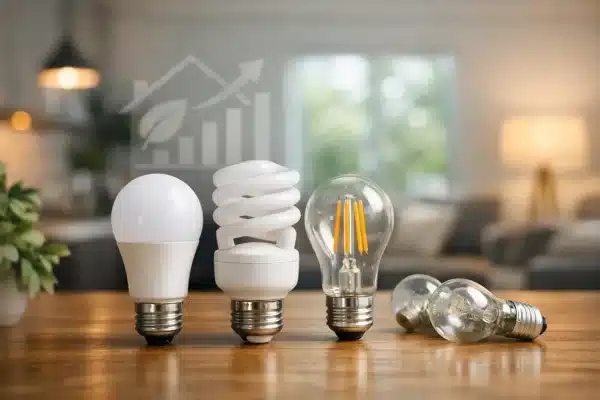
| Bulb type | Typical power for around 800 lumens | Energy-saving potential | |—|—:|—| | Incandescent | 60W | Lowest – now largely obsolete | | Halogen | 42W to 53W | Better than incandescent, but still high use | | CFL | 13W to 15W | Efficient, but slower to reach full brightness | | LED | 7W to 10W | Best choice for low energy use and long life |
Halogen bulbs can offer attractive, sparkling light and excellent colour rendering, but they are expensive to run beside LED alternatives. Compact fluorescent lamps, often called CFLs, represented a major step forward years ago, yet their slow start-up time, limited decorative choice and mercury content make them less appealing for most new purchases.
LED is the practical winner because it combines efficiency with choice. From discreet GU10 spotlights and candle bulbs to oversized globe lamps, vintage-style filaments and outdoor-rated fittings, there is now an LED option for almost every setting.
Choose lumens, not the wattage you remember
When homeowners move to LED, the most common mistake is buying a bulb with too few lumens because the low wattage looks unfamiliar. Think of watts as the energy a bulb consumes and lumens as the amount of light you receive.
A 470-lumen LED is broadly comparable to an old 40W bulb and works well in smaller lamps, bedside lights and decorative wall fittings. Around 806 lumens is comparable to a traditional 60W bulb, making it a versatile choice for general room lighting. For brighter kitchens, utility rooms or larger spaces, look towards 1,000 lumens and above, provided the fitting can safely accommodate the bulb and the glare is controlled.
The shade and fitting matter too. A dark fabric shade, smoked glass pendant or deeply recessed spotlight reduces the light reaching the room. In those cases, choose a higher-lumen LED rather than assuming the bulb is underperforming. Layering ceiling lights with table lamps, floor lamps and wall lights also creates a more inviting result than relying on one excessively bright central fitting.
Warm white or cool white?
Energy use is not meaningfully affected by choosing warm or cool white. The choice is about atmosphere and function.
Warm white, typically around 2700K, gives living rooms, bedrooms and dining areas a softer, more relaxed glow. It is particularly effective in exposed-filament bulbs and statement decorative pendants. Neutral white, around 3000K to 4000K, feels cleaner and is often useful in kitchens, bathrooms and home offices. Cool white is brighter in appearance and can suit utility, garage or practical commercial spaces, although it can feel stark in a cosy home interior.
For a cohesive scheme, avoid mixing very warm and very cool bulbs within the same open-plan room unless you are deliberately creating separate zones. Consistent colour temperature makes finishes, furnishings and architectural details look considered.
The energy-saving details that make a real difference
The lowest-watt LED only saves money if it gives you enough light to use comfortably. A poorly lit room often leads to extra lamps being switched on, which defeats the purpose. Choose the bulb around the task and the fitting, not simply the smallest wattage on the box.
Dimmable LEDs are a strong choice for rooms that serve several purposes. In a dining area, for example, bright light helps with preparation and clearing up, while a lower setting creates a more relaxed evening atmosphere. Dimming can reduce electricity use further, but check that both the bulb and your existing dimmer are compatible. Older dimmer switches may cause LED bulbs to flicker, buzz or fail to dim smoothly, so an LED-compatible dimmer is often worthwhile.
Smart LED bulbs can also reduce wasted energy, especially in busy homes. Timers, routines, motion sensors and app control make it easier to avoid lights being left on in empty rooms. They use a small amount of standby electricity to stay connected, so they are not automatically more efficient than a standard LED used carefully. Their value lies in control: setting exterior lights to switch off at a set time, creating a bedtime routine or checking a forgotten lamp from elsewhere in the house.
For bathrooms, kitchens and outdoor areas, always select a bulb and fitting suitable for the location. A high-efficiency bulb in an unsuitable enclosure is a false economy. In bathrooms and exposed external spaces, the required IP rating and correct installation matter just as much as style.
LED lifespan: the saving people often overlook
Running cost is only part of the calculation. A good LED can last many thousands of hours, often substantially longer than halogen bulbs. That means fewer replacements in awkward ceiling fittings, stairwells, high voids and outdoor wall lights, as well as less disruption to the look of a carefully planned room.
Lifespan claims do vary. Heat is the main enemy of LEDs, so fully enclosed fittings, poor ventilation and low-quality bulbs can shorten their working life. If a bulb repeatedly fails in one fitting, do not simply replace it with the same type. Check whether the fitting is enclosed, whether the bulb is rated for that environment and whether the transformer or dimmer is compatible.
For spotlight circuits, replacing every lamp at once is usually the best approach. Mixing different colour temperatures, beam angles or brands can make a ceiling look patchy. A consistent LED GU10 across a kitchen or hallway creates a cleaner pool of light and makes the whole space feel more polished.
How to make the right choice room by room
In a living room, prioritise warm-white LED bulbs, dimming where possible and decorative shapes that complement the fitting. A visible filament bulb is part of the design, so choose one with enough lumens for the role rather than treating it as a purely ornamental detail.
In kitchens, use brighter LED downlights or directional spotlights for worktops, then soften the room with pendants or under-cabinet LED tape. This layered approach gives practical visibility without flooding the entire space with harsh light.
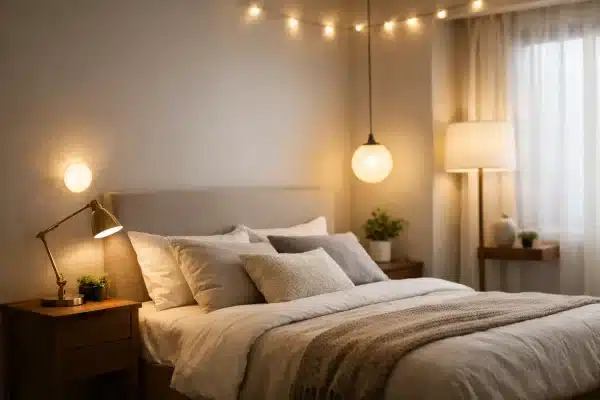
Bedrooms benefit from low-glare, warm LED bulbs in bedside lamps and wall lights. If reading is important, choose a bulb with adequate brightness or add a dedicated adjustable reading light rather than making the whole room brighter.
For outdoor lighting, LEDs are particularly effective because exterior lights can run for long periods during darker months. Combine efficient wall lights, pathway lights or security fittings with sensors and timers for useful illumination without unnecessary overnight use.
Do LEDs always make financial sense?
For most everyday fittings, yes. An LED may cost more upfront than a halogen replacement, but the difference is normally recovered through lower electricity use and fewer replacements. The case is strongest where lights are used often: kitchens, halls, bathrooms, communal areas, shop floors and hospitality spaces.
There are exceptions. If a rarely used decorative lamp is switched on for only a few hours each year, the financial payback is naturally slower. Even then, LED remains the sensible default because it produces less heat, offers better bulb choices and is less likely to need frequent changing.
A final detail: dispose of old bulbs correctly. LEDs should not go in household waste where local recycling facilities accept electrical items, while CFLs need particular care because they contain a small amount of mercury. Replacing inefficient bulbs is a small change, but across a whole home it can make every room feel brighter, more considered and less costly to enjoy.