A wall sconce can make a room feel considered in a way a ceiling fitting alone rarely can. It brings light down to eye level, adds softness after dark and gives an otherwise plain wall a purposeful finish. But knowing where to place wall sconces is what separates a beautiful lighting scheme from a fitting that feels too high, too bright or strangely isolated.
The right position depends on what the light needs to do. A sconce beside a bed should make reading comfortable without lighting the whole room. In a hallway, it should create an inviting rhythm without narrowing the space. Around a mirror, it must flatter faces rather than cast unhelpful shadows. Start with the function, then use proportion and symmetry to make it look effortless.
Where to place wall sconces: begin with the light’s purpose
Before choosing a height, decide whether the wall light is for ambient, task or accent lighting. Ambient sconces create a warm layer of general illumination, often complementing pendants, downlights or floor lamps. Task sconces deliver practical light for reading, grooming or working. Accent sconces draw attention to texture, artwork, alcoves and architectural details.
This distinction matters because each calls for a different beam direction and position. Up-and-down wall lights work brilliantly as ambient or accent lighting on a long, uninterrupted wall. Adjustable reading lights belong close to the person using them. Decorative sconces with fabric shades are often best where their glow can be seen and appreciated, rather than hidden behind furniture.
As a useful starting point, install most living-room, bedroom and hallway sconces with their centre around 150 to 170cm from the finished floor. This typically puts the fitting near eye level for a standing adult and avoids the harsh, top-heavy appearance that comes from placing it too high. Ceiling height, furniture scale and the fitting itself can all change the final measurement, so treat this as a guide rather than a fixed rule.
Living rooms: add depth, not just brightness
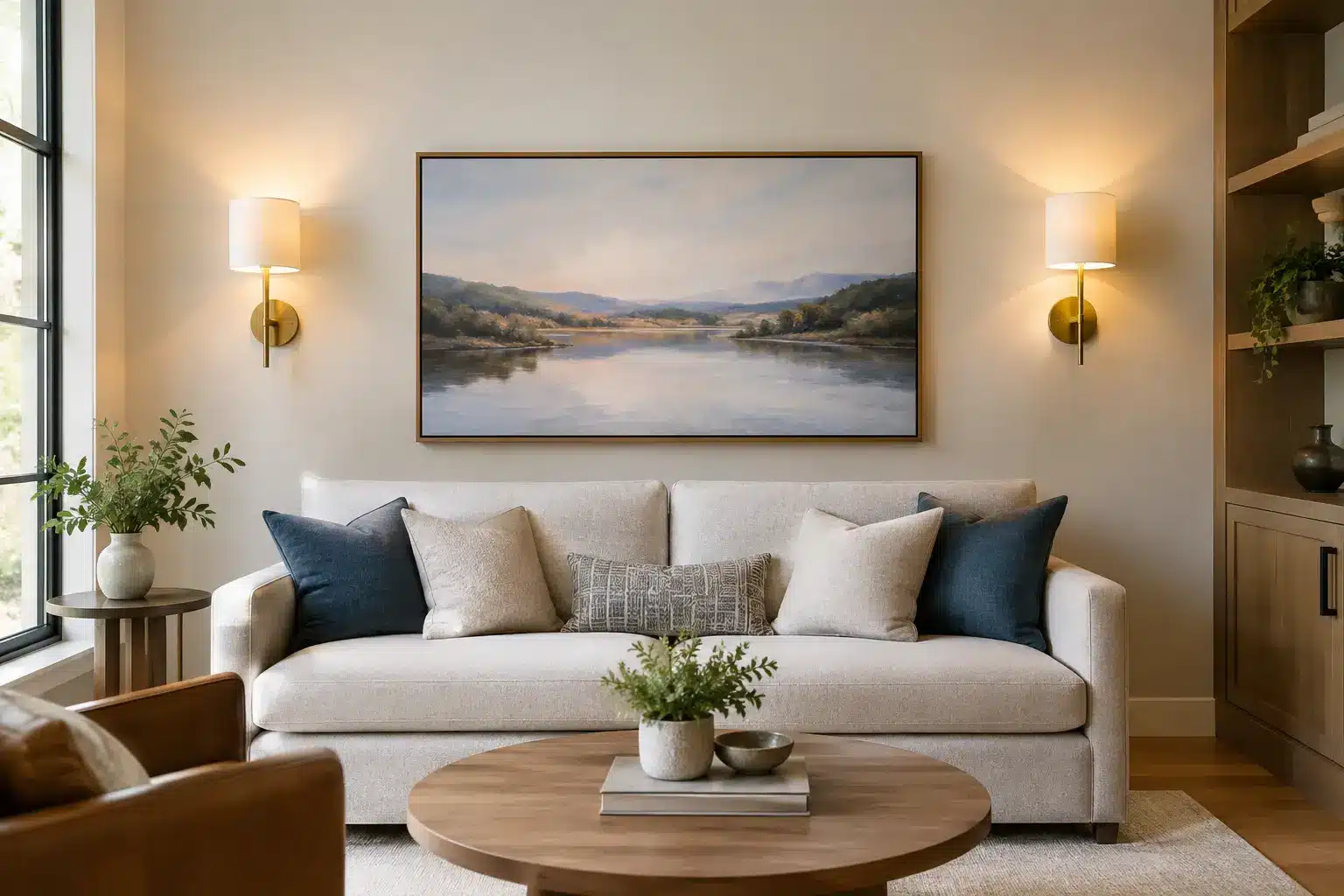
Wall sconces are especially effective in living rooms because they make evenings feel calmer and more layered. Rather than relying on one central pendant, place sconces on either side of a fireplace, a large mirror or a feature wall to create balance. They can also frame a sofa, provided there is enough clear wall around them and the fittings will not be blocked by tall furniture.
For a fireplace arrangement, align the centres of the sconces with each other rather than trying to match the top or bottom edge of the mantelpiece. The exact height may sit slightly above or below the usual 150 to 170cm range, depending on the proportions of the chimney breast. Step back before fixing anything: the spacing should make the fireplace look wider and more substantial, not crowded.
On a blank wall, a pair of decorative wall lights can replace the need for another picture or accessory. Choose a warm lamp colour, typically around 2700K, for a relaxed golden glow. If the room has darker paint, timber panelling or textured plaster, a sconce that casts light up and down will make those finishes look even richer.
Bedroom wall sconces: free up the bedside table
Bedside wall sconces are one of the smartest upgrades for a bedroom, particularly in compact rooms where table space is limited. Position each fitting so that the switch or control is easy to reach from the bed. For reading lights, the centre of the fitting is often around 95 to 120cm above the finished floor, although bed height is more useful than a universal measurement.
Aim to place the light around 30 to 45cm above the top of the mattress, with the beam directed towards the book rather than into your partner’s eyes. If you are using wall lights with shades rather than adjustable heads, centre them roughly above each bedside table. They should feel connected to the bed, not float too far out towards the edge of the wall.
A wide upholstered headboard may call for lights mounted directly on it or just beyond its outer edges. In this situation, check the projection of the fitting and leave enough room to sit up comfortably. Slim reading sconces offer a cleaner look, while decorative glass or metal designs can make the bed wall feel more like a boutique hotel.
Bathroom sconces: place light at face level
The most flattering bathroom lighting comes from the sides of the mirror. A pair of wall sconces positioned at face level lights both sides of the face and reduces the shadows that overhead lighting can create under the eyes, chin and nose. Install them with their centres approximately 150 to 165cm from the floor, adjusting for the height of the users and the mirror.
Where space allows, set the fittings around 60 to 75cm apart. This usually means placing one sconce on each side of the mirror, rather than tight against its edges. For a double vanity, individual sconces between the mirrors or at the outside edges can work beautifully, but the layout should remain symmetrical.
Bathrooms demand the right IP rating for the installation zone. This is not simply a style decision, and your electrician should confirm the appropriate fitting and placement before installation. Choose diffused shades or opal glass for a soft, even glow, especially near a grooming mirror. A highly exposed bulb may look striking but can be less forgiving for daily use.
Hallways, stairs and landings: create a gentle rhythm
A hallway is often the first interior space guests see, yet it is easy to leave it dependent on a single ceiling light. Wall sconces give corridors more character and make the route through the home feel warmer after dark. On a standard hallway wall, keep the centre of each fitting around 150 to 170cm from the floor and space them evenly according to the length of the space.
There is no single perfect gap, but around 180 to 240cm between fittings often feels balanced in a longer corridor. Let doors, radiators, artwork and sightlines influence the final layout. It is better to use fewer well-positioned sconces than force a strict spacing pattern that conflicts with the architecture.
On staircases, wall lights should follow the slope or rhythm of the stairs without creating glare at eye level. Position them where they illuminate treads and landings, while keeping projections modest in a narrow stairwell. Low-level stair lights are another elegant option for night-time guidance, especially when paired with softer decorative lighting higher up.
Dining spaces, kitchens and alcoves
In a dining room, sconces work best as supporting players. Place them on a wall behind or beside the dining table to give the room a more intimate feel when the pendant above the table is dimmed. Keep them clear of chair backs and routes around the table, and consider fittings with shades or dimmable lamps to avoid a harsh pool of light.
Kitchen wall lights are useful where cabinets create shadow, such as beside open shelving, at the end of a run of units or around a breakfast nook. They should not be the main task lighting for food preparation, but they can make the kitchen feel much less clinical in the evening. Avoid placing a decorative sconce where open cabinet doors will strike it.
Alcoves are made for wall sconces. A single fitting centred in each recess adds instant structure and makes built-in shelving, a console table or a favourite piece of art feel intentional. If the alcove is narrow, choose a low-projection design so the fitting does not overwhelm the space.
Outdoor wall sconces: light arrivals and boundaries
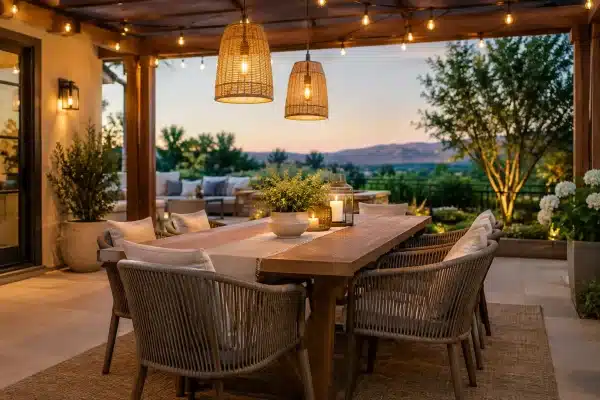
Outside, place sconces where people need reassurance and visibility: beside the front door, at a side entrance, along a covered porch or near a patio door. A pair flanking a front door creates a polished entrance, while one fitting above the door can suit a narrower façade. The scale matters – a small light can disappear against a broad stone or rendered wall.
For door-side fittings, aim for a centre height around 165 to 180cm, then check how it relates to the door frame and house number. Choose a fitting designed for outdoor conditions and use warm, controlled light. The goal is a welcoming approach, not a floodlit façade.
Check the view before the final fix
Tape a paper template to the wall, stand back, then look at it from the doorway and from the seat or bed it will serve. This simple step reveals whether a fitting is competing with artwork, sitting awkwardly beside a curtain or falling behind a headboard. It also gives you a chance to consider cable routes, switches and dimmers before the electrician arrives.
Wall sconces are most effective when they feel like part of the room’s architecture rather than an afterthought. Choose a finish that connects with your handles, mirrors or furniture, use dimmable lighting where atmosphere matters, and let each fitting earn its place through both style and purpose. For rooms that need a more tailored plan, Lux Lighting’s design expertise can help turn a good idea into a scheme that feels perfectly resolved.