A chandelier that is too small can make a generous dining table feel oddly unfinished. One that is too wide can dominate the room before anyone has pulled out a chair. If you are asking what size chandelier over table will look right, the best answer starts with the table itself, then considers the room, ceiling height and the kind of atmosphere you want to create.
Dining lighting should feel intentional from every angle: welcoming at family meals, impressive when guests arrive and practical enough for the everyday moments in between. A few well-judged measurements will give you a far stronger result than choosing by eye alone.
What size chandelier over a dining table works best?
As a reliable starting point, choose a chandelier with a diameter or width around one-half to two-thirds of your table’s width. This creates enough visual presence without allowing the fitting to spill beyond the tabletop.
For a rectangular table that is 90cm wide, a chandelier around 45cm to 60cm wide will usually feel balanced. With a 120cm-wide table, you can comfortably consider a statement piece between 60cm and 80cm wide, depending on how open the room feels and how detailed the design is.
There is one practical boundary worth respecting: the chandelier should normally sit inside the edges of the table. Aim to leave roughly 15cm to 30cm of table visible on either side of the fitting’s widest point. This keeps the light centred over the setting rather than visually crowding the people seated at either end.
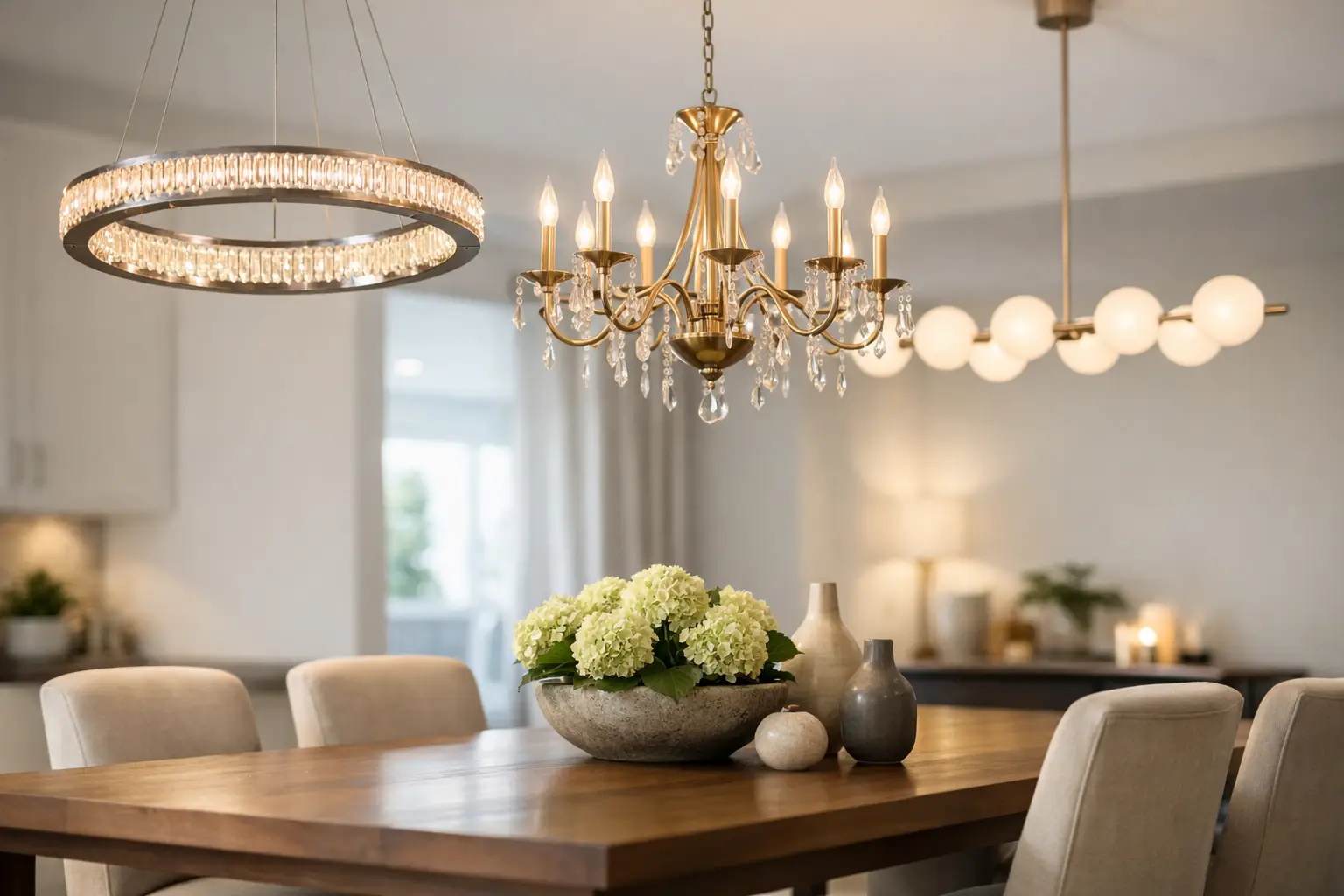
A delicate open-frame chandelier can sometimes be slightly larger because it allows the eye to travel through it. A dense globe cluster, solid shade or dramatic tiered crystal fitting often needs a little more restraint. Scale is not only about centimetres – it is also about visual weight.
Start with the table, then check the room
The popular room formula is simple: add the room’s length and width in feet, then use that number in inches as a guide to chandelier diameter. In a 12ft by 14ft dining room, for example, a chandelier around 26 inches wide, or approximately 66cm, is a sensible first option.
This is useful, but it should not overrule the table. The table is the visual anchor, and the chandelier needs to serve it. A large open-plan kitchen-diner may have plenty of floor area, but a compact four-seat table can still look overwhelmed by an oversized fitting.
Consider the room formula as a second check. If it suggests a much larger chandelier than the table proportions allow, you may need to introduce more than one light source rather than forcing one large chandelier into the scheme. Wall lights, cabinetry lighting or a pair of pendants can build ambience without putting all the visual emphasis above the table.
Round tables and round chandeliers
Round tables are usually the simplest pairing. A round chandelier, lantern or clustered pendant placed centrally creates a calm, cohesive composition. For a 120cm round table, a fitting around 60cm to 75cm in diameter is often a strong choice.
A smaller table can carry a more decorative fitting, provided it remains within the table’s edge. If your chandelier has a broad metal frame, long arms or large glass shades, measure its true widest point rather than the central body.
Rectangular tables need a longer lighting plan
A single round chandelier can work beautifully over a rectangular dining table, especially when the table is up to around 180cm long. Keep it centred and choose a design with enough presence to hold the length of the table.
For tables longer than 200cm, a linear chandelier is often the more natural choice. It follows the table’s shape and distributes light across place settings rather than leaving the ends in shadow. As a guide, a linear fitting can be around one-half to two-thirds of the table length, while still leaving clear space at both ends.
Another considered option is two matching pendants or chandeliers. This works particularly well over long tables, kitchen islands and extendable dining tables. Position the fittings evenly along the centre line, keeping their combined width visually contained within the table.
How high should a chandelier hang over a table?
Once the width is right, hanging height makes the difference between a polished dining area and a fitting that feels awkwardly placed. In most homes, the bottom of a chandelier should hang around 76cm to 91cm above the tabletop.
This range gives a clear view across the table while keeping the light low enough to create intimacy. It also prevents the fitting from becoming a head-height hazard when someone stands up or leans across to serve dinner.
Begin at approximately 76cm above the table for a standard ceiling, then stand back and assess the sightlines. If the chandelier has a large or visually busy design, raising it closer to 86cm can make the room feel less crowded. With high ceilings, it can often sit nearer 91cm above the tabletop, although the exact height depends on the fitting’s proportions and chain or suspension length.
Do not measure from the floor. Dining tables vary in height, and the relationship between the chandelier and tabletop is what people will notice. If your table is unusually high, such as a bar-height dining table, preserve a comfortable visual gap rather than applying a standard measurement blindly.
Match the chandelier to how you use the dining space
A dining room used mainly for relaxed evening meals can carry a more sculptural, decorative chandelier. Glass globes, warm brass finishes, ribbed shades and layered designs bring a sense of occasion, especially when paired with dimmable bulbs.
In a busy kitchen-diner, practicality matters just as much. A fitting with shades that direct light downwards can make weekday homework, serving and entertaining easier, while an open design helps maintain an airy feel above an island-style table. If the room has low ceilings, consider a semi-flush chandelier or a close-to-ceiling statement light rather than trying to shorten a large hanging fitting beyond its intended proportions.
The finish should also belong to the wider room. Matt black can give a contemporary table and dark-framed doors a crisp architectural edge. Brass or champagne gold adds warmth to timber, cream and soft neutral schemes. Smoked glass, clear glass and chrome tend to suit more streamlined interiors, but their reflected light can appear cooler without warm-toned bulbs.
Brightness matters as much as size
A perfectly sized chandelier will still disappoint if the light level is wrong. Dining spaces benefit from layers: the chandelier provides the focal point and general light, while lamps, wall lights or LED details soften the room around its edges.
Choose warm white bulbs for a more inviting dining atmosphere, usually around 2700K. A dimmer is one of the most worthwhile additions because it allows the same chandelier to work for a lively Sunday lunch, a quiet evening meal or a celebratory dinner. If your fitting takes several lamps, lower-output bulbs across multiple points of light often look more elegant than a few overly bright bulbs.
Pay attention to glare, particularly with exposed bulbs or clear glass. The most beautiful chandelier should still be comfortable to sit beneath. Frosted globes, shaded bulbs or a dimmable setup can help preserve the sparkle without making conversation feel like a spotlight moment.
Common sizing mistakes to avoid
The most frequent mistake is choosing a chandelier based only on a product photograph. Showroom images often feature high ceilings, large tables and generous room dimensions, so a fitting can appear more modest than it will at home. Mark the intended width on your table with masking tape or lay out a cardboard template before ordering. It is a quick way to judge scale from the seats, doorway and adjoining living area.
Another is ignoring an extendable table. Size the lighting for the table as it is used most often, but think about the extended version if you regularly host. A linear chandelier or two pendants can be particularly effective here, as the arrangement still looks purposeful when extra leaves are added.
Finally, avoid placing the chandelier according to the room’s centre if the table is positioned elsewhere. The fitting should be centred over the table, not necessarily under the ceiling rose. If relocating the electrical point is not practical, a swag hook, track solution or professional lighting design can offer a more considered route to the right position.
The right chandelier does more than fill the space above a table. It gives the dining area its own identity, drawing people in with warmth, proportion and a finish that feels beautifully at home long after the table has been cleared.