You notice bad lighting most when the room should feel its best. The kitchen is bright but flat. The sitting room has one harsh ceiling light and nowhere to hide. The bedroom looks finished in daylight, then oddly cold at night. Smart lighting for home changes that quickly – not because it is flashy, but because it gives you control over mood, function and flow in a way standard fittings rarely can.
The appeal is simple. Instead of one setting for every hour, every task and every room, you create lighting that responds to real life. Softer light for winding down. Brighter light for cooking or homework. Accent lighting that picks up shelves, artwork or architectural details. Once you have seen a space shift from practical to inviting with a tap, it makes old-style on and off lighting feel limited.
Why smart lighting for home works so well
Good lighting has always been about layers. Ambient light gives overall brightness, task lighting helps you see clearly, and accent lighting adds depth and atmosphere. Smart lighting makes those layers easier to manage. You are not relying on a single pendant to do everything, and you are not stuck getting up to change the mood every time the room changes purpose.
That matters in modern homes where one space often needs to do several jobs. A kitchen may be a cooking zone at 6pm, a dining space by 7pm and an improvised workspace the next morning. Smart lamps, dimmable fittings, LED strip and app or voice control let you move between those uses without the room feeling overlit or under-considered.
There is also a design benefit. Lighting is one of the quickest ways to make a room feel more expensive, more polished and more intentional. Warm under-cabinet strips in a kitchen, softly lit shelves in a living room or bedside lamps set to a low evening scene all create the kind of finish people usually associate with professionally designed interiors.
Start with the room, not the technology
The biggest mistake people make is shopping by gadget rather than by space. A smart bulb can be useful, but it is not automatically the best answer in every room. The better question is what you want the room to feel like and how you actually use it.
In a living room, flexibility matters most. You want enough brightness for everyday use, but you also want softer evening light that flatters the room rather than flattening it. A mix of smart floor lamps, table lamps and dimmable wall or ceiling fittings usually works better than relying on one central fitting. If the room has alcoves, shelving or media units, LED strip can add subtle depth without pulling attention away from the rest of the scheme.
In kitchens, smart lighting is less about novelty and more about practical comfort. Bright task lighting over worktops is essential, but that same brightness can feel clinical once dinner is over. This is where layered smart lighting earns its place. Ceiling spots for function, pendant lighting over an island for focus, and low-level or under-cabinet lighting for atmosphere can all be adjusted to suit the time of day.
Bedrooms benefit from restraint. Not every space needs colour-changing scenes and app-controlled drama. Often the best smart bedroom lighting is simply warm, dimmable and easy to control from bed. Bedside lamps or wall lights with scheduled evening settings can make the room feel calmer, while wardrobe or dressing area lighting adds convenience without disturbing the overall mood.
Bathrooms are slightly different because safety ratings and fitting suitability matter. But where the right products are used, smart mirror lighting, dimmable ceiling fittings or low-level lighting can make a bathroom feel far more considered. Bright for the morning routine, softer for a late bath – it is a small luxury that quickly becomes part of daily life.
The best smart lighting ideas are often subtle
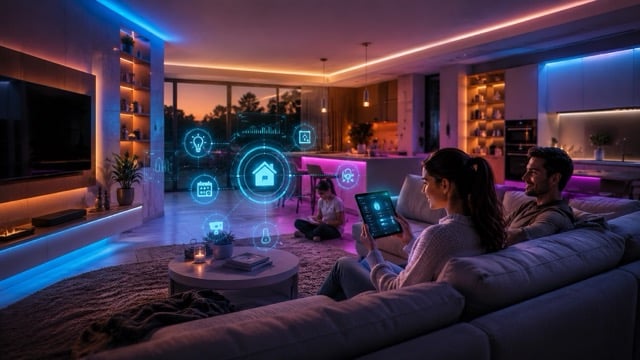
There is still a perception that smart lighting means novelty colours and constant app use. For most homes, the strongest results are much quieter than that. Warm whites, dimming control and scene setting do more for a space than bright blue bulbs ever will.
Think about how hospitality interiors use light. The best bars, restaurants and boutique hotels rarely blast a room with one level of brightness. They use contrast. They guide the eye. They make certain materials and features stand out. That same thinking works beautifully at home, especially in open-plan rooms or renovated spaces where you want the layout to feel structured rather than exposed.
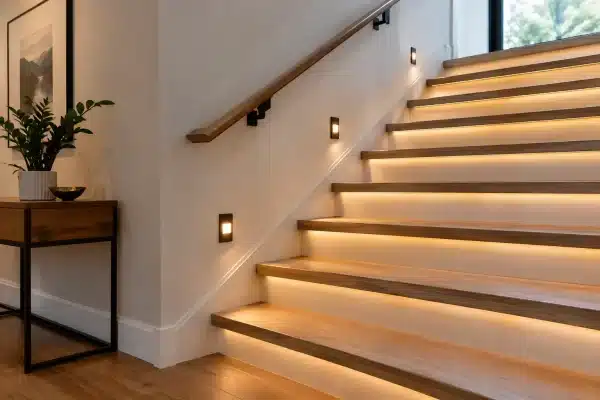
LED strip is particularly effective here. Used well, it can define steps, soften cabinetry, highlight shelving or create a clean floating effect beneath units and furniture. The result is contemporary and architectural rather than decorative for its own sake. For homeowners working on a renovation or larger design scheme, this is where a more tailored approach often pays off.
What to look for before you buy
Compatibility comes first. Some smart products work within closed systems, while others are more flexible. If you already use a voice assistant or have existing smart home devices, it is worth checking what integrates easily. Convenience disappears quickly if every fitting needs a different app or control method.
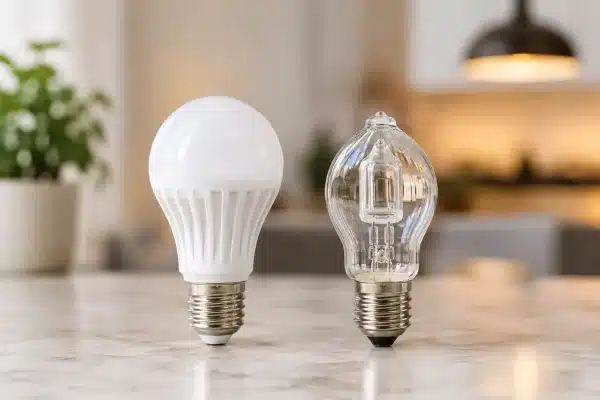
Dimming performance is another detail that matters more than people expect. Not all bulbs dim beautifully, and not all fittings are suited to every smart lamp. If a room is meant to feel warm and relaxed in the evening, smooth dimming and the right colour temperature will matter more than a long list of features.
You should also think about the fitting itself, not just the technology inside it. A smart bulb in the wrong pendant is still the wrong pendant. The style, scale and finish need to suit the room, because the visual effect in daylight is just as important as the lighting effect at night. This is where design-conscious buying makes a visible difference.
Then there is the practical side. Some people want a full smart home setup with schedules, scenes and multi-room control. Others simply want better lighting with a little more flexibility. Both are valid. You do not need to automate every corner of the house for smart lighting to be worthwhile.
Where smart lighting adds the most value
The rooms that benefit most are the ones where ambience and function need to sit side by side. Kitchens, living rooms and master bedrooms tend to deliver the clearest return because they are used heavily and at different times of day. Hallways and stairs are also worth attention, especially where low-level lighting can improve both atmosphere and visibility.
Outdoor spaces are often overlooked. Smart exterior lighting can make a garden, patio or front entrance feel far more welcoming, while also adding practical security. The key is avoiding over-lighting. A few well-placed fittings, controlled with timers or scenes, usually look better than flooding the whole space with brightness.
For renovations, extensions and self-builds, smart lighting becomes even more compelling. Planning it early allows you to create cleaner results, particularly with integrated LED tape, concealed lighting details and layered circuits. It is easier to build atmosphere into a space from the start than to fix flat lighting after the room is finished.
Is smart lighting worth it?
Usually, yes – if you are buying it for the right reason. If the goal is to make your home feel better to live in, easier to use and more visually refined, smart lighting offers real value. If the goal is simply to add tech for the sake of it, the novelty wears off quickly.
The most successful schemes are the ones that feel almost invisible in use. You walk into the kitchen in the morning and the light is right. You settle into the sitting room in the evening and the room softens. Guests notice the atmosphere before they notice the fittings. That is when lighting is doing its job properly.
For homeowners who care about both function and finish, smart lighting for home is less about gadgets and more about shaping how a space feels. Choose it with the same care you would give to furniture, flooring or paint, and it becomes one of the hardest-working design decisions in the house. If you are planning a refresh, start with the room that frustrates you most at night – that is often where the transformation begins.