A living room can have beautiful furniture, carefully chosen paint and still feel unfinished at 7pm. The missing ingredient is often not another cushion or artwork, but well-placed living room lamps. They soften the hard edges created by a central ceiling fitting, bring warmth to the areas you actually use and make the room feel considered after dark.
The best schemes do more than brighten a space. They give every corner a purpose: a pool of light beside the sofa, a gentle glow on a console, a focused beam over a favourite chair. Getting there is less about matching every lamp perfectly and more about combining the right light, at the right height, for the way your household lives.
Start with layers, not one bright ceiling light
A single pendant or flush fitting is useful for general illumination, especially in a compact room, but it rarely creates a welcoming evening atmosphere on its own. Overhead lighting can cast shadows beneath brows and eyes, flatten the room’s textures and leave the edges surprisingly dark. Lamps solve that problem by adding light at a human level.
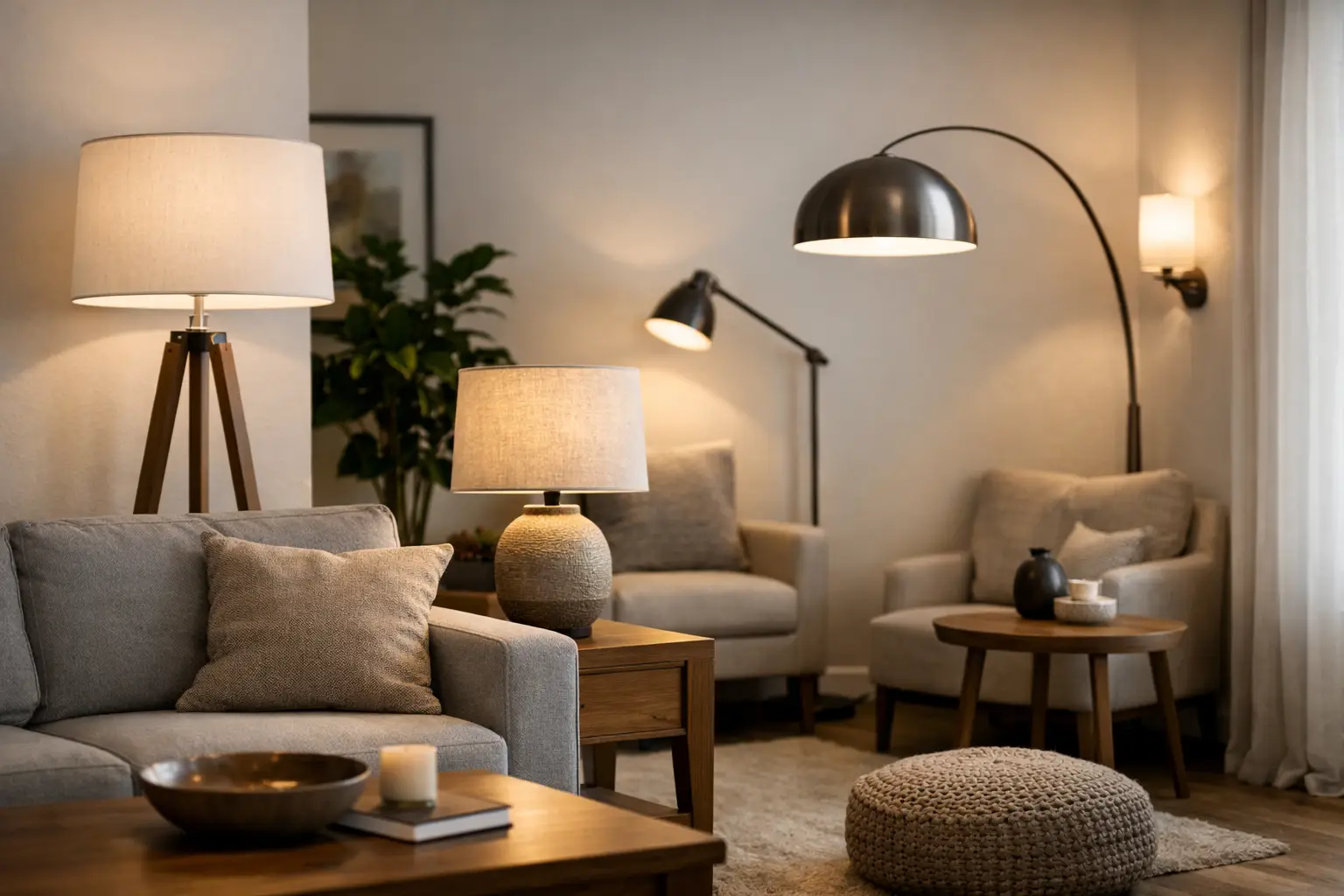
Think of the living room in three layers. Ambient light provides the overall level of brightness. Task light helps with a specific activity, such as reading, knitting or working from the sofa. Accent light draws attention to something worth seeing: a textured wall, a framed print, shelving or an architectural detail.
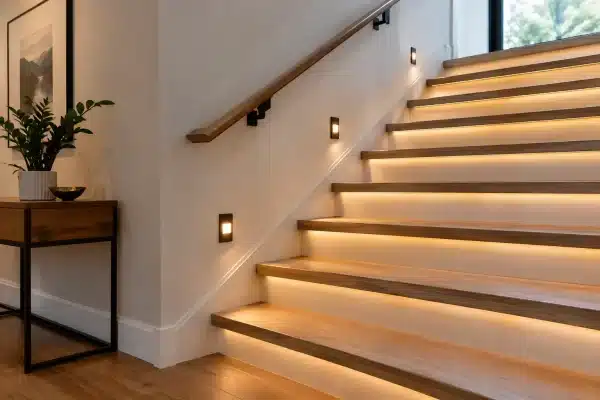
A floor lamp near a seating area often handles task lighting and ambience at once. A table lamp on a side table or cabinet gives a lower, more intimate glow. Where the room has built-in joinery, discreet integrated lighting can bring depth without taking up valuable surface space. The most relaxed rooms usually use at least two of these layers, rather than relying on one fitting to do every job.
Choose living room lamps by how you use the room
Before choosing finishes, look at the room in its evening state. Sit in each regular seat and notice what is missing. If someone reads in the corner, a lamp needs to send light towards the page without shining directly into their eyes. If the sofa is where the family watches television, you need soft light behind or beside the seating, not a bare bulb facing the screen.
For a reading chair, an adjustable floor lamp with a directed head is a practical choice. A taller arched design can reach over a sofa or chaise without requiring a side table, although its base needs enough clear floor area to feel secure rather than intrusive. A slim uplighter is excellent for lifting a low ceiling visually, but it will not replace a proper reading lamp.
Table lamps are the more decorative workhorses. Place one at either end of a sideboard, on a console behind the sofa, or on a side table beside an armchair. They are particularly effective in open-plan homes, where their warm pools of light can quietly define the lounge area once the kitchen has gone dark.
A small lamp can also earn its place on a bookshelf, coffee table or deep windowsill, provided the cable can be managed safely and the lamp will not be knocked over. This is where a rechargeable design can be useful, offering a little flexibility without adding another visible wire to the room.
Get scale and height right before focusing on style
A lamp that is too small disappears against a generous sofa. One that is too tall can dominate the room and put the bulb at an uncomfortable eye level. Proportion is what makes even a bold statement lamp feel intentional.
When seated beside a table lamp, the lower edge of the shade should generally sit around eye level or slightly below. This helps hide the bulb while casting useful light over the nearby seat. On a console or sideboard, allow the lamp enough height to create presence, but leave room for artwork, mirrors or decorative objects to breathe.
Floor lamps need a different check. Consider the height of the shade or light source in relation to seated eye level, then consider the footprint. A tripod base or oversized marble base can look superb in a large room, but may crowd a narrow circulation route. In a compact living room, a slender stem with a small base, or a wall light with a plug-in option, can deliver the same atmosphere with less visual weight.
Do not assume a matching pair is always the answer. Symmetrical lamps suit formal layouts and create a calm, polished look on a mantel or sideboard. In a more relaxed room, mixing a floor lamp with a table lamp is often more natural. Tie the choices together through one or two shared details, such as a warm metal finish, a linen shade or a repeated shape.
Shades control the mood as much as the lamp base
The shade is not an afterthought. It decides whether the light is crisp and useful, softly diffused or deliberately dramatic. A pale linen or fabric shade spreads a warm, forgiving glow that works beautifully in rooms designed for conversation and relaxing. It is a strong all-round choice beside sofas and armchairs.
Opaque metal shades direct light more precisely, making them suitable for reading or highlighting a wall. Glass can give a cleaner, more contemporary appearance, but clear glass exposes the bulb and asks for a decorative filament lamp. Smoked or opal glass is more forgiving, reducing glare while still keeping the fitting visually light.
Material and colour affect the result too. A cream, ivory or natural linen shade will reflect more light into the room than a black or deep-coloured shade. Dark shades bring a cocooning effect and can look striking in a larger room with several light sources, but they should not be the only source of illumination in a dim space.
Select bulbs for warmth, clarity and control
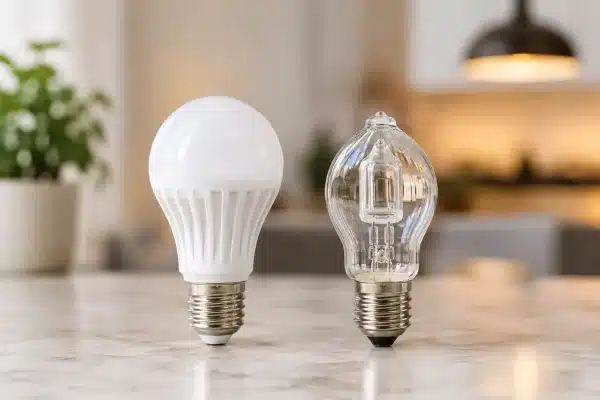
Even the most stylish lamp will disappoint with the wrong bulb. For everyday living rooms, warm white light around 2700K usually feels inviting and flattering. It works well with timber, warm neutrals, brass and layered textiles. If your interior is very crisp and contemporary, 3000K can provide a slightly cleaner look without becoming harsh.
Brightness depends on the job. A decorative table lamp may only need a lower-output LED bulb for atmosphere, while a reading lamp benefits from a brighter bulb and a well-directed shade. Rather than making one lamp excessively bright, distribute the light across the room. This reduces glare and gives you more options during the evening.
Dimmable lamps are worth considering, particularly where the living room changes character through the day. Brighten the room for visitors, homework or tidying, then lower the level for a film or a quiet night in. Check that both the bulb and the lamp or dimmer are compatible. Smart bulbs can add further flexibility, but they are most useful when the controls suit your household rather than becoming another app no one opens.
Build a scheme that looks finished, not overfilled
Start with the seat that needs the best light, then add a second source across the room. This simple move prevents the familiar effect of one bright corner and three forgotten ones. If the room is large, introduce a third lamp near shelving, a sideboard or a darker alcove to create balance.
Pay attention to what the light lands on. A lamp is more effective when it catches the grain of a timber cabinet, a soft curtain fold or a favourite piece of art. It is less effective when it illuminates clutter, reflects in the television or creates an awkward shadow behind the sofa. Small shifts in position can change the whole feel of the room, so test placement before committing to cable clips or furniture rearrangement.
For renovated homes and more complex layouts, lighting design support can be especially valuable. Lux Lighting can help bring together decorative lamps, fixed fittings and bespoke LED details so the finished room has a clear visual rhythm rather than a collection of separate purchases.
The right lamp should make the living room feel easier to inhabit. Choose one light for the task you return to most, add another for atmosphere, and let the room reveal where a final warm glow would make it feel truly yours.