A kitchen diner has to perform more than almost any other room. It is where breakfast is grabbed before the school run, vegetables are chopped after work, friends gather with a glass of wine and homework spreads across the table. The best lights for kitchen diner layouts recognise those changing moments, giving you bright, practical illumination when needed and a softer, more inviting glow when the cooking is done.
One central fitting rarely achieves all of that. A well-planned scheme uses layers, placing light where it has a purpose while making the room feel considered from every angle. The result is a kitchen diner that works hard during the day and looks beautifully settled at night.
Start with zones, not fittings
Before choosing a pendant or scrolling through ceiling lights, look at how the room is used. Most kitchen diners contain at least three distinct zones: the kitchen work area, the dining table and the circulation space between them. Open-plan rooms may also include a sofa, island seating or a view into the garden.
Each zone needs a different quality of light. Worktops need clear, even illumination that does not throw your own shadow across the chopping board. A dining table benefits from a more focused pool of light that makes the table feel like a destination. The wider room needs enough ambient light to move around comfortably without looking flat or overlit.
This approach also prevents a common mistake: installing several matching ceiling fittings across the whole room simply because there are several ceiling points. Matching lights can be effective, but they should support the layout rather than dictate it.
Build a layered lighting plan
Ambient light sets the overall feel
Ambient lighting is the foundation. Recessed downlights, a discreet surface-mounted fitting or a carefully chosen central ceiling light can provide the general illumination needed for everyday use. In a low-ceiling kitchen diner, downlights can keep the room open and uncluttered. In a period property or a room with more height, a decorative semi-flush fitting may add personality without hanging too low.
Avoid positioning all downlights in a rigid grid without considering cabinetry, beams and the dining table. A grid can look tidy on a plan but may leave dark worktops or create glare on glossy cabinet doors. Aim lights at the usable parts of the room, allowing for tall units, wall cupboards and extractor hoods.
For a cleaner, calmer ceiling, choose fewer well-positioned fittings and add other layers below eye level. Light should feel present, not relentlessly visible.
Task lighting makes the kitchen easier to use
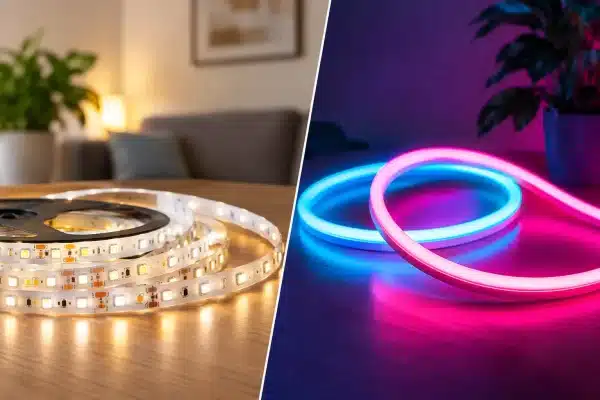
Under-cabinet lighting is one of the most valuable additions to a kitchen. It puts light directly onto the worktop, where you need it most, and removes the shadow cast by overhead lighting. LED strip lighting in an aluminium profile creates a continuous, polished line of light, while compact under-cabinet fittings suit more straightforward installations.
Pay attention to the colour temperature. Warm white light, usually around 2700K to 3000K, gives a relaxed and welcoming finish that works particularly well in kitchen diners connected to living areas. Neutral white can feel crisper for food preparation, but it may appear cooler beside warm timber, brass finishes and soft furnishings. It depends on the materials in your room and how much evening entertaining you do.
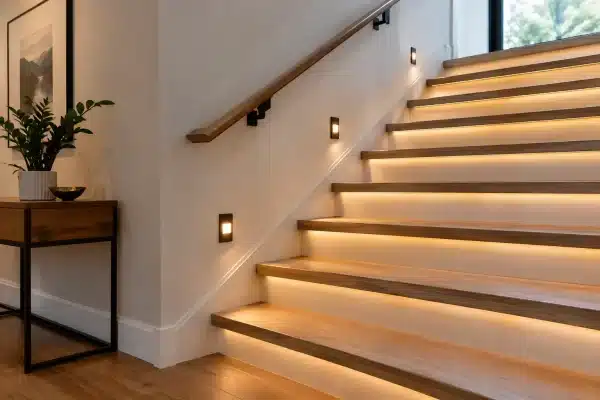
Lighting inside glass-fronted cabinets, beneath an island overhang or along a plinth can add depth after dark. These are not substitutes for proper task lighting, but they make the kitchen feel more architectural and less like a row of cabinets floating in shadow.
Dining lighting creates a focal point
The dining table is your opportunity to choose a fitting with real presence. A pendant over the table visually anchors the dining zone, especially in an open-plan kitchen where the table can otherwise feel adrift.
For a round table, one substantial pendant or a small cluster often looks balanced. A long rectangular table generally suits a linear pendant, a row of two or three pendants, or an elongated statement fitting. The shape should echo the table rather than compete with it.
As a useful guide, hang pendants so their lowest point sits roughly 75 to 90cm above the table. This usually keeps sightlines open while giving the light enough intimacy. If the table is regularly used for crafts, paperwork or children’s activities, select a fitting that directs some useful light downwards rather than relying on decorative exposed bulbs alone.
A dimmer is essential here. Bright light is helpful for Sunday lunch and table setting; softer light changes the mood for a relaxed evening meal in seconds.
Choose fittings that relate to the room
Kitchen diner lighting should feel connected, but it does not need to be identical. The simplest way to achieve cohesion is to repeat one or two details across the scheme. You might pair a black linear dining pendant with black track heads above the island, or carry brushed brass from dining pendants into wall lights and cabinet handles.
Glass pendants are excellent where you want visual lightness and do not want to block a view through the room. Smoked or amber glass gives a more atmospheric look, although it can reduce the amount of clear light reaching the table. Metal shades direct light more effectively and suit industrial, contemporary or Scandi-inspired interiors. Natural materials such as rattan, linen and woven fibre bring texture, but cast patterned shadows, so they work best with strong supporting task lighting elsewhere.
Scale matters as much as style. A tiny pendant above a large table can look apologetic, while a large feature fitting may overwhelm a narrow room. Measure the table, ceiling height and the space around it before committing. If you are choosing several pendants, consider them as one composition rather than individual objects.
Add warmth beyond the ceiling
The most inviting lights for kitchen diner spaces are often not on the ceiling at all. Wall lights can soften a blank wall, frame a sideboard or bring a warmer glow to the edge of the room. A table lamp on a console, dresser or deep windowsill introduces the lived-in feel usually associated with a sitting room.
This matters in open-plan homes. When every light is overhead, the kitchen can remain visually dominant long after dinner. Switching on wall lights, cabinet lighting and a lamp lets the dining area take over, making the room feel ready for conversation rather than cooking.
If your layout includes shelving, glazed cabinetry or a built-in banquette, integrated LED lighting can highlight those details without adding visual clutter. Bespoke LED strip solutions are especially useful around awkward joinery, curved edges and custom islands, where off-the-shelf fittings may not sit neatly.
Plan controls before the kitchen is fitted
Good lighting depends on good controls. Put the kitchen downlights, under-cabinet lighting, island pendants and dining lights on separate circuits where possible. This gives you far more flexibility than one switch controlling everything at once.
Dimmers should be matched to compatible LED lamps and fittings. It is worth checking this early, as dimming problems are often caused by an unsuitable driver, bulb or dimmer switch rather than the light fitting itself. Smart controls can be useful too, particularly for setting scenes such as cooking, dining and evening, but a simple, well-positioned wall switch remains the easiest option for guests and family members.
Think about where you enter and leave the room. Two-way switching is helpful in larger open-plan spaces, while a low-level evening setting near the kitchen entrance can make late-night trips less harsh.
Avoid the details that spoil a scheme
Glare is the quiet enemy of a beautiful kitchen diner. Bare bulbs at eye level, highly reflective worktops and poorly placed spotlights can all make a room uncomfortable. Choose diffused shades where people will be seated nearby, and avoid placing downlights directly above glossy surfaces where reflections will be obvious.
Also consider cleaning and maintenance. Open glass shades and intricate pendants can look striking above a dining table, but grease and dust travel further in open-plan rooms than many people expect. Select finishes that suit your appetite for upkeep, especially near the hob or island.
Finally, use a qualified electrician for new circuits, recessed lighting and any work that alters fixed wiring. Lighting is at its best when the installation is as considered as the fitting itself.
A kitchen diner should never make you choose between function and atmosphere. Start with the way you live, layer the light around those moments and let one confident feature fitting give the room its signature. For more complex layouts, Lux Lighting can help turn a good lighting idea into a scheme that feels right from the first coffee to the last guest leaving.