A beautiful pendant on its own can still leave a room feeling flat. The secret is not simply choosing a brighter fitting, but knowing how to layer room lighting so every area feels comfortable, useful and considered from morning to night. When light comes from more than one source, a living room becomes more inviting, a kitchen works harder, and a bedroom feels ready for both busy mornings and slower evenings.
Layered lighting is one of the most effective ways to make a home feel professionally designed. It gives you control over mood, draws attention to the features you love and avoids the harsh, shadowy effect of relying on one central ceiling light.
Start with the three layers of lighting
A successful scheme combines ambient, task and accent lighting. Each has a different job, and the balance between them changes from room to room.
Ambient lighting is the general light that allows you to move around safely and comfortably. This may come from ceiling pendants, chandeliers, recessed spotlights, flush fittings or wall lights. It forms the base of the scheme, but it should not be expected to do everything.
Task lighting gives focused illumination where you need to see clearly. Think pendant lights over a kitchen island, reading lamps beside a sofa, mirror lighting in a bathroom or under-cabinet LEDs across a worktop. It should be positioned for the task, rather than simply added wherever there is an empty surface.
Accent lighting is where atmosphere takes shape. Picture lights, wall lights, LED tape beneath shelving, uplighters behind a large plant or a soft glow inside a display cabinet all add depth. This layer makes architectural details, artwork, textured walls and carefully chosen furniture feel intentional.
The aim is not to fill every corner with fittings. It is to give the room options. A good lighting plan lets you switch on exactly what you need, whether that is bright light for cooking, a quiet pool of light for reading or a gentle glow for entertaining.
How to layer room lighting from the room plan
Before choosing finishes or falling for a statement pendant, look at how the room is actually used. Stand in the doorway and identify the natural zones: where people sit, eat, prepare food, work, get dressed or pass through. These zones will tell you where light belongs.
Start with the ambient layer, then add task lighting at key activity points. Finish with accent lighting where you want to create visual interest. This order prevents a common mistake: buying several decorative fittings first, then discovering the practical areas are still poorly lit.
Also consider the room’s daylight. A bright, south-facing kitchen may need less daytime support but still benefit from warm, low-level lighting after dark. A north-facing sitting room can handle more layered light throughout the day. Windows, dark paint colours, reflective surfaces and ceiling height all affect how much light a space will need.
For open-plan rooms, treat each function as its own lighting zone. The dining table might have a decorative pendant, the kitchen work area may use downlights and under-cabinet LEDs, while the lounge section uses floor lamps and wall lights. The fittings can relate through finish, shape or bulb warmth without needing to match exactly.
Build a better ambient layer
Central ceiling lights are useful, particularly in smaller rooms, halls and bedrooms. But one overhead fitting often creates unflattering shadows and makes a large room feel stark. Soften the effect with more than one ambient source.
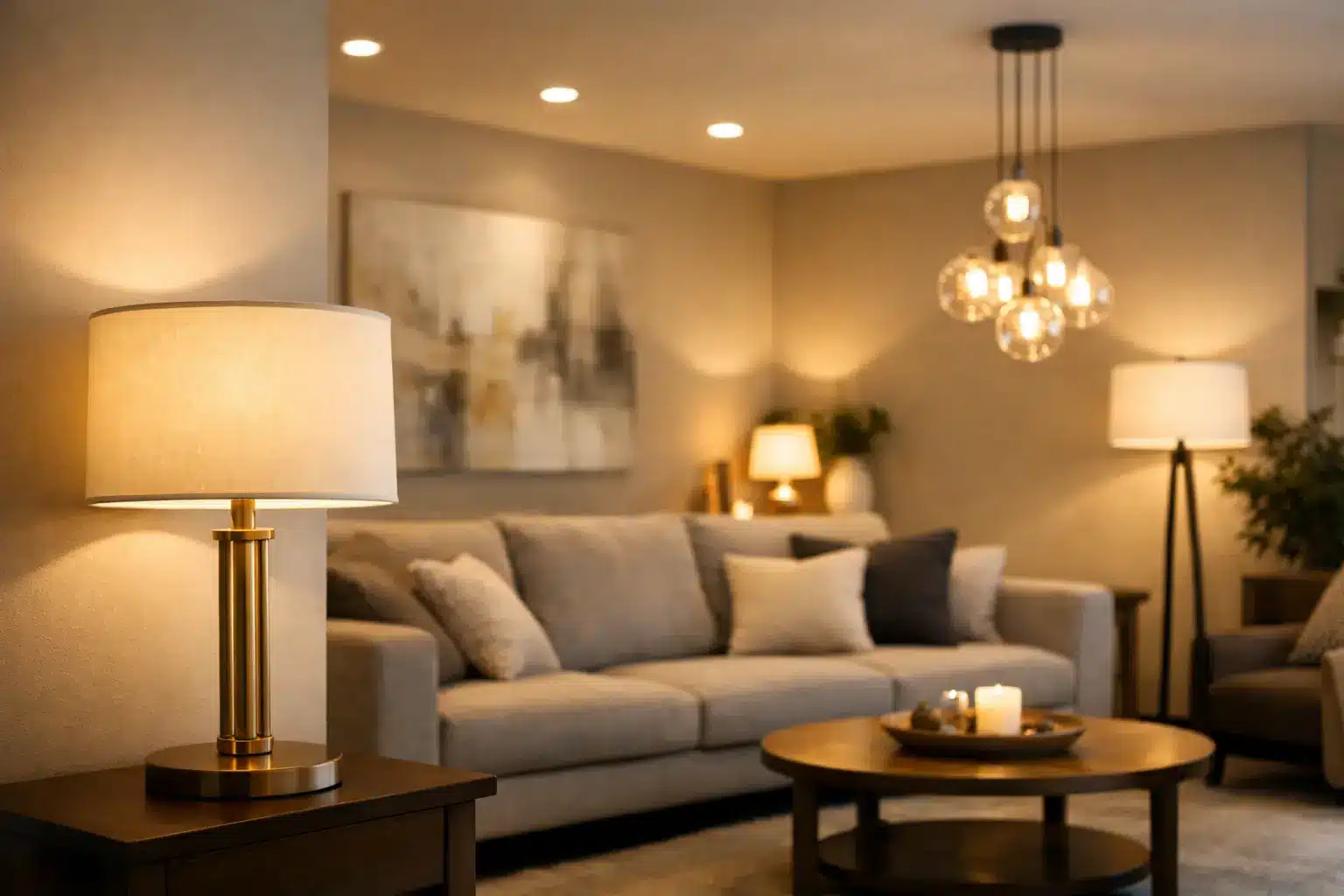
In a living room, a ceiling pendant or discreet downlights can provide general coverage, while wall lights or a pair of floor lamps help spread light around the perimeter. This makes the room feel wider and more relaxed, especially in the evening.
In kitchens, downlights are popular because they give an even, clean base layer. Their placement matters more than quantity. Avoid positioning them directly behind where someone stands at a worktop, as their body will cast a shadow onto the surface. Put the light slightly forward of the work area, then add under-cabinet lighting for a clearer finish.
For bedrooms, ambient light should be calm rather than clinical. A pendant, semi-flush fitting or decorative ceiling light can set the style, while bedside lamps and wall lights reduce the need to use the main light at night. In lower-ceiling rooms, flush or semi-flush fittings often give a more balanced result than a large hanging pendant.
Add task lighting where it earns its place
Task lighting is the hardworking layer, but it does not have to look utilitarian. The right fitting can become part of the room’s design while making daily routines easier.
At a kitchen island, pendants bring focus and character. As a guide, choose a size and number that suits the island rather than following a fixed formula. Two larger pendants can look more considered than three small ones, while a long linear fitting may suit a narrow island. Keep the bottom of the fitting high enough to preserve sightlines across the room, but low enough to create a sense of connection with the worktop.
In a sitting room, put reading lights where people genuinely sit with a book, tablet or newspaper. A floor lamp behind or beside a chair works well, provided the shade directs light onto the page without shining into someone’s eyes. Adjustable wall lights are particularly useful where floor space is limited.
Bathroom task lighting deserves careful thought. A ceiling light alone can leave shadows across the face, making shaving, skincare and applying make-up more difficult. Lighting positioned on both sides of a mirror, or an evenly lit mirror designed for the bathroom, gives a much more flattering and practical result. Always select fittings with the appropriate IP rating for the bathroom zone.
Use accent lighting to create depth and drama
Accent lighting is often the difference between a room that is lit and a room that feels finished. It works best when it has something worthwhile to reveal: a fireplace, alcove, gallery wall, bookcase, timber panelling or beautiful material finish.
Wall lights are especially effective because they bring light down from the ceiling plane and onto the walls. This creates visual layers, makes a room feel less box-like and adds a warm evening ambience. In a hallway, they can turn an overlooked route through the home into a welcoming space.
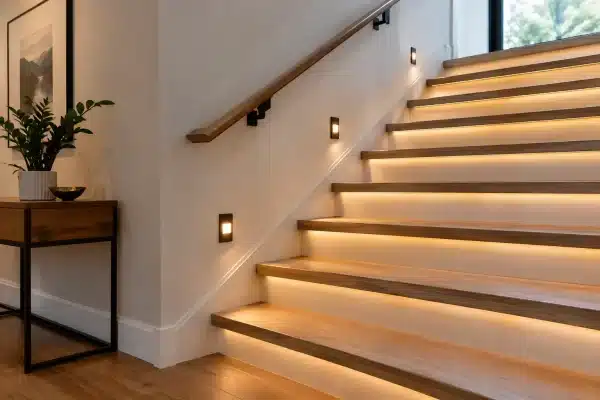
LED tape offers a clean, contemporary way to add discreet accent light. It can run under kitchen cabinets, along shelving, beneath a floating vanity or within joinery. For the best result, use a proper aluminium profile and diffuser rather than leaving the tape exposed. This gives a smoother line of light and helps avoid visible dots on reflective surfaces.
Aiming a narrow beam at artwork or a textured feature wall can be highly effective, but avoid overdoing it. Every feature does not need its own spotlight. A few carefully chosen points of interest feel more luxurious than a room filled with competing pools of light.
Choose bulb warmth, brightness and control carefully
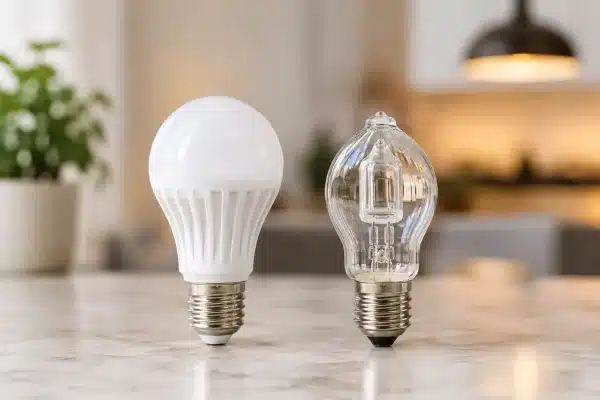
Even the most considered layout can disappoint if the bulbs are wrong. For most living rooms, bedrooms and dining areas, warm white light around 2700K creates a softer, more welcoming feel. Kitchens, utility rooms and practical work areas often suit 3000K, which is still warm but a little clearer. Cooler light can feel crisp, but it may make a home feel less comfortable after dark.
Brightness is measured in lumens, not watts. A decorative table lamp may only need a modest output, while a kitchen requires stronger light across working surfaces. Rather than fitting the brightest bulbs everywhere, spread the light across the different layers. This feels more comfortable and gives you greater flexibility.
Dimmers are one of the simplest ways to improve a layered scheme. They allow the same room to move from useful daytime brightness to a softer evening setting. Check that both the bulbs and fittings are dimmable, and use compatible controls to avoid flickering or buzzing.
Where possible, put different layers on separate switches. In a kitchen, for example, downlights, island pendants and under-cabinet lighting should ideally be controlled independently. Smart lighting can add further flexibility with scheduled scenes and app control, but a well-planned physical switch layout still matters every day.
Common mistakes that flatten a room
The most common issue is treating the centre ceiling fitting as the whole plan. Another is installing too many cool-white spotlights, which can make a lounge feel more like a workplace than a place to unwind.
Scale also matters. A tiny pendant over a large dining table will disappear, while an oversized fitting in a compact room can dominate the space. Consider the fitting’s width, drop and visual weight, as well as the furniture beneath it.
Finally, do not leave lighting decisions until the end of a renovation. Wiring for wall lights, island pendants, cabinet LEDs and separate switching is far easier to plan before plastering and decorating. For more complex homes, hospitality spaces or bespoke joinery, a professional lighting design service can help turn a good idea into a scheme that works beautifully in practice.
The best layered lighting does not demand attention every time you enter the room. It simply makes the space feel brighter when you need clarity, warmer when you want to relax and more like home at every hour.