A tired fluorescent grid can make even a beautifully fitted space feel dated. The right commercial LED panel lights do more than brighten a ceiling: they make workstations clearer, products more appealing and customer areas more comfortable to spend time in. For offices, retail floors, schools, clinics and hospitality venues, the aim is not simply maximum brightness. It is light that feels considered, consistent and fit for the way the space is actually used.
Start with the ceiling and the purpose of the room
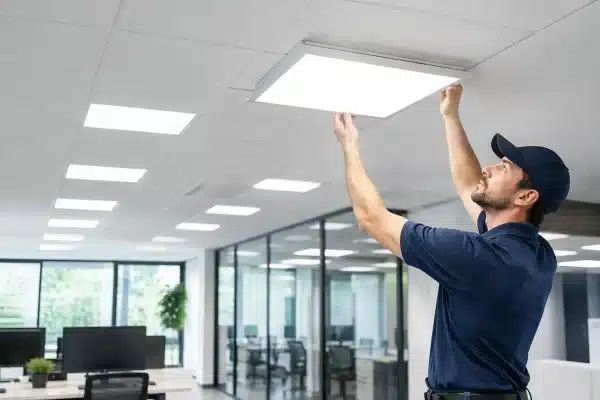
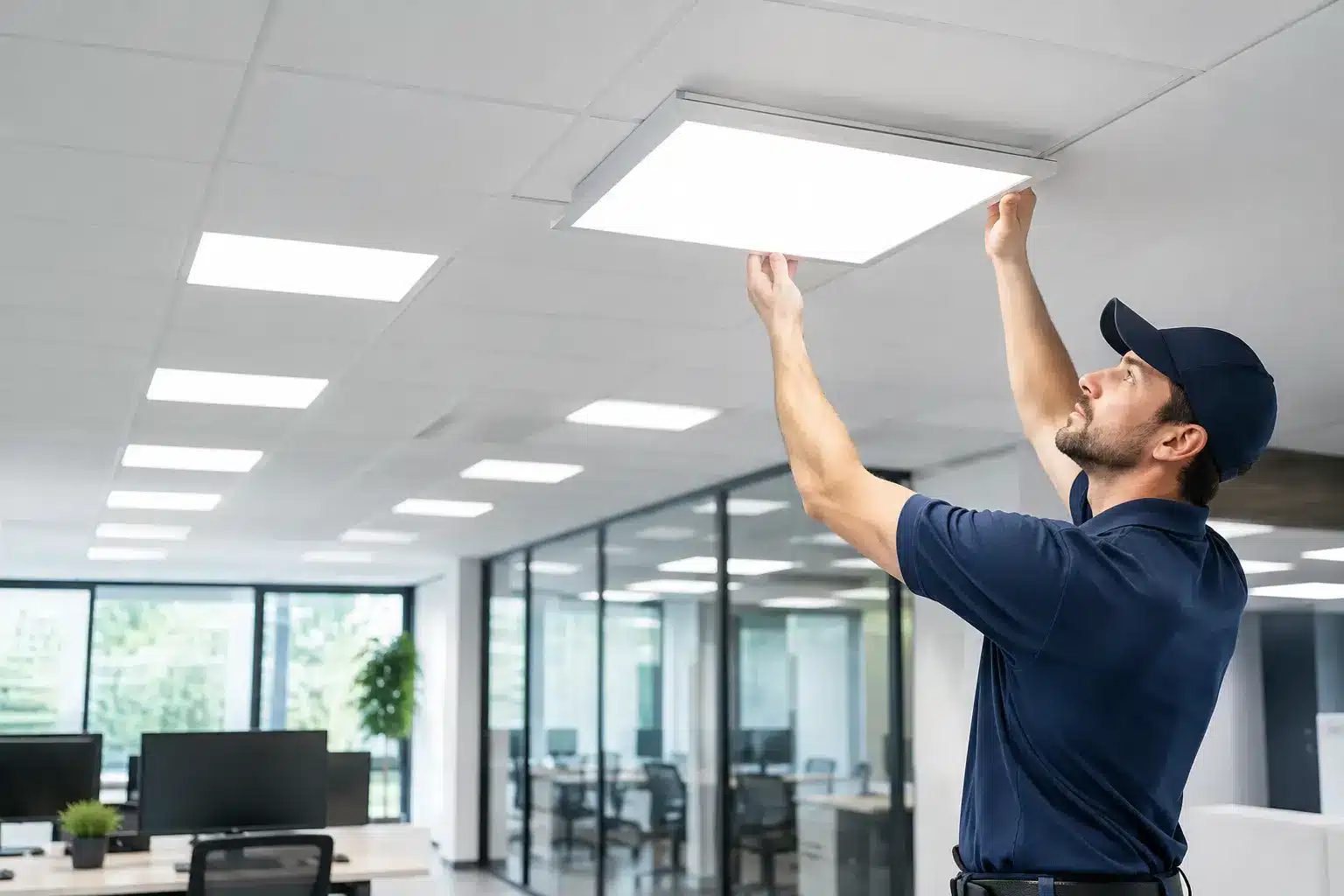
LED panels are most at home in suspended grid ceilings, where they sit neatly within standard ceiling modules for a clean, low-profile finish. They can also be surface-mounted or suspended where there is no ceiling void, making them useful for refurbishments, studios and contemporary commercial interiors.
Before choosing a fitting, look at what happens beneath it. An accounts office needs even, comfortable task lighting over desks. A retail space needs enough clarity for colour, texture and display while still feeling inviting. In a school or healthcare setting, visual comfort and reliable performance take priority. In a café, salon or reception area, the panels may need to support the atmosphere rather than dominate it.
This is why the cheapest panel is rarely the best value. Two fittings can look almost identical when switched off, yet differ greatly in glare control, driver quality, colour consistency and lifespan. A well-planned lighting scheme reduces the need to over-light a room, helping the finished space feel sharper and more polished.
Choosing commercial LED panel lights by light level
Wattage is no longer the most useful starting point. Look instead at lumens, which tell you how much light a fitting produces, then consider how that output is distributed across the room. A high-lumen panel may be ideal in a busy workspace with darker finishes, but excessive output in a compact meeting room can cause eye strain and leave the space feeling clinical.
As a general guide, offices commonly work towards around 300 to 500 lux at desk height, while detailed tasks may require more. Corridors, storage areas and back-of-house spaces can often use lower levels. Retail and hospitality lighting is more varied because the right level depends on displays, décor, ceiling height and the mood the business wants to create.
The layout matters as much as the panel specification. Wider spacing can create shadows between fittings, while placing every panel too closely together wastes energy and flattens the room. Ceiling height, wall colours, natural daylight and furniture placement all affect the result. For project spaces, a lighting plan is often the sensible route before ordering fittings.
Think about uniformity, not just brightness
A room should not have bright pools of light with noticeably dull patches between them. Uniform illumination helps staff work comfortably and makes a commercial interior look intentionally finished. Panels with a broad, even distribution are particularly effective in open-plan offices, classrooms and treatment rooms.
Where desks face computer screens, fitting position deserves extra care. Reflections from poorly positioned panels can be distracting throughout the day. Positioning, diffuser quality and glare rating should work together rather than relying on brightness alone.
Glare control makes a visible difference
For offices and other screen-based environments, look for panels designed with a low Unified Glare Rating, often shown as UGR. A UGR rating of less than 19 is commonly specified for computer work areas because it helps limit uncomfortable glare in the user’s field of view.
This is not a detail to leave until the final specification. A bright, low-cost panel with limited glare control may appear fine during a quick installation check, then become a daily irritation once desks, monitors and occupants are in place. Microprismatic diffusers are a popular choice where visual comfort is a priority, offering a cleaner, more controlled light than a basic opal diffuser.
There is a trade-off. Better glare control can slightly reduce the raw light output compared with a simpler diffuser, so the room layout and fitting quantity may need adjusting. It is a worthwhile exchange in spaces where people read, type, study or work under the lighting for long periods.
Select a colour temperature that suits the setting
Colour temperature changes the character of a room. It is measured in Kelvin and should be chosen around the experience you want to create, not simply what is most common.
A warm white panel, usually around 3000K, brings a softer and more relaxed feel. It can work well in hospitality, reception areas, cafés, salons and design-led retail spaces. Neutral white, typically around 4000K, is the reliable all-round option for offices, educational settings, kitchens and general retail. It looks clean and alert without feeling excessively cool. Cooler light has its place in utility-led areas, but it can make customer-facing interiors feel stark if used without balance.
Colour rendering also deserves attention, especially where merchandise, finishes or skin tones need to look natural. A higher CRI helps colours appear more faithful under artificial light. For fashion, beauty, food presentation and showrooms, this can have a direct impact on how customers perceive the space and the products within it.
Do not overlook drivers, dimming and controls
The driver is the component that powers the LED panel, and it has a significant influence on performance. A quality driver supports stable light output and helps avoid visible flicker, which can be uncomfortable for occupants and problematic on camera. For commercial installations, choosing dependable components is a practical decision that protects the scheme over time.
Dimming should be specified from the outset. Not every panel is dimmable, and dimmable fittings need to be compatible with the chosen control system. Standard wall dimming can suit simple spaces, while DALI, sensors and daylight controls offer more flexibility for larger offices, schools and multi-use venues.
Occupancy sensors are particularly useful in toilets, corridors, stockrooms and meeting rooms that are not continuously in use. Daylight harvesting can reduce output near windows when sunlight is already doing some of the work. These controls can lower unnecessary energy use, but they need thoughtful commissioning. A sensor that switches lights off too quickly, or dims a space too aggressively, quickly becomes a frustration rather than a benefit.
Match the panel to the environment
Commercial spaces are not all dry, clean office ceilings. A panel used in a changing room, commercial kitchen perimeter, covered external area or dusty workshop may need a suitable IP rating for protection against moisture and particles. Bathrooms and other wet areas also require careful consideration of electrical zones and fitting placement.
For retail and hospitality projects, appearance can influence the final choice too. A slim panel with a tidy white frame suits many contemporary ceilings, while a suspended installation can create a more architectural look in spaces with exposed services. Surface-mounted panels are a smart alternative where recessed installation is not possible, though the depth of the fitting should be considered against the overall ceiling design.
Emergency lighting is another area that should be planned rather than added as an afterthought. Depending on the building and use, an emergency version of a panel or separate emergency fittings may be required to support safe exit routes. A qualified electrician and the relevant project requirements should guide this part of the specification.
Plan for installation and long-term maintenance
Panel lights are often straightforward to fit, but commercial projects benefit from a few checks before installation begins. Confirm the ceiling cut-out or grid size, allow enough void depth for the driver, and make sure access will remain practical if a driver ever needs replacing. On larger schemes, keeping a small number of matching spare panels can prevent an awkward mismatch years later if a product range changes.
It is also worth checking the warranty, expected lifespan and whether replacement drivers are available. The lowest initial price can be tempting when fitting dozens of units, but downtime, call-out costs and inconsistent replacement light can quickly erode that saving. A reliable panel with good efficiency and a stable colour temperature will look better for longer.
For projects across Ireland, Lux Lighting can help bring product choice and practical design thinking together, whether you are refreshing a compact office or planning lighting for a larger commercial fit-out. Start with the people using the room, the tasks they need to complete and the feeling the space should leave behind. The right panel light will then become part of the design, not merely something installed in the ceiling.