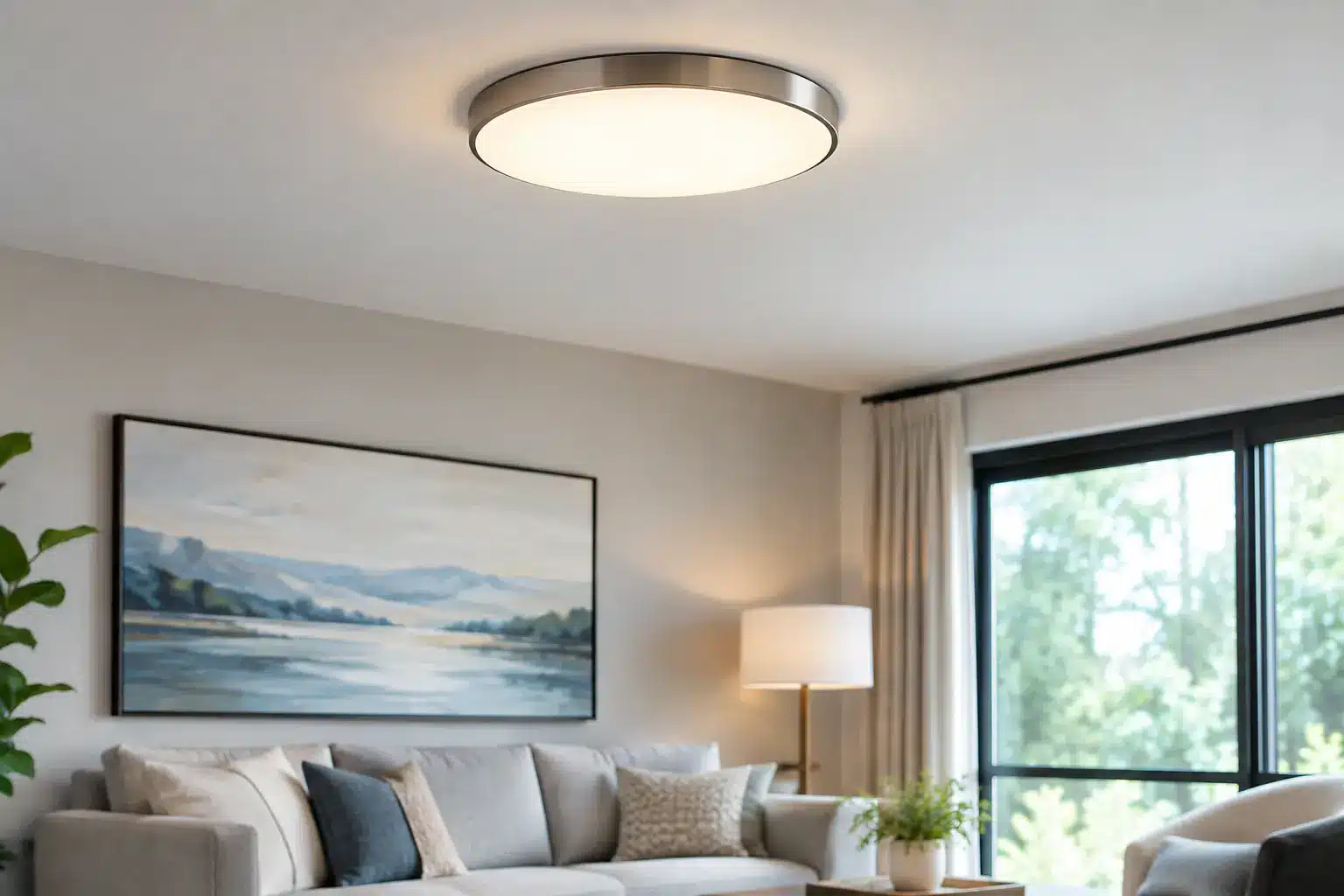
A beautiful light fitting should not make a room feel smaller. That is the real strength of a flush fitting: it brings useful, well-distributed light close to the ceiling, while leaving headroom and sightlines clear. In this flush ceiling lights review, we look at where these compact designs shine, where a different fitting may work better, and how to choose one that gives your room the finish it deserves.
Flush ceiling lights are often treated as the practical choice for low ceilings, but the category has moved on considerably. Slim black frames, smoked glass, soft opal shades, ribbed details and warm metallic finishes now make these fittings a design feature in their own right. The best choice is not simply the brightest model or the flattest one. It is the fitting that suits the scale, atmosphere and daily use of your space.
Flush Ceiling Lights Review: What They Do Best
A flush ceiling light sits directly against the ceiling, or with only a very small gap between the fitting and the surface. Unlike a pendant or chandelier, it does not hang into the room. That makes it particularly effective where ceiling height is limited, where doors open close to the ceiling, or where a clean, uncluttered look matters.
Hallways are an obvious fit. They need dependable illumination, yet a low-hanging shade can feel intrusive in a narrow entrance or landing. A flush fitting keeps the route clear and creates a more open first impression. In kitchens, it provides broad general light without competing with cabinetry, extractor hoods or statement island pendants.
Bedrooms also benefit, especially in newer homes with standard ceiling heights. A low-profile fabric, glass or textured shade can soften the room without the visual weight of a central pendant. For utility rooms, cloakrooms and understairs spaces, the appeal is even more straightforward: plenty of light, no obstruction, and a finish that feels more considered than a basic batten fitting.
The trade-off is that flush lights are generally designed for ambient lighting rather than dramatic focal-point lighting. They can make a room feel bright and polished, but they will not deliver the same sculptural presence as a large pendant suspended over a dining table. In a tall living room or period hallway, that restraint may feel underwhelming rather than elegant.
Style Has Changed the Flush Fitting
Older flush lights were often chosen solely because they were unobtrusive. Modern versions can be deliberately quiet or confidently decorative. This is what makes the category so useful when building a cohesive scheme.
For contemporary interiors, look for slim circular or square designs in matt black, white, brushed brass or chrome. These work especially well with clean-lined kitchens, modern bathrooms and minimalist hallways. A black flush ceiling light can pick up door furniture, mirror frames or kitchen handles, giving the room a stronger visual thread without adding clutter overhead.
Glass designs suit homes that need more sparkle. Clear, ribbed or smoked glass adds texture and depth, while an opal diffuser produces a softer, more even glow. In bedrooms and living spaces, this matters. A bare, exposed lamp can create glare when viewed from below, whereas a diffuser makes the light easier to live with in the evening.
For a warmer, more decorative effect, consider fabric drum shades or fittings with brass accents. These can look particularly refined in bedrooms, landings and smaller sitting rooms. Just pay attention to the overall diameter. A decorative flush light should feel intentional, not oversized and crowded against a low ceiling.
Brightness, Colour and Comfort Matter More Than Finish
The fitting may catch the eye first, but the quality of light determines whether the room actually works. Start with lumens rather than wattage. Lumens indicate brightness, while wattage describes energy use. An efficient LED fitting can deliver strong light while using comparatively little power.
A compact cloakroom may need only modest output, while a larger kitchen or open hallway needs significantly more. As a general guide, a room used for practical tasks needs a brighter central fitting than a bedroom or lounge. Size, wall colour, natural daylight and the presence of lamps or spotlights all change the answer, so avoid choosing based on a single number alone.
Colour temperature is equally influential. Warm white light, around 2700K to 3000K, creates a relaxed feel for bedrooms, living rooms and welcoming hallways. Neutral white, around 4000K, has a crisper appearance that suits utility spaces, kitchens and areas where visibility is the priority. A cool light can look clinical in a cosy room, while a very warm lamp may make food preparation or grooming less clear.
If colour accuracy matters, such as around wardrobes, mirrors or in a kitchen, choose a fitting with a good CRI rating. This helps colours appear more natural. It is a small specification that can make paint, fabrics and finishes look closer to how they do in daylight.
Integrated LED or Replaceable Bulbs?
This is one of the most useful distinctions in any flush ceiling lights review. Integrated LED fittings have the LED components built in. They tend to be exceptionally slim, energy-efficient and visually streamlined. Many offer long lifespans, and some include selectable colour temperatures or dimming functions.
Their limitation is future servicing. When the LED component eventually reaches the end of its life, replacement may require a compatible part or a new fitting, depending on the model. For a high-use kitchen, hallway or commercial setting, choose a quality integrated design from a dependable range and check the stated lifespan and warranty.
A bulb-based fitting offers more flexibility. You can select the bulb brightness, warmth and smart functionality yourself, and replacing a failed bulb is simple. It is often the better option for bedrooms and living spaces where you may want to adjust the mood over time, or where smart bulbs form part of the wider lighting plan.
Neither option is automatically better. Integrated LED suits a neat, modern installation with consistent everyday output. Replaceable bulbs suit shoppers who value personal control and easy long-term changes.
Bathrooms Need a More Careful Choice
A flush light is ideal for many bathrooms because it stays close to the ceiling and gives practical, even illumination. However, a bathroom fitting must be selected with its location in mind. The IP rating indicates how well it is protected against moisture and water ingress.
The closer a light is to a shower or bath, the more protection it needs. A fitting suitable for a general bathroom ceiling may not be suitable directly above a shower enclosure. Always match the IP rating to the bathroom zone and have electrical work completed by a qualified professional. This is one area where a stylish finish cannot compensate for the wrong specification.
A soft, diffused flush light works well for the main bathroom illumination, but it should rarely be the only source. Add dedicated lighting around the mirror to reduce shadows on the face. The result feels more luxurious and is far more practical for shaving, skincare and getting ready.
Getting the Scale Right
A fitting that is too small can disappear and leave the room feeling poorly lit. One that is too large can dominate a compact space. In a narrow hall or small utility, a discreet diameter is usually enough. In a generous kitchen or open-plan area, a larger flush fitting may be appropriate, though it may still need support from downlights, under-cabinet lighting or a pendant over the island.
Consider what the light shares the ceiling with. Smoke alarms, vents, ceiling roses and skylights all affect placement. A central fitting is often the natural starting point, but it is not an unbreakable rule. In a long hallway, two smaller flush lights can look more balanced and eliminate dark patches better than one powerful fitting in the middle.
Dimming is worth considering before purchase, particularly in bedrooms, lounges and dining-adjacent spaces. A dimmable ceiling light offers bright, practical illumination when needed, then a gentler level for evenings. Check that both the fitting and the selected bulbs, if applicable, are compatible with your existing dimmer switch.
Is a Flush Ceiling Light Right for Your Room?
Choose a flush fitting when you want efficient general lighting without compromising headroom or visual calm. It is one of the strongest choices for kitchens, halls, bedrooms, bathrooms and practical spaces, especially where the ceiling is low or the room already contains enough decorative detail.
Look elsewhere when the ceiling is high, the room needs a statement centrepiece, or you are trying to define a dining table, stairwell or island. In those settings, a pendant, cluster light or chandelier can bring needed height and character. Often, the most considered schemes combine both: flush lights for the wider circulation areas and a more expressive feature fitting where people gather.
The right flush ceiling light does not ask for attention at the expense of the room. It improves the way the space feels, functions and flows. For homes being refreshed room by room, a well-chosen design from Lux Lighting can be the quiet finishing detail that makes the entire scheme feel considered.