A beautiful frame can disappear after dark if the lighting around it is flat, harsh or simply absent. The best picture lights give artwork, family photographs and decorative mirrors their own gentle pool of light, bringing out colour, texture and detail without taking over the wall. They are a small fitting with a significant effect on the atmosphere of a living room, hallway, bedroom or dining space.
A picture light is not only for formal oil paintings or period interiors. Today’s slim LED designs work just as well above a contemporary print, a gallery wall or a statement mirror. The right choice depends on the piece you want to highlight, the size of the wall and whether you need a wired, plug-in or rechargeable solution.
What Makes the Best Picture Lights?
The best picture lights balance visual impact with a controlled, comfortable beam. They should illuminate the surface evenly, with enough brightness to reveal the artwork but not so much that the fitting creates glare, hot spots or distracting reflections.
Start with the light source. Integrated LED picture lights are a popular choice for everyday homes because they run cool, use little energy and often have a neat, minimal profile. Low heat is especially helpful around framed prints, photographs and canvases. However, light exposure can still affect delicate or valuable artwork over time. If you are lighting an original work, antique textile or cherished watercolour, use a dimmable fitting at a modest level and avoid leaving it switched on for long periods. For particularly valuable pieces, conservation advice is worth seeking.
Colour rendering matters as much as brightness. Look for a high CRI, ideally 90 or above, if the aim is to show colours faithfully. A low-quality light source can make rich blues look dull, whites look grey and skin tones in photographs appear unnatural. A high-CRI LED makes the frame and the piece within it look closer to how they appear in daylight.
The colour temperature sets the mood. Warm white, usually around 2700K to 3000K, suits traditional artwork, timber frames, warm neutrals and relaxed living spaces. A more neutral white can complement modern graphic prints, crisp black frames and contemporary interiors, but cooler light can feel clinical in a snug or bedroom. There is no single correct setting – the existing lamps, wall colour and finishes in the room should guide the decision.
Choose a Picture Light That Fits the Frame
Scale is where many picture-light choices go wrong. A very short fitting above a wide painting leaves the edges in shadow, while an oversized bar can look clumsy and pull attention away from the artwork itself.
As a useful starting point, choose a picture light around half to two-thirds of the width of the frame. For a narrow portrait or small framed photograph, a compact light can look considered and elegant. Wider landscape artwork usually benefits from a longer linear fitting or two carefully positioned lights, particularly when the piece has deep texture or a wide mount.
The depth of the artwork also changes the result. A picture light projects forward from the wall, so its arm and shade need enough reach to throw light down the face of the frame. Deep box frames and substantial canvases may need a fitting with an adjustable head or longer projection. On a shallow glazed frame, too steep an angle may create glare on the glass. Test the direction of the beam before fixing anything permanently.
For gallery walls, resist the urge to light every small frame individually. That can make the wall feel busy and over-lit. A pair of wall lights nearby, discreet ceiling spotlights or one wider picture light over a key piece may create a calmer, more layered effect.
Lighting a mirror is different
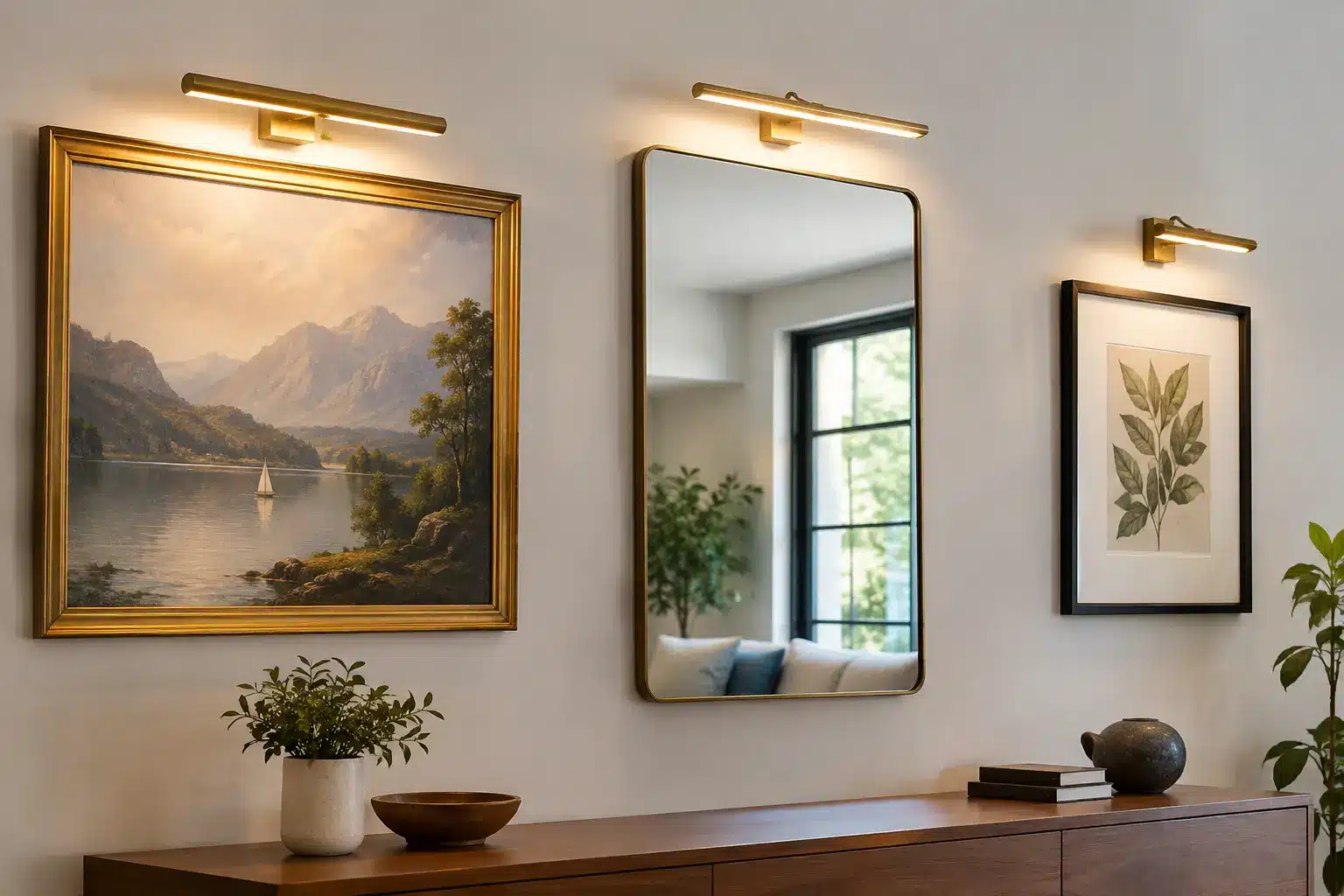
A picture light above a mirror can add a refined, hotel-inspired finish to a hallway, cloakroom or bedroom. The goal is less about revealing brushstrokes and more about creating a flattering, balanced glow. Choose a fitting wide enough to relate to the mirror, but avoid one that is dramatically wider than the frame.
Be mindful of reflection. An exposed bulb, a very bright LED bar or an incorrectly angled shade may be visible in the mirror when you enter the room. A directional, diffused fitting is usually the safer choice. In bathrooms, a standard picture light is not automatically suitable: the fitting must have the correct IP rating for its location and be installed with bathroom electrical zones in mind.
Wired, Plug-In or Rechargeable?
The power option can narrow the selection quickly, especially when you are updating an existing room rather than renovating from scratch.
A hardwired picture light gives the cleanest, most tailored finish. With cabling hidden behind the wall, the fitting appears intentional and architectural, making it an excellent option above a fireplace, in a newly planned hallway or as part of a wider lighting scheme. It does require electrical work, so it is easiest to plan before decorating or during refurbishment.
Plug-in picture lights are practical where chasing walls is not desirable. They suit rented homes, older properties and spaces where you want the flexibility to move artwork later. A visible cable can still look smart when routed neatly to one side and paired with a considered switch or cable cover, although it will never be as discreet as a wired installation.
Rechargeable picture lights offer the quickest route to a finished look. They are particularly useful for a single picture on a wall with no nearby socket, and many include remote controls or touch dimming. The trade-off is charging. For a frequently used light in a busy hallway, regular recharging may become inconvenient. They are often best for occasional accent lighting, styling a shelf display or highlighting a piece that does not need illumination every evening.
Placement and Angle Create the Finish
Position the fitting just above the frame, allowing enough room for the shade to sit comfortably without looking crowded. The exact gap will vary with the size of the fitting and its projection, but the light should read as part of the artwork rather than as a separate object floating high on the wall.
Angle the beam so it washes across the artwork rather than striking it head-on. A downward angle of roughly 30 degrees is often a good starting point, helping to reduce reflected glare while keeping the surface evenly lit. Textured pieces may benefit from a slightly more raking angle, which can bring out the character of brushwork or relief. Conversely, glossy photographs and glazed prints usually need careful adjustment to prevent bright reflections.
Always check the result at night, from the normal viewing position and from the route people take into the room. A fitting can look perfect when you are standing close to it but cause an uncomfortable glare from the sofa or doorway. Dimmable picture lights offer the most flexibility here, letting you set a brighter level for viewing art and a softer level for evening ambience.
Select a Finish That Belongs in the Room
Picture lights are decorative objects in their own right. Antique brass adds warmth to classic frames, rich wall colours and traditional furnishings. Polished chrome or brushed nickel can sit beautifully with contemporary mirrors, while matte black gives crisp definition against pale walls and works well with modern monochrome artwork.
Matching every metal finish exactly is not essential. A brass picture light can look striking above a black frame, for example, if the room already includes brass in a table lamp, cabinet handle or curtain pole. What matters is repetition and balance. Let the fitting relate to at least one other finish in the room so it feels chosen rather than accidental.
Slim, understated fittings are often the right choice for bold artwork, colourful gallery walls and busy wallpaper. More decorative, traditional picture lights can become part of the visual story when the frame, fireplace and furniture have a classic character. The frame should remain the focus, but the fitting can still add a layer of considered style.
Build Picture Lighting Into the Whole Scheme
Picture lighting works best as part of a layered room, not as the only source of illumination. A picture light adds accent light. Pair it with ambient light from a ceiling fitting or floor lamp, then include task lighting where needed for reading, dressing or working. This combination gives a room depth and makes artwork feel naturally integrated into the space.
In long hallways, picture lights can also create rhythm. A sequence of framed prints with softly lit focal points makes a practical route feel more welcoming, particularly in the evening. In a dining room, lighting a single large artwork can establish a focal point without adding another pendant or overwhelming the table setting.
For projects where artwork, joinery, LED tape and decorative fittings need to work together, planning the scheme early prevents awkward cable routes and competing pools of light. Lux Lighting can help turn those separate decisions into a more cohesive result, whether you are refreshing one feature wall or designing a complete interior.
Choose a picture light for the way you actually use the room, not just for how it looks in daylight. When its size, beam, finish and brightness are right, the effect is quietly transformative: the wall gains depth, the artwork earns its place, and the room feels finished long after the sun has gone down.