A reception that feels flat, a retail display that loses its colour, or a restaurant where guests cannot comfortably read the menu can all be traced back to the same issue: lighting was treated as a finishing touch. A well-planned commercial lighting guide starts earlier. It considers how people move, work, shop and relax in a space, then layers light to make every area look considered and perform properly.
For a café, salon, office, shop or hospitality venue, the right scheme does more than brighten the room. It can make products more appealing, improve staff comfort, guide customers naturally through the space and give the whole interior a stronger identity. The goal is not simply more light. It is the right light in the right place.
Start with the job each area needs to do
Commercial spaces rarely have one lighting requirement. A restaurant may need a welcoming entrance, a lively bar, intimate dining tables, a practical kitchen and clearly lit toilets, all within one address. A retail unit needs enough general illumination to browse comfortably, stronger light at displays and fitting rooms, and a shopfront that still works after dark.
Begin by mapping the zones before choosing fittings. Ask what happens there, who uses it and whether the mood should feel energising, calm, premium or efficient. This prevents a common mistake: selecting a single style of fitting and repeating it everywhere, regardless of function.
Ambient, task and accent lighting
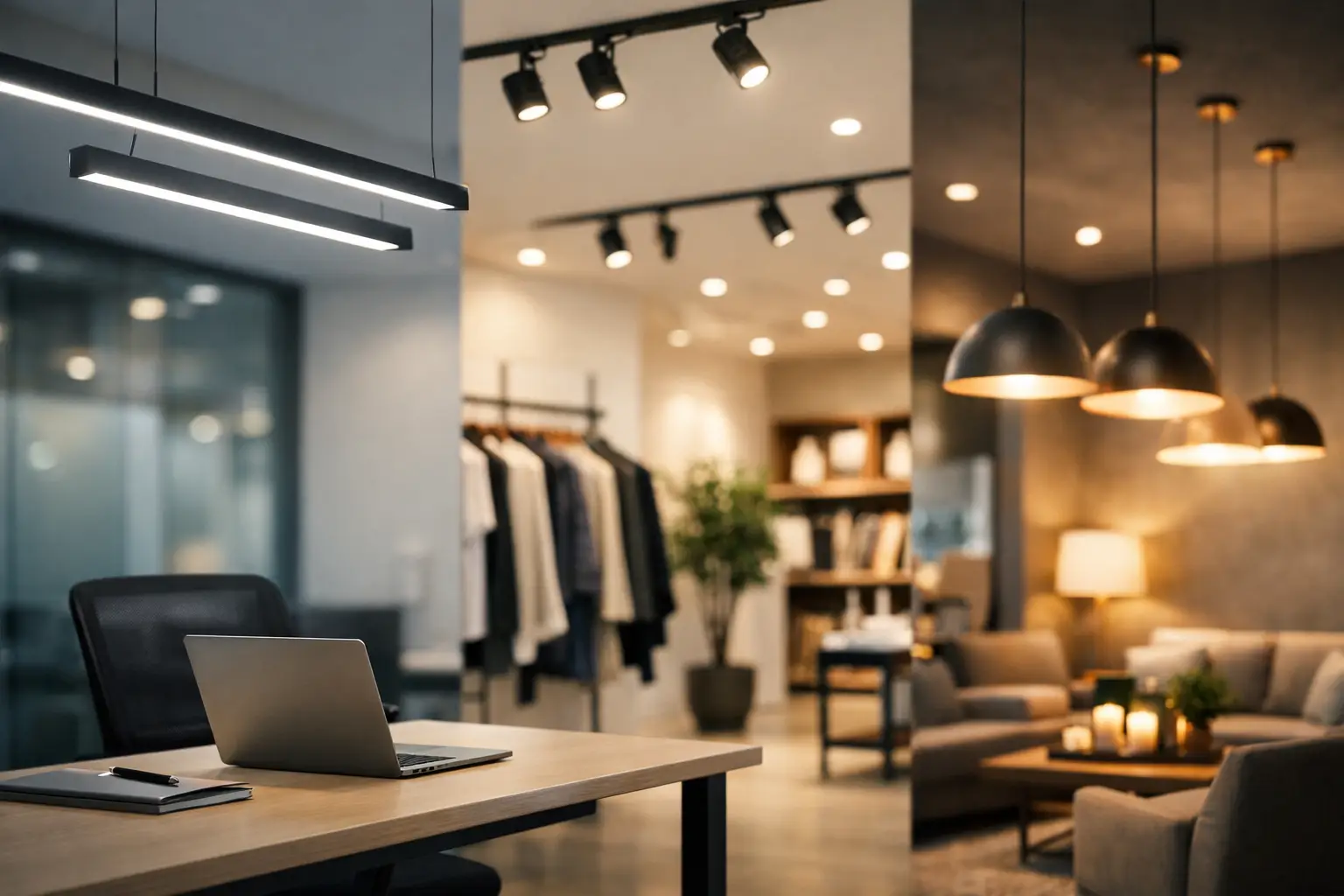
Most successful schemes combine three layers. Ambient lighting provides the comfortable overall level of brightness. It may come from recessed downlights, track lighting, linear fittings, decorative pendants or surface-mounted ceiling lights, depending on the ceiling height and design direction.
Task lighting supports a specific activity. Think focused light at a reception desk, a back-office workstation, a preparation counter, a treatment chair or a hotel bathroom mirror. It should reduce shadows and make detail easy to see without creating harsh glare.
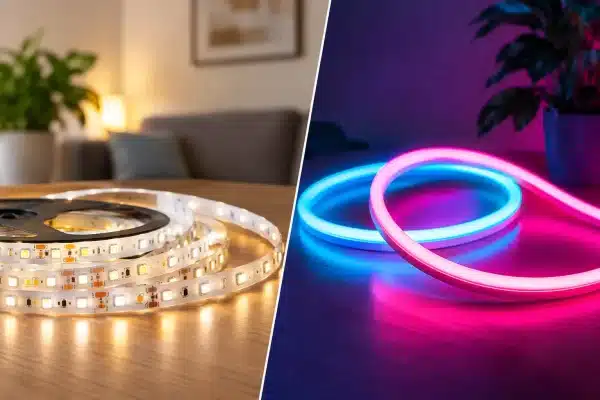
Accent lighting adds shape, focus and atmosphere. Adjustable spotlights can pick out merchandise, artwork, signage or textured walls. LED tape can bring a softer line of light beneath shelving, behind a bar, around joinery or inside display units. This is often the layer that makes a commercial interior feel designed rather than merely fitted out.
Choose brightness for the space, not just the fitting
Wattage is no longer the most useful way to compare LED lighting. Look at lumens, which indicate the amount of visible light produced, while remembering that the final effect also depends on beam angle, mounting height, wall colours and daylight.
A compact boutique with dark finishes may require a different approach from a bright, open-plan office, even if their floor areas are similar. Pale surfaces reflect light and can make a scheme feel brighter; dark timber, black ceilings and richly coloured walls absorb it. High ceilings may need fittings with a more focused distribution, while low ceilings often benefit from controlled, glare-conscious illumination.
As a broad planning principle, circulation areas need less light than worktops, service counters and detailed retail displays. But avoid treating target light levels as a shopping list. The most accurate approach is a lighting calculation based on the room dimensions, finishes, fitting output and intended use, particularly for larger projects or regulated working environments.
Get colour temperature and colour rendering right
Colour temperature has a major influence on first impressions. It is measured in Kelvin and describes whether light appears warmer or cooler.
Warm white, typically around 2700K to 3000K, suits restaurants, bars, hotels, beauty spaces and customer-facing interiors where comfort and ambience matter. It works beautifully with timber, brass, soft furnishings and earthy palettes. Neutral white, often around 4000K, gives a cleaner, more alert feel and is commonly selected for offices, utility areas, kitchens, pharmacies and practical workspaces.
Neither option is automatically better. A fashion retailer may prefer a warmer scheme that feels luxurious, while a showroom selling crisp white products may need a more neutral tone. The key is consistency. Mixing noticeably different colour temperatures within the same sightline can make a carefully designed interior feel accidental.
Colour rendering is equally valuable, especially where products, food, finishes or skin tones need to look natural. Look for a high CRI rating, with CRI 90 or above often a strong choice for retail displays, salons, hospitality and premium residential-style commercial interiors. A lower-quality source can make fresh food look dull, fabrics look inaccurate and carefully selected décor lose its impact.
Control glare, shadows and visual clutter
Brighter is not always better. A row of exposed lamps above a counter may look striking in photographs but become uncomfortable if the light source sits directly in customers’ or staff members’ eyelines. Likewise, poorly positioned downlights can cast shadows across faces at reception desks or create distracting reflections on screens, glossy tables and glass displays.
Choose the beam angle to match the application. Narrow beams create drama and definition on artwork or key merchandise. Wider beams give more even coverage for general areas. Adjustable spotlights offer flexibility in retail and gallery-style spaces, where layouts and displays change regularly.
The fitting itself should support the visual language of the interior. Sleek black track lighting can disappear into a dark ceiling or introduce an architectural edge. Decorative pendants can establish a focal point above tables or a reception island. Linear profiles can reinforce clean, contemporary lines across offices, salons and hospitality settings. A commercial scheme should feel coordinated, not crowded with competing feature lights.
Use controls to make the scheme work harder
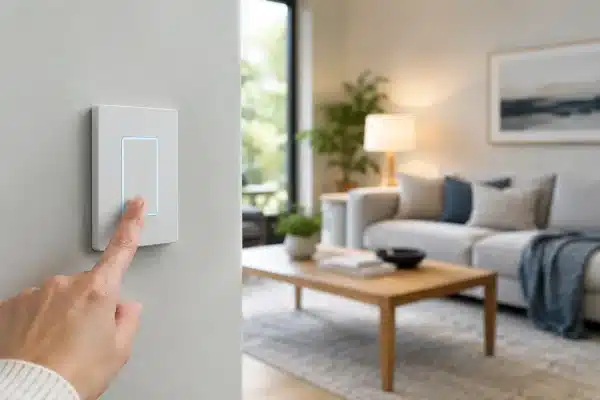
Lighting controls help a space respond to its operating hours, natural daylight and changing atmosphere. Dimming is particularly useful in hospitality venues, meeting rooms, showrooms and multi-purpose spaces. A brighter setting may suit morning service or cleaning, while a lower level can make the same room feel more relaxed in the evening.
Sensors can reduce unnecessary energy use in storerooms, corridors, toilets and low-traffic areas. Daylight-responsive controls can adjust output near windows, helping prevent an overlit shop floor or office on bright days. For larger projects, grouped switching and scene-setting let staff control zones without affecting the whole premises.
Compatibility matters. Not every LED lamp or integrated fitting works with every dimmer, driver or control system. Confirm this before ordering, particularly with LED tape, smart lighting and bespoke installations. It is far easier to specify compatible components at the start than to diagnose flickering or limited dimming after installation.
Do not leave compliance and durability until last
Commercial lighting must be safe, suitable for its location and installed in line with applicable regulations. Emergency lighting, escape-route illumination and illuminated exit signage may be required depending on the building and use. These should be planned as part of the full scheme, not added as an awkward afterthought.
Consider the environment too. Bathrooms, commercial kitchens, exterior entrances and covered outdoor dining areas may need fittings with an appropriate IP rating for moisture and water exposure. In busy public spaces, durable materials and easy maintenance can be just as valuable as a statement finish. A delicate pendant may suit a quiet dining nook but be impractical above a high-traffic counter.
Energy efficiency should include more than the LED label. Long-life fittings, sensible controls, accessible drivers and a layout that avoids over-lighting all support lower running costs over time. For venues operating long hours, those decisions can make a meaningful difference.
Where bespoke LED solutions add real value
Off-the-shelf fittings are ideal for many areas, but custom LED tape solutions can solve the details that standard products miss. They can be sized for shelving, recessed into joinery, shaped around architectural features and tuned to deliver a clean, continuous effect without visible hotspots.
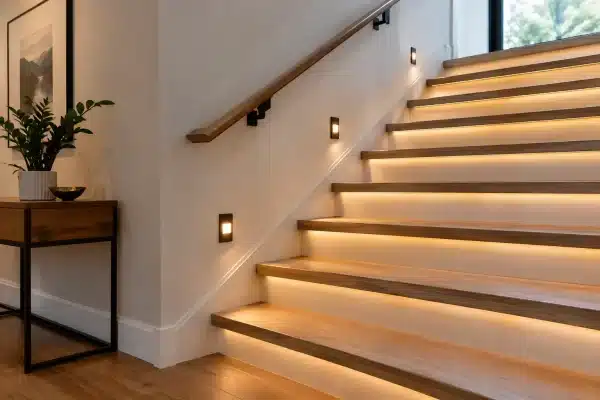
This is especially effective for bars, reception desks, display cabinetry, stair details, coving, wall panelling and hospitality joinery. The result can look subtle when switched off and transformative when illuminated. Specification still matters: tape output, profile depth, diffuser choice, driver capacity and access for future maintenance should all be considered together.
For a project with multiple zones or a strong design brief, professional lighting design can bring clarity before costly decisions are fixed. At Lux Lighting, this can include tailored advice for decorative fittings, commercial illumination and bespoke LED strip solutions, helping bring practical requirements and visual ambition into one considered plan.
A practical commercial lighting guide for specifying fittings
Before finalising an order, review the scheme from the user’s viewpoint. Can customers see what they came to see? Can staff work comfortably at every station? Does the lighting flatter your finishes and products? Does the space still feel right from day to night?
Then check the practical details: ceiling heights, fixing points, circuit locations, dimming requirements, emergency provision, IP ratings, lead times and access for maintenance. Photographing or measuring the space at the start gives installers, designers and suppliers a far clearer brief.
The best commercial lighting does not demand attention from every corner of the room. It creates a setting where the products, people and atmosphere take centre stage – and where every switch-on feels intentional.