A low ceiling should not mean settling for flat, uninspiring lighting. The best lights for low ceilings create brightness, character and a considered finish without hanging into the room or making it feel more enclosed. The right fitting can make a compact hallway feel welcoming, give a kitchen a cleaner working light, or add hotel-style warmth to a bedroom – all while preserving valuable headroom.
The key is to treat lighting as part of the room’s proportions. Choose fittings that sit close to the ceiling, layer the light rather than relying on one central point, and use wall or concealed lighting to draw the eye across the space. Done well, a lower ceiling can feel deliberately intimate rather than restrictive.
What makes a light suitable for a low ceiling?
Ceiling height is only part of the decision. A fitting that projects too far down can interrupt sightlines, compete with cupboard doors and feel awkward in a busy room. In circulation areas such as halls, landings and kitchens, it can also become a practical nuisance.
As a useful rule, reserve pendants for areas where people will sit beneath them, such as a dining table or kitchen island. Elsewhere, look for compact fittings that keep a generous clearance below. Flush ceiling lights sit directly against the ceiling, while semi-flush designs drop slightly lower to offer more decorative detail without the scale of a traditional pendant.
Light distribution matters just as much. A small but powerful fitting that throws light sideways and upwards can make a ceiling feel visually lighter. A single harsh downlight, on the other hand, may leave corners in shadow and emphasise the room’s limits. For the most flattering result, combine general illumination with task and accent lighting.
The best lights for low ceilings by fitting type
Flush ceiling lights for everyday rooms
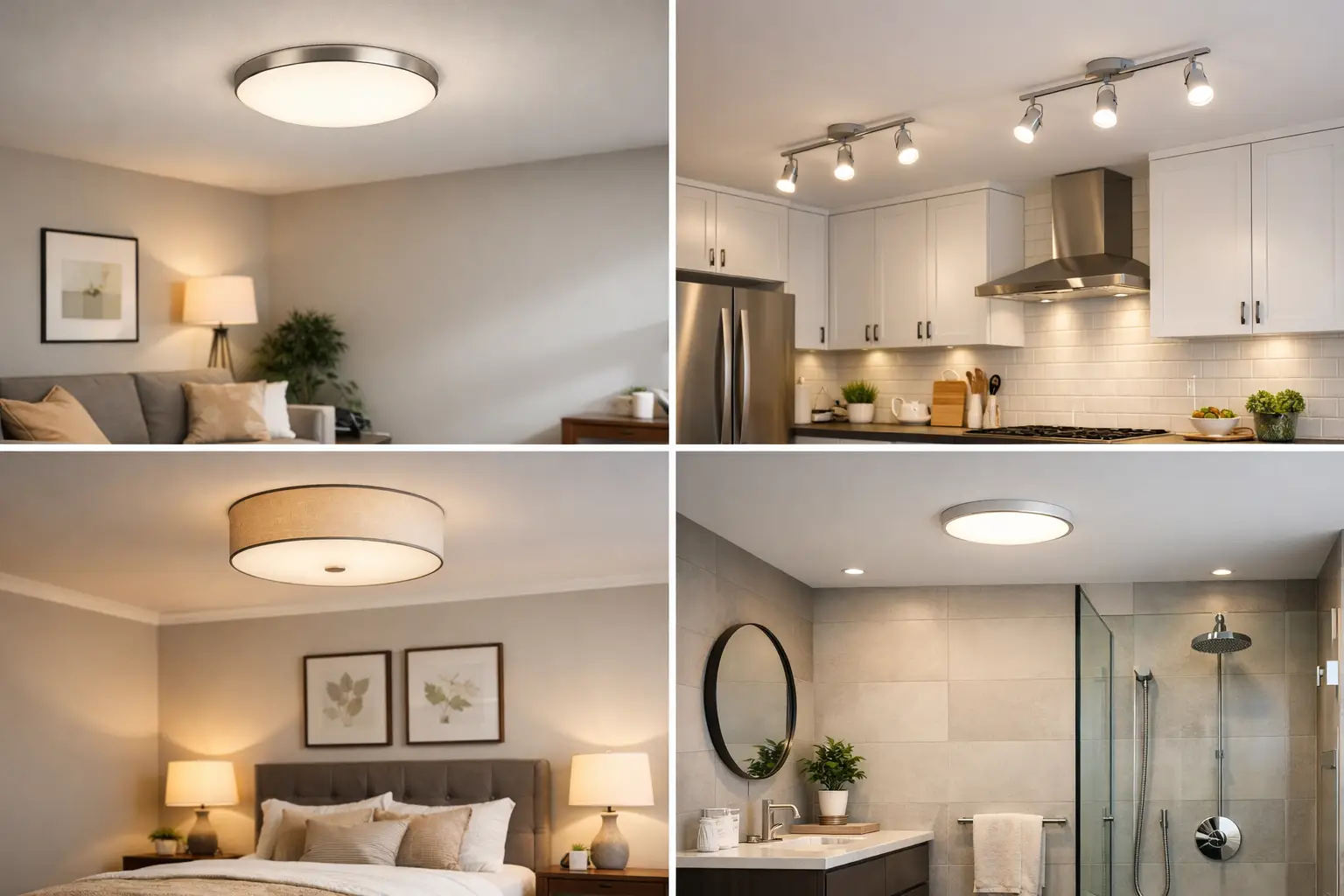
Flush ceiling lights are the natural starting point for low-ceilinged rooms. Their compact profile makes them ideal for hallways, utility rooms, bedrooms, box rooms and smaller living spaces. Modern flush fittings are far from purely functional: opal glass, ribbed shades, metallic finishes and sculptural forms can all deliver a polished decorative look.
A diffuser is worth seeking out in rooms used every day. It softens the light source, reduces glare and gives a more even wash of illumination. In a kitchen or hallway, a wide flush fitting can provide dependable general light without visually crowding the ceiling.
The trade-off is that a very shallow fitting may not create the drama of a chandelier or statement pendant. If the room needs more personality, introduce it through the finish, a decorative wall light or a well-placed table lamp instead.
Semi-flush lights when you want more presence
Semi-flush ceiling lights offer a little breathing space between the ceiling and the shade. They suit living rooms, bedrooms and dining spaces where a flush fitting may appear too understated, but a hanging pendant would sit too low.
This style is especially effective with glass shades or open frames, as these allow light to travel around the fitting and keep the visual weight light. Choose a design with a modest drop and consider the viewing angle from doorways. A larger room with a moderately low ceiling can carry a broad semi-flush fitting beautifully, provided it does not become the first obstacle you notice on entering.
Recessed and surface-mounted spotlights for clean lines
Spotlights work hard in low rooms because they keep the ceiling plane uncluttered. Recessed downlights create a neat, architectural finish and are particularly useful in kitchens, bathrooms, dressing areas and contemporary extensions. They can be positioned to light worktops, wardrobes, shower areas and walkways precisely.
They do need planning. Too few can leave pools of shadow, while too many can make a room feel clinical. Warm-white lamps and a dimmable circuit help bring softness back into the scheme, especially after dark. If recessing into the ceiling is not possible due to joists, insulation or limited void depth, slim surface-mounted spotlights can achieve a similarly streamlined result.
Wall lights that free up the ceiling
Wall lights are one of the most effective ways to make low ceilings feel less important. Rather than drawing attention overhead, they spread illumination across walls and create a wider, more layered sense of space. In a living room, use them to frame a fireplace, artwork or a sofa wall. In a bedroom, wall-mounted bedside lights can replace table lamps and clear valuable space on narrow bedside cabinets.
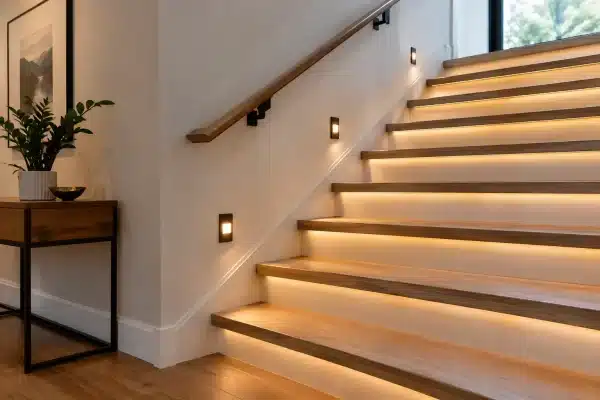
Up-and-down wall lights are particularly useful in hallways and stairways, where they give shape to the walls and reduce the need for an oversized central ceiling fitting. Choose frosted shades where possible if the fitting will be at eye level, as exposed bulbs can create uncomfortable glare.
LED strip lighting for subtle depth
Concealed LED tape is a powerful design tool in rooms with restricted height. Installed beneath kitchen cabinets, along shelving, behind a television panel or within a ceiling recess, it adds depth without adding bulk. It is not usually a substitute for primary lighting, but it can transform the atmosphere and make the room feel more considered.
In a low-ceilinged kitchen, under-cabinet LED lighting removes shadow from the worktop while allowing the main ceiling light to remain discreet. In a living room or bedroom, a soft LED glow behind joinery can introduce calm evening ambience. For custom lengths, corners and profiles, a bespoke LED solution gives a much cleaner result than a visible run of tape.
Choose the right light for each room
In a hallway, prioritise clear circulation and a warm first impression. A compact flush fitting paired with one or two wall lights will feel far more inviting than a lone bright bulb. If the hall is narrow, choose fittings with a shallow projection and avoid dark, oversized shades that visually lower the ceiling further.
Kitchens benefit from layers. Use slim spotlights or a flush ceiling light for general illumination, then add under-cabinet lighting for food preparation. A low ceiling does not rule out pendants entirely: a pair of compact pendants above an island can work well when the island provides a fixed surface beneath them. Keep the drop short and ensure the shades do not block views across the kitchen.
For living rooms, focus on mood as well as brightness. A semi-flush statement light can anchor the room, while floor lamps, table lamps and wall lights create softer pools of light around seating. This avoids the common mistake of relying on one powerful ceiling fitting to do every job.
Bedrooms are often best with a low-profile central fitting and separate bedside lighting. Dimmable lamps or wall lights make the room feel calmer at night, while a flush or semi-flush ceiling light provides practical brightness for dressing and cleaning. If the ceiling is particularly low, choose a light-coloured shade or glass diffuser to keep the overhead area visually open.
Bathrooms require fittings suited to the room’s electrical zones, particularly near a bath or shower. Low-profile bathroom ceiling lights and rated downlights are often the smartest choice, paired with well-positioned mirror lighting for grooming. A beautiful bathroom can still feel functional when every light has a clear purpose.
Finishes, bulbs and proportions make the difference
For low ceilings, pale glass, white fabric, light metals and reflective finishes tend to feel lighter than heavy opaque shades. That does not mean every fitting has to disappear. Black, brass or smoked-glass details can look striking in the right scheme, particularly when repeated elsewhere through handles, mirrors or furniture.
Pay attention to scale. A tiny fitting in a broad living room can look accidental, while a bulky fitting in a compact room will dominate. Measure the room, consider the furniture beneath the light, then choose a design with enough width to feel intentional but a shallow enough depth to protect headroom.
Bulb colour is the final layer. Warm white light is generally the most flattering choice for living rooms, bedrooms and hallways. Kitchens and bathrooms often suit a slightly crisper tone for visibility, though excessively cool light can make finishes appear stark. Dimming gives you the freedom to shift from useful daytime brightness to a more relaxed evening atmosphere.
A low ceiling is not a design compromise when the lighting is chosen with purpose. Start with a fitting that respects the room’s proportions, then build warmth with wall lights, lamps or discreet LED detail. The result is a space that feels brighter, taller and distinctly more stylish – exactly the kind of transformation thoughtful lighting should deliver.