A bathroom can have beautiful tiles, a statement bath and carefully chosen brassware, yet still feel flat if the lighting is treated as an afterthought. Knowing how to plan bathroom lighting means designing for the moments that actually happen there: early starts, detailed grooming, a long soak and the quick midnight visit when bright ceiling light is the last thing anyone wants.
The strongest schemes combine practical clarity with a softer, more considered atmosphere. Rather than choosing one central fitting and hoping for the best, plan light in layers from the start. Your bathroom will feel more spacious, more polished and far more enjoyable to use.
Start with the bathroom’s layout and routines
Before choosing fittings, look at the room as it will be used. Mark the position of the basin, mirror, shower, bath, toilet and doorway. Then think about where people stand, face the mirror and move through the space. A compact en-suite needs a different approach from a generous family bathroom with a freestanding bath.
The basin area is usually the priority. It is where you shave, apply make-up, style hair and check your appearance, so it needs even light directed towards the face. The shower needs dependable, moisture-safe illumination, while a bath area often benefits from softer light that makes it feel less functional and more like a place to switch off.
Also consider natural daylight. A bathroom with a large window may need less daytime support but can feel unexpectedly dark after sunset. In a windowless room, layered artificial lighting becomes even more valuable because it adds depth that a single ceiling fitting cannot provide.
How to plan bathroom lighting in three layers
A well-planned bathroom generally uses ambient, task and accent lighting. These are not complicated design terms. They simply describe what the light needs to do.
Ambient lighting sets the overall mood
Ambient light is the room’s general illumination. Recessed downlights are a clean, versatile option, especially in contemporary bathrooms with lower ceilings. Space them thoughtfully rather than placing one directly above the mirror or in the middle of the floor. A central fitting can leave the edges of the room dull and can cast unflattering shadows at the basin.
For larger bathrooms, several dimmable downlights give better coverage and more control. In rooms with sufficient ceiling height, a decorative flush fitting, pendant or compact statement light can bring personality to the scheme. Keep scale in mind: an oversized fitting can dominate a small bathroom, while a tiny fitting can disappear in a larger space.
Warm white light, typically around 2700K to 3000K, creates a more relaxed, residential feel. At the cooler end of this range, 3000K is often a good all-round choice for a bathroom because it still feels crisp and clean. Avoid making every source overly cool and blue, which can make tiles look harsh and skin tones less flattering.
Task lighting makes the mirror work properly
Task lighting is where many bathroom schemes fall short. A downlight directly above the mirror may appear bright, but it creates shadows beneath the eyes, nose and chin. That is not ideal for grooming and rarely gives the mirror area a luxurious finish.
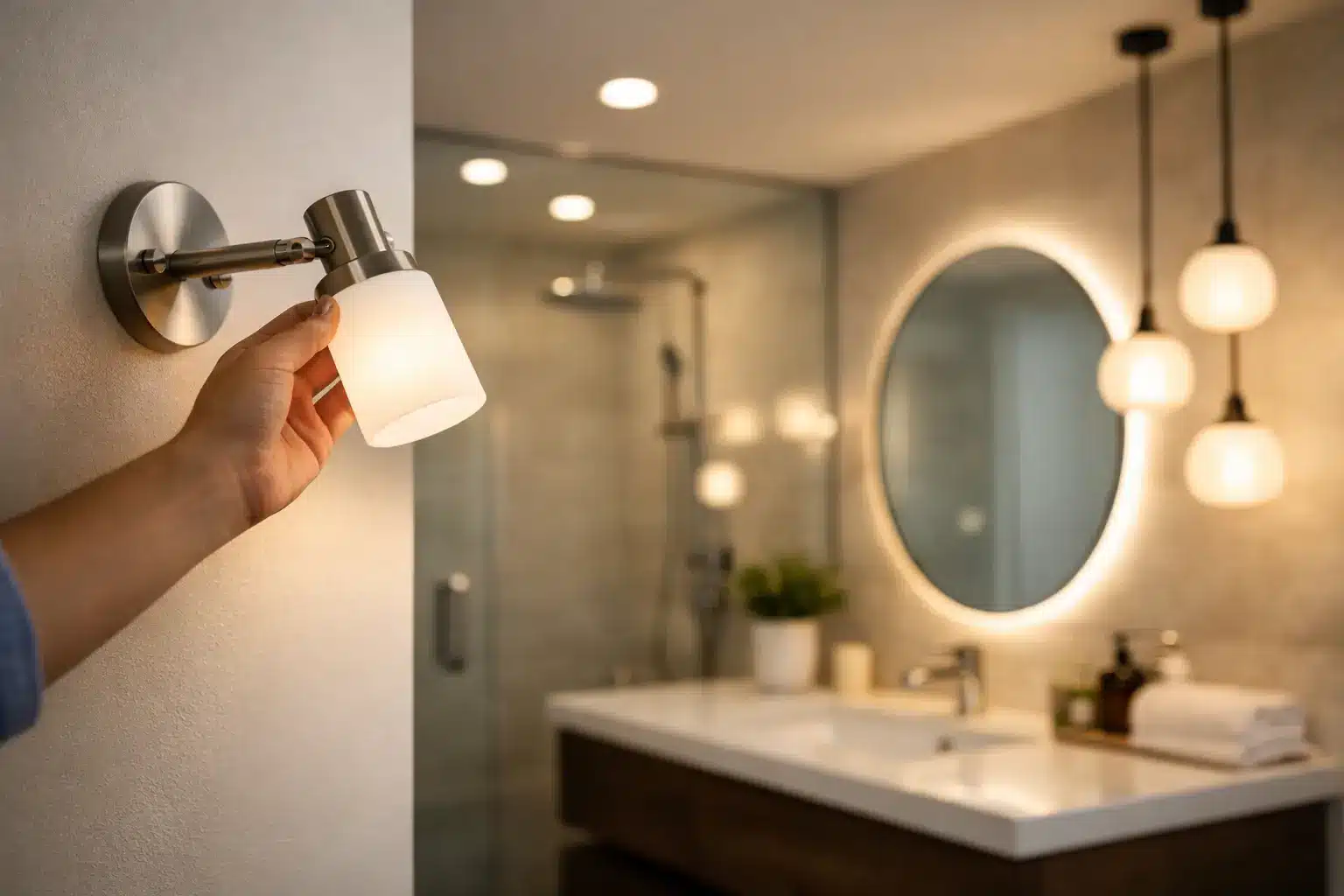
The most flattering solution places light at face level, usually with wall lights on either side of the mirror. This spreads light across the face more evenly. Where the layout does not allow side lights, an illuminated bathroom mirror or mirror cabinet can provide a neat, space-saving alternative. Look for well-diffused illumination rather than a line of exposed, dazzling LEDs.
For a shared bathroom with a wide double vanity, consider a pair of mirrors with individual lighting or a long illuminated mirror that gives both users a balanced view. Integrated demisters are worth considering too. They keep a clear section of the mirror after a hot shower, making the fitting work harder for the space.
Accent lighting adds atmosphere and depth
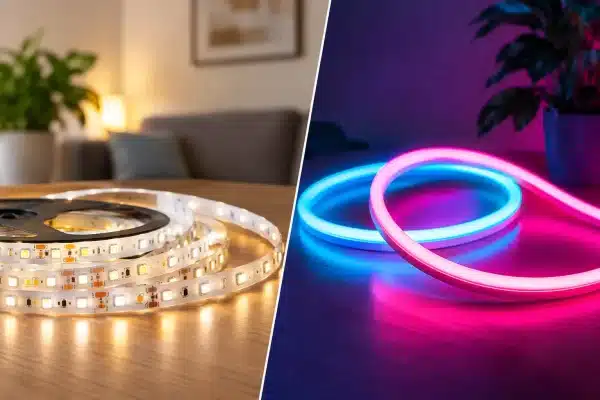
Accent light is what turns a useful bathroom into an inviting one. It can highlight a tiled niche, create a gentle glow beneath a wall-hung vanity or draw attention to a feature wall. Concealed LED tape works particularly well here, as it gives a clean line of light without adding visual clutter.
Under-vanity lighting is practical as well as stylish. On a low setting, it can act as night lighting without waking the whole household. LED tape within recessed shelves or shower niches can also add definition, but it must be correctly specified for the location and installed professionally.
Accent lighting should never be your only source of illumination. Its role is to soften hard edges, reveal texture and make the room feel intentional after dark. Used with restraint, it brings a high-end hotel feel without overwhelming the space.
Choose the correct IP rating for every fitting
Bathrooms demand more care than other rooms because water and electricity must be kept safely apart. Every fitting should be selected for its exact position, not simply because it is labelled as suitable for bathrooms.
The room is divided into zones based on proximity to the bath, shower and basin. Fittings inside or immediately around the bath and shower need the highest level of water protection, commonly IP65 or above, depending on their precise location. Areas farther away may allow a lower rating, but that does not mean any indoor fitting is appropriate.
An IP rating has two digits. The first relates to protection against solid objects, while the second relates to water. For bathroom planning, the second digit is usually the key consideration. Your electrician can confirm what is suitable for each zone and ensure the installation meets applicable local wiring requirements.
Do not overlook illuminated mirrors, wall lights, recessed downlights or LED tape profiles. Each needs an appropriate rating, and all electrical work in a bathroom should be handled by a qualified electrician. This is where a considered lighting plan protects both the finished look and the safety of the room.
Put every layer on the right controls
Good lighting is not just about fittings. It is about being able to use them differently throughout the day. Put ambient, mirror and accent lighting on separate circuits or controls where possible. This gives you bright, practical illumination when getting ready and a softer setting when you want to unwind.
Dimming is one of the most effective upgrades you can make. Check that the bulbs, driver and dimmer are compatible before buying, particularly with integrated LED fittings. A system that flickers, hums or has a very limited dimming range can quickly spoil an otherwise beautiful scheme.
Smart lighting can be useful in bathrooms when chosen for practical reasons rather than novelty. You might set a gentle morning scene, a brighter daytime setting and a low-level evening mode. Motion-activated under-vanity or toe-kick lighting is especially useful at night. Keep controls easy to understand, however. The best technology disappears into the routine rather than demanding attention.
Balance style, finishes and light quality
Bathroom lighting should belong to the wider interior scheme. Black fittings can give a crisp contemporary edge, while brass and warm metallic finishes bring softness against marble, timber tones and neutral tiles. Chrome remains a classic choice where you want a clean, reflective finish that works with existing bathroom furniture.
Match finishes thoughtfully, but do not feel compelled to make every metal identical. A black mirror frame with brushed brass wall lights can look striking when repeated elsewhere through handles or accessories. The connecting thread may be colour, shape or texture rather than an exact finish match.
Light quality matters just as much as the fitting itself. Choose LEDs with good colour rendering, ideally a CRI of 90 or above around the mirror. Higher colour rendering helps skin tones, paint colours and tile finishes appear more natural. This is a small specification detail that makes a noticeable difference every day.
Common bathroom lighting mistakes to avoid
The most common mistake is relying on one ceiling fitting. It may meet the basic need for light, but it rarely gives a bathroom the balance needed for grooming and relaxation. Another is installing mirror lighting too high or using a bare, overly bright source that creates glare.
Avoid placing downlights directly over the centre of a freestanding bath unless the fitting is correctly rated and the visual effect has been considered. A decorative pendant can look exceptional above a bath in the right room, but ceiling height, zoning and safe positioning all matter. In a compact bathroom, a well-placed flush fitting may achieve the same sense of style with fewer compromises.
Finally, do not leave lighting decisions until the tiling and cabinetry are already complete. Wall lights, mirror cabinets, recessed channels and concealed LED tape all need early coordination. Planning the wiring before walls are closed gives you far more freedom and usually a cleaner finish.
A bathroom lighting plan should make the room look beautiful at first glance, then prove itself in the quiet everyday details. Start with the mirror, build out your general light, and add a considered glow where the room deserves to feel special. For more complex layouts, bespoke LED details or a full renovation, a professional lighting design conversation can turn those early ideas into a scheme that feels right from every angle.