A staircase can change the feel of a home faster than almost any other feature. Switch on well-planned led tape for stairs, and what was once purely practical suddenly feels sharper, calmer and far more considered. It is one of those upgrades that adds both atmosphere and function – especially in hallways, landings and open-plan spaces where the stairs are always in view.
The appeal is obvious. Stair lighting improves visibility at night, gives the space architectural definition and creates that polished, design-led look people usually associate with bespoke interiors. But the result depends on more than simply sticking a strip light under each tread. Brightness, placement, finish and control all matter, and the wrong choice can look harsh rather than refined.
Why led tape for stairs works so well
Stairs sit in a unique part of the home. They are transitional, often narrow, and frequently underlit by natural daylight. That makes them ideal for low-level lighting. Instead of relying on a central pendant or wall light to do all the work, LED tape introduces softer illumination exactly where it is needed.
There is also a strong visual reason to use it. A staircase has rhythm – tread after tread, line after line. LED tape picks up that structure and turns it into a feature. In contemporary homes, it can make a floating staircase feel even lighter. In more traditional settings, it can quietly modernise the area without stripping away character.
For family homes, there is a practical benefit too. If anyone is moving around early in the morning or late at night, subtle stair lighting is far easier on the eyes than a bright overhead fitting. It helps people navigate safely without flooding the whole hallway with light.
The best places to install LED tape on stairs
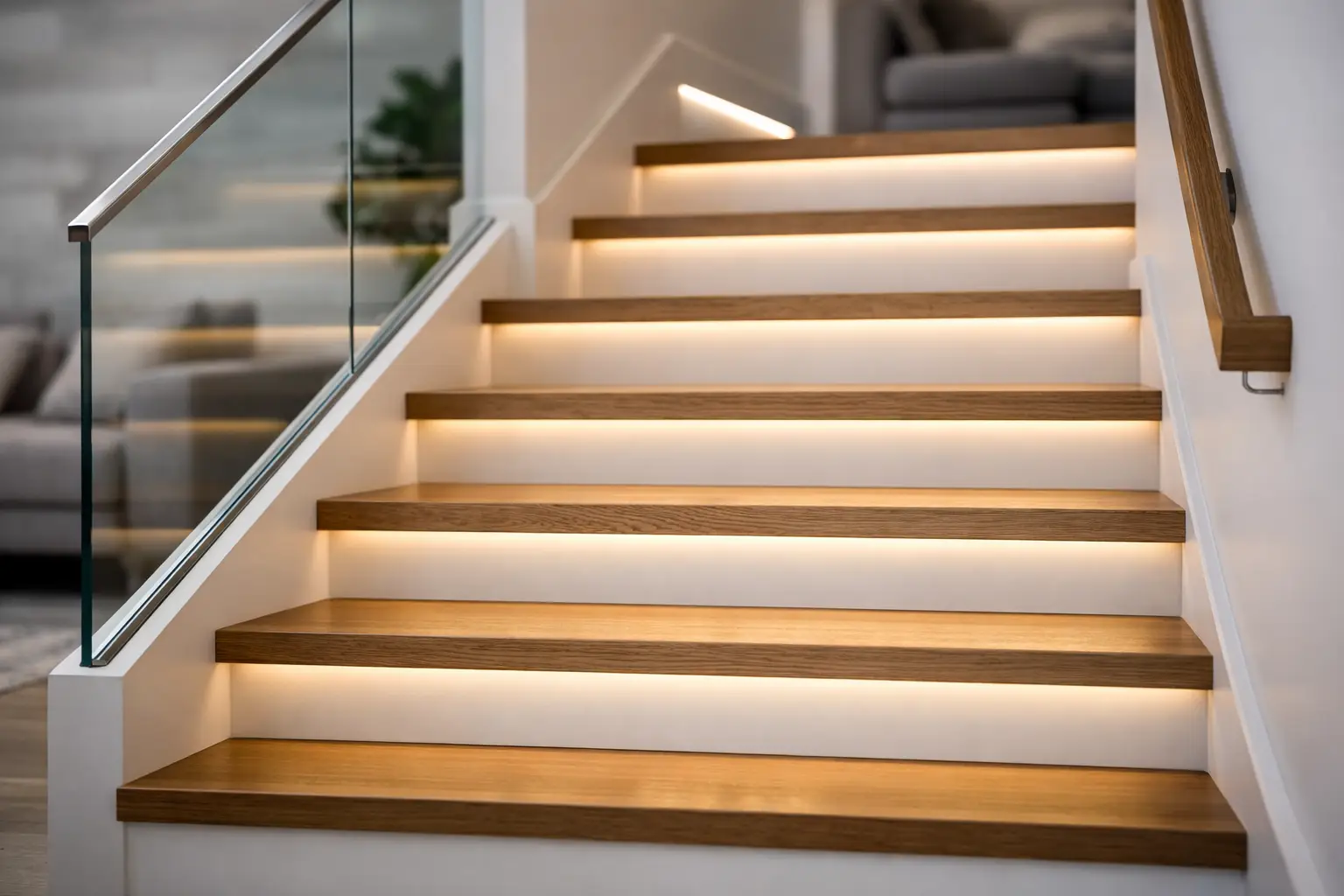
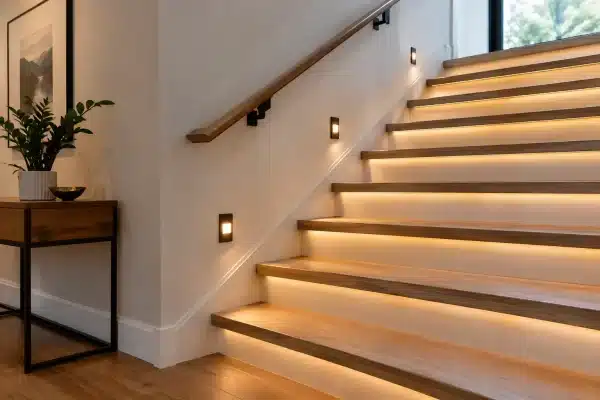
The most popular position is beneath the nose of each tread. This gives a clean wash of light onto the step below and creates the crisp, layered effect many homeowners want. It suits timber, painted and floating staircases especially well, provided there is enough detail in the tread to conceal the tape or profile neatly.
Another option is to run the lighting along the side of the staircase, either recessed into the wall or mounted into the stringer detail. This can feel more architectural and often works better where the stair design does not allow under-tread placement. It is also useful in narrower stairwells, where side lighting can guide the route without drawing too much attention to the steps themselves.
For some projects, a continuous line along the skirting or wall beside the stairs gives the best effect. It is less about highlighting every individual tread and more about creating ambient guidance through the space. That can work particularly well in minimalist interiors, where a single uninterrupted line feels more in keeping with the design.
Choosing the right brightness and colour temperature
This is where many stair lighting schemes go wrong. Brighter is not always better. On stairs, the aim is usually controlled, comfortable light rather than something that looks clinical or overpowering.
Warm white tends to be the most versatile choice in residential settings. It adds softness, flatters timber finishes and feels more relaxed in the evening. If the surrounding interior is very sleek, with cooler materials such as stone, glass or pale polished surfaces, a more neutral white can work beautifully. But anything too cold can make the staircase feel stark.
Brightness should be judged in context. A feature staircase in a large hallway may carry a little more output because it is part of the room’s visual statement. A compact stairs-and-landing layout often needs less. If the tape is visible rather than deeply recessed, it should usually be softer to avoid glare.
Dimming is worth serious consideration here. It gives flexibility between daytime impact and night-time comfort, and it helps the scheme feel more expensive because the lighting can adapt to the moment rather than staying fixed at one level.
Why the finish matters as much as the light
If you want led tape for stairs to look built-in rather than added as an afterthought, the finishing detail matters every bit as much as the LED itself. Exposed tape can be fine in utility areas, but on a staircase it rarely gives the premium result most people are after.
Using aluminium profiles with diffusers creates a cleaner line, helps manage heat and softens the appearance of the light points. That means the effect is smoother and more refined, especially at close range. On a visible staircase in a main entrance hall, this detail makes a real difference.
Concealment is another key part of the look. The best stair lighting often appears effortless because you see the glow, not the source. That may mean planning a recess in the joinery, integrating the lighting into a wall channel or coordinating with a stair manufacturer during the design stage. It can still be done in retrofit projects, but early planning gives you more control.
New build, renovation or quick upgrade?
The right approach depends on the stage of the project. In a new build or major renovation, there is more freedom to hide drivers, run cabling neatly and recess profiles into walls or stair details. This is where stair lighting can become part of the architecture rather than a decorative extra.
In an existing home, the focus is often on achieving a tidy finish with minimal disruption. Surface-mounted profiles, carefully chosen placement and thoughtful cable routing can still deliver an impressive result. You may not get the same invisible detailing as a fully planned scheme, but you can still create a staircase that feels elevated and intentional.
For trade buyers, developers or hospitality projects, durability and serviceability should sit alongside appearance. It is worth thinking about future access to components, especially if the lighting is built into bespoke joinery or stonework. A beautiful installation needs to remain practical after handover.
Controls that make stair lighting more useful
One of the smartest ways to use stair lighting is to pair it with sensors. Motion activation works particularly well in hallways and landings, where the lights only need to come on when someone is moving through the space. That creates convenience, supports safety and keeps the effect subtle.
Manual switching still has its place, especially where the staircase lighting is part of a wider scene including wall lights, pendants or hallway lamps. In design-led homes, layered control often gives the best result. You might want full brightness when entertaining, but a much gentler level for evening use.
Smart control can be useful too, though it is not essential for every project. If the rest of the house already uses smart lighting, adding the staircase into scenes and schedules can make the whole scheme feel more cohesive.
Common mistakes to avoid with led tape for stairs
The biggest mistake is choosing tape that is too bright and leaving it fully visible. That creates glare and takes away the calm, premium look most people are trying to achieve. The second is ignoring the surrounding materials. Gloss paint, polished stone and glass balustrades all reflect light differently, so the same LED can feel very different from one staircase to another.
Another common issue is treating stair lighting as a last-minute add-on. By the time flooring, joinery and plastering are finished, the options become narrower. Even if you are only at the ideas stage, it helps to think about stair lighting early so the layout, wiring and detail can support the look you want.
Finally, do not judge the result by the strip alone. Drivers, profiles, control gear and installation quality all influence the final finish. This is especially true on stairs, where the lighting is viewed repeatedly and from close angles every day.
When bespoke makes more sense
Not every staircase is straightforward. Curved stairs, open risers, floating steps and mixed-material designs often need a more tailored solution. In those cases, a bespoke LED strip setup can deliver a much cleaner result than trying to force a standard off-the-shelf approach into a custom space.
That is often where specialist advice pays off. Matching the tape output to the stair material, choosing the right profile depth and planning the cable runs properly can be the difference between lighting that looks expensive and lighting that simply looks fitted. For homes and projects where the staircase is a key feature, it is worth getting that detail right from the start.
A well-lit staircase should feel effortless. Not flashy, not overdone – just beautifully resolved. When the light sits in the right place and the finish is clean, led tape for stairs turns an everyday route through the house into part of the design story.