Renovation projects often stall at the same point: the layout is settled, finishes are chosen, and then lighting gets treated as a final add-on. That is usually when a beautiful scheme starts to feel flat. Good lighting design for home renovation is not simply about picking attractive fittings. It is about deciding how each room should feel, what needs to be seen clearly, and where you want the eye to land the moment someone walks in.
When lighting is planned early, the whole house works harder. Joinery looks sharper, colours feel richer, ceilings seem higher and everyday routines become easier. When it is left too late, even expensive interiors can feel underlit, overlit or strangely disconnected.
Why lighting design for home renovation matters so much
A renovation changes more than the look of a space. It changes how you move through it, how you use it at different times of day and how rooms connect to one another. Lighting should follow that same logic. A kitchen extension with generous glazing may need very little support by day but a carefully layered scheme at night. A period sitting room may need decorative warmth without losing practical light for reading. A hallway may be narrow and functional, yet it still sets the tone for the rest of the house.
This is where homeowners often underestimate the job. One central pendant rarely solves everything. Downlights alone can make a room feel clinical. Statement lighting can look spectacular, but if there is no softer support around it, the space may still feel unfinished. The strongest schemes combine ambient, task and accent lighting so the room has depth as well as brightness.
That balance matters in renovations because you are usually working with real-life constraints. Ceiling heights, existing wiring routes, insulation build-ups, steel beams and furniture plans all affect what is possible. Great results come from shaping the scheme around those realities rather than fighting them.
Start with the room, not the fitting
It is tempting to shop by style first. A smoked glass pendant, a neat plaster downlight or a sleek wall light can all be appealing on their own. But lighting works best when the room leads the decision.
Ask what happens in the space from morning to night. In a kitchen, you may need brighter task lighting over worktops, softer light over the island for casual evenings, and subtle LED tape to lift shelving or a pantry run. In a bedroom, the priority shifts. You want calm, flattering light, practical bedside reading options and enough general light for dressing without making the room feel harsh.
Open-plan renovations need even more discipline. Many homeowners want a clean ceiling line, so they lean heavily on downlights. The result can be a grid of light that technically covers the room but does little for atmosphere. Breaking the space into zones usually works far better. Pendants can anchor a dining table, under-cabinet lighting can sharpen kitchen tasks, and wall lights or lamps can soften the living area so the entire room does not feel switched on at once.
Layering light creates the finished look
The difference between a basic lighting scheme and a memorable one is usually layering. Ambient lighting gives overall illumination. Task lighting helps you do something specific, whether that is chopping vegetables, applying make-up or working at a desk. Accent lighting adds mood and visual structure by drawing attention to texture, artwork, alcoves, shelving or architectural details.
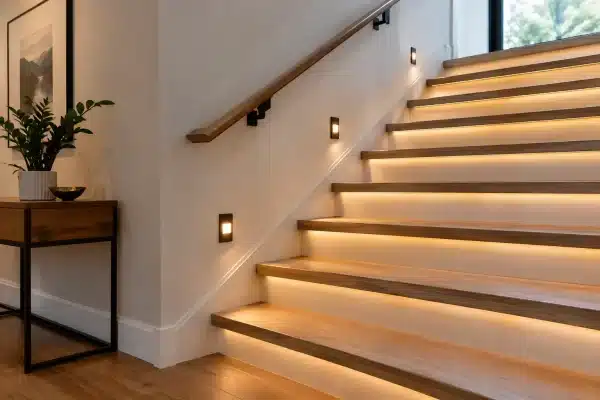
In renovation work, accent lighting is often what makes the project feel considered. A run of LED tape under a floating media unit, a soft wash of light across a tiled bathroom niche, or discreet stair lights along a hallway can completely change the perception of quality. These details are practical, but they also give the home a tailored feel.
There is a trade-off, of course. More layers usually mean more circuits, more planning and sometimes a higher upfront cost. But this is one of the areas where spending carefully tends to show. Decorative fittings catch attention, yet it is often the concealed and supporting light that makes a room feel effortless.
Choosing the right approach room by room
Kitchens benefit from a mixed scheme. You want enough brightness for prep areas, but not so much that the room loses its warmth in the evening. Islands often justify decorative pendants, particularly where they help define the social centre of the room. At the same time, practical support from under-cabinet lighting or discreet ceiling fittings keeps the space usable.
Living rooms need flexibility more than sheer output. This is where dimmable circuits, wall lights and table or floor lamps come into their own. If everything is bright from above, the room can feel exposed. Lower-level light creates comfort and gives the space a more polished character.
Bedrooms are at their best when the light feels calm and intentional. Bedside pendants or wall lights free up table space and add a boutique finish, but make sure they are positioned properly for reading. Soft ceiling light, wardrobe lighting and gentle accent features can all play a role without making the room feel overly engineered.
Bathrooms require a little more care because style and safety must work together. Mirror lighting should be flattering and functional, especially for shaving or make-up. Ceiling lights need to suit the room’s zones, and finishes should sit comfortably with the rest of the design. The goal is a bathroom that feels crisp in the morning and relaxed at night.
Hallways, stairs and landings are often missed opportunities. These are transition spaces, but they shape first impressions. Wall lights, stair lights and well-placed pendants can turn a purely functional route into something far more inviting.
Think about control as much as brightness
A renovation is the ideal time to improve not just what lights you use, but how you use them. One switch for an entire room is rarely enough in modern living. Separate circuits let you adapt the mood, save energy and make spaces more versatile.
Dimming is one of the simplest upgrades with the biggest impact. Bright light is useful, but constant maximum brightness is not. In kitchens, open-plan rooms and bedrooms especially, dimmable lighting gives the space a more refined and liveable quality.
Smart lighting can also make sense, although it depends on the household. Some homeowners love app control, scenes and voice commands. Others prefer straightforward wall switches that always work exactly as expected. The best answer is often a blend of both: intuitive manual control with smart options where they genuinely add convenience.
Avoid the common renovation mistakes
The biggest mistake is leaving the lighting plan until after first fix decisions are already made. Once ceilings are closed and joinery is ordered, your options narrow quickly. Another common issue is focusing all budget on visible fittings while neglecting the supporting layers that make them work.
Scale is another area where schemes go wrong. A fitting may look perfect online and then feel undersized over a dining table or oversized in a compact bedroom. Ceiling height matters too. What works in a new extension with generous proportions may not suit a lower existing room.
Colour temperature should not be ignored either. If one room feels warm and welcoming while the next feels cold and stark, the flow of the home suffers. Consistency matters, though there are exceptions. Utility spaces may benefit from a cleaner feel, while living areas usually suit a warmer tone.
When expert planning is worth it
Some projects are straightforward. Others are layered, ambitious and full of bespoke details. If your renovation includes an extension, custom joinery, feature ceilings, garden lighting or integrated LED strip, bringing in lighting expertise early can save time and expensive changes later.
This is especially true when you want the scheme to do more than provide light. The right design can emphasise material choices, improve proportions and give the house a stronger sense of identity. For homeowners renovating in Ireland, where dark evenings make artificial light a major part of daily life for much of the year, that added consideration pays off quickly.
A specialist retailer with design experience, such as Lux Lighting, can help bridge the gap between inspiration and execution. That means thinking beyond individual fittings and towards a complete scheme that looks cohesive when everything is installed.
The most successful renovation lighting is rarely the loudest. It is the scheme that feels right at every hour, supports the way you live and quietly makes every finish look better. If you are planning a renovation, give lighting a seat at the table early – your home will feel better for it long after the dust has settled.